
Read summarized version with
I remember my first day at a tech company years ago.
I showed up pumped, ready to make an impact. But my laptop wasn’t ready. My manager was stuck in back-to-back meetings. Nobody seemed to know I was starting that day. So I just sat there at an empty desk for three hours, waiting for something to happen.
That initial excitement? It evaporated pretty quickly.
About 20% of employees quit within their first 45 days of joining. And after experiencing onboarding from both sides - as the confused new hire and as a founder scrambling to get people up to speed - I get why.
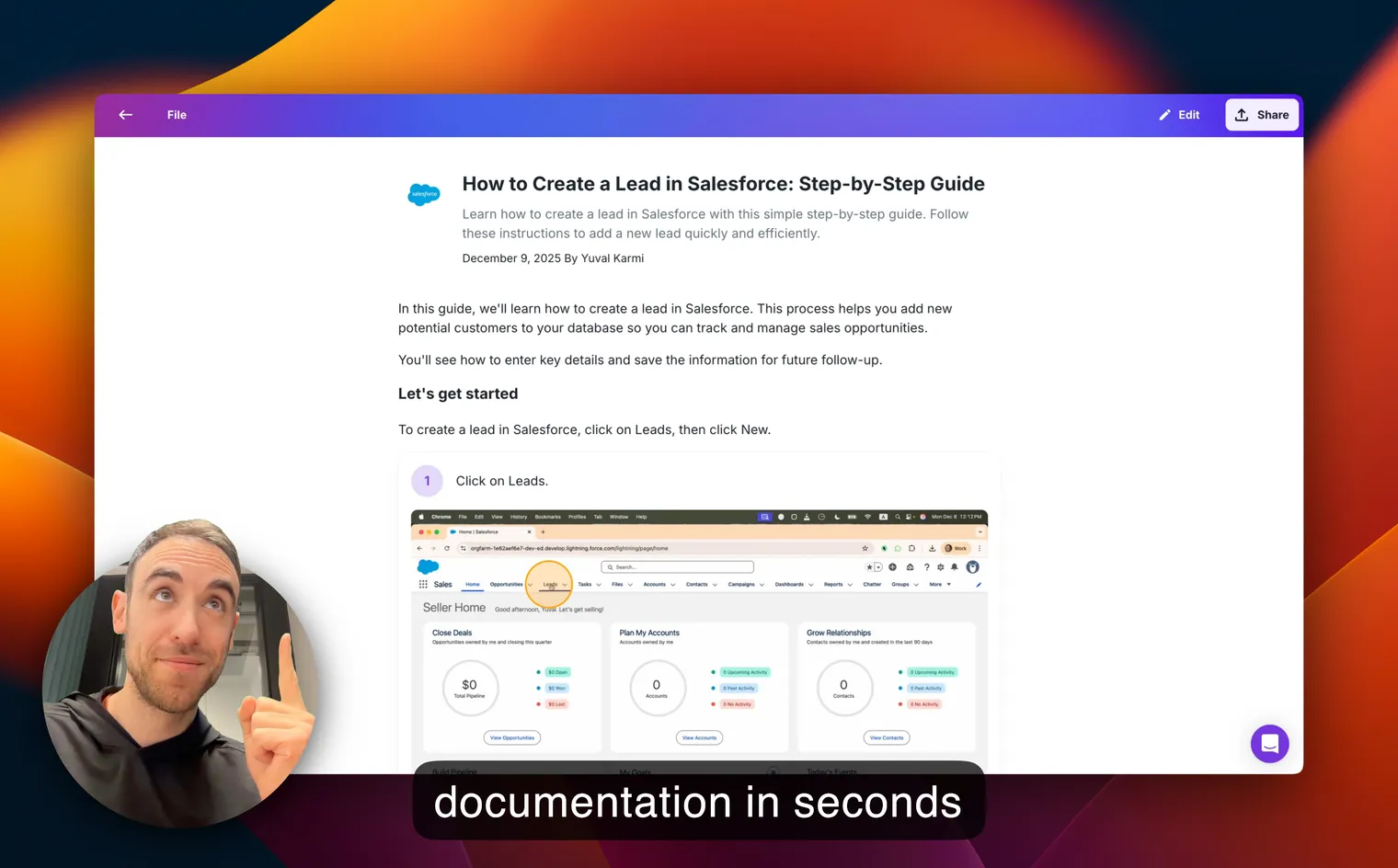
I’m Yuval, founder of Glitter AI. Onboarding challenges are real, they’re frustrating, and they cost companies way more than they realize, which is why I put together a complete guide to employee onboarding. But here’s the thing: most of these problems have straightforward solutions.
Teach your co-workers or customers how to get stuff done – in seconds.

Why Onboarding Challenges Matter More Than Ever
In 2026, onboarding isn’t just some HR formality you rush through. It’s become a strategic necessity.
Economic uncertainty means companies can’t afford high turnover. Technology is changing faster than ever, so new hires need to get up to speed quickly. And with remote and hybrid work, the old “show up and we’ll figure it out” approach just doesn’t cut it anymore.
The numbers don’t lie:
- Only 12% of employees strongly agree their organization does a great job with onboarding
- Companies with structured onboarding see 82% better retention
- But 88% of companies admit they could improve their onboarding
- 36% have no structured process at all
So yeah, there’s clearly room for improvement.
The Biggest Onboarding Challenges (And What Actually Works)
Let me walk you through the challenges I’ve seen repeatedly, both in my own companies and from talking to hundreds of founders and HR leaders.
Challenge 1: Information Overload
Here’s what typically happens: You want new hires to know everything right away, so you dump weeks’ worth of information on them in the first few days, instead of pacing it the way a structured employee training and onboarding program would.
Policies. Systems. Processes. Company history. Team structures. Product details. On and on.
And then you wonder why they seem overwhelmed.
The reality: Research shows that 81% of employees felt overwhelmed during onboarding. Our brains simply can’t absorb that much at once. People forget around 70% of new information within a day if there’s no reinforcement.
How to Fix It
Break information into digestible chunks. Instead of a six-hour orientation covering everything, spread content over the first few weeks.
Prioritize what matters now. Day one, they need to know where the bathroom is and how to log into email. They don’t need the complete history of your company’s pivot in 2019.
Use microlearning. Short, focused learning sessions (15-20 minutes) work way better than marathon training blocks. I wrote about this approach in my post on how to train your team more effectively.
Make content searchable. Give people a knowledge base they can reference when they actually need something, not weeks before.
When you’re documenting processes for new hires, tools like Glitter AI let you create quick, visual guides they can access on-demand instead of trying to remember everything from a single training session.
Create visual onboarding materials in minutes
Challenge 2: Remote and Hybrid Onboarding
Remote onboarding is just different.
In an office, a new hire can turn to the person next to them and ask a quick question. They overhear conversations that give context. They can read the room and pick up on culture naturally.
Remote? None of that happens automatically.
The stats: Many remote employees report feeling lost, undertrained, or disconnected during their first few weeks. And 43% of new hires waited over a week for basic workstation logistics and tools to be in place.
That’s brutal.
How to Fix It
Ship equipment early. Get a welcome kit with laptops and gear to remote employees at least a week before their start date. Test everything. Make sure it works.
Schedule over-communication. What would happen organically in an office needs to be intentional remotely. Daily check-ins for the first week aren’t overkill.
Assign a buddy. Someone who’s not their manager but can answer all the random questions that pop up throughout the day.
Use video for training. When you can’t show someone something in person, screen recordings become essential. I talk about this more in my post on training video tips.
Create async documentation. People in different time zones need materials they can access when it works for them. Visual, step-by-step guides work better than long text documents nobody reads.
Challenge 3: Lack of Personalization
Here’s a common mistake: treating every new hire exactly the same.
An experienced senior engineer and a fresh college grad need very different onboarding experiences. So does someone in sales versus someone in operations.
But 68% of organizations struggle to personalize onboarding at scale.
One-size-fits-all onboarding means you’re either boring the experienced people with basics they already know or completely overwhelming the junior folks.
How to Fix It
Assess before you train. Find out what people already know before making them sit through training on it.
Create role-specific tracks. Your new employee onboarding checklist should have core components everyone gets, plus role-specific sections.
Let people skip ahead. If someone already knows your CRM inside and out from their last job, let them prove it and move on.
Adjust based on experience level. A director joining your company needs different context than an entry-level analyst. Give them what they actually need.
Challenge 4: Unclear Expectations
I can’t tell you how many times I’ve heard this: “I spent my first three months not really knowing what I was supposed to be doing.”
That’s on the company, not the new hire.
66% of new hires say they struggle with job duties and expectations during onboarding. 64% report a lack of clarity around their role in the organization.
When people don’t know what success looks like, they can’t possibly achieve it.
How to Fix It
Set clear 30/60/90 day goals. Be specific. “Learn the product” is vague. “Complete product training and shadow five customer calls” is actionable.
Write down expectations. Have a conversation, sure, but also document what you discussed. People need to reference it later.
Check in regularly. Weekly one-on-ones for the first month aren’t excessive. They’re necessary.
Define what “good” looks like. Show them examples of excellent work in your company. Let them see the standard.
Ask if they understand. Don’t assume. Explicitly check that expectations are clear, not just stated.
Teach your co-workers or customers how to get stuff done – in seconds.
Challenge 5: Administrative Bottlenecks
There’s nothing that kills momentum quite like administrative chaos.
The new hire can’t access systems because IT hasn’t set up their accounts. Paperwork is lost in email threads. Equipment orders are delayed. Approvals are stuck somewhere.
And the new person just… waits.
HR teams spend up to 50% of their time managing these administrative tasks instead of actually helping people feel welcome and prepared.
How to Fix It
Use a checklist. Seriously, just having a structured onboarding checklist prevents so many dropped balls.
Assign clear owners. Every task needs a specific person responsible. “Someone from IT” isn’t specific enough.
Start pre-boarding. Don’t wait until day one to start the process. Get paperwork, equipment, and access sorted before someone’s first day.
Automate what you can. Account creation, equipment orders, standard communications - automation handles this stuff better than humans trying to remember.
Track progress. Know where things stand before the person shows up so you can fix problems in advance.
Challenge 6: Poor Documentation and Training Materials
Here’s what usually happens with training materials:
Someone creates them once, three years ago. They’re mostly text documents that nobody reads. Half the screenshots are outdated. The processes described aren’t even how you do things anymore.
And you wonder why new hires are confused.
52% of employees say administrative tasks dominated their onboarding experience, largely because clear documentation would have answered their questions but didn’t exist.
How to Fix It
Make documentation visual. Screenshots, diagrams, short videos - these work better than walls of text.
Keep it current. Out-of-date training materials are worse than no materials. I wrote a whole post about keeping process documentation updated.
Make someone own it. Each piece of training content needs a specific owner responsible for keeping it accurate.
Test with actual new hires. They’ll tell you what’s confusing or missing.
Make it searchable. People should be able to find answers when they need them, not dig through folders hoping to stumble on the right document.
This is actually why I built Glitter AI. Creating visual, step-by-step guides was taking forever, and keeping them updated was nearly impossible. Now I can recreate a guide in five minutes just by walking through the process again.
Challenge 7: No Continuous Support
A lot of companies think onboarding is a one-week event.
You do orientation on day one. Maybe some training in week one. And then you’re basically done.
But real onboarding takes months.
52% of employees say their onboarding lasted less than a month. 14% say it ended within a week. That’s way too short.
The challenge is providing continuous learning and development beyond that initial period. When you don’t, people lose the momentum and excitement they had when they first joined.
How to Fix It
Extend onboarding to 90 days minimum. Have structured check-ins at 30, 60, and 90 days.
Keep providing learning opportunities. Just because week one is over doesn’t mean they know everything.
Assign a mentor for the long term. Not just for the first week, but for several months.
Create feedback loops. Regular check-ins where they can ask questions and you can catch issues early.
Don’t rush it. Expecting someone to be fully productive in week two sets everyone up for disappointment.
Build a knowledge base that actually helps
Challenge 8: Lack of Engagement
Onboarding is boring when it’s just passive learning.
Watching videos. Reading documents. Listening to presentations. None of that is particularly engaging, and people don’t retain much from it anyway.
Only 31% of employees describe their onboarding as engaging.
When people are bored, they’re not learning. And they’re definitely not getting excited about working there.
How to Fix It
Make it interactive. Give people things to do, not just things to watch.
Include hands-on practice. Let them try the actual work with someone watching and providing feedback.
Facilitate connections. Schedule informal coffee chats, team lunches, one-on-ones with key people.
Give them real work. Small, achievable projects early on help people feel useful instead of useless.
Ask for their input. New hires notice things you’ve gone blind to. Their fresh perspective is valuable if you actually listen.
Challenge 9: Inconsistent Experiences
When onboarding isn’t standardized, every new hire gets a different experience.
One person gets a thorough orientation. The next person gets basically nothing because their manager was busy that week. Someone else gets way too much because an overeager buddy overwhelmed them.
This inconsistency means you can’t even learn what works because there’s no baseline.
How to Fix It
Document the process. Everyone involved in onboarding should know what they’re supposed to do.
Use templates and checklists. These ensure the basics happen every time.
Train your trainers. Managers and buddies need guidance on how to onboard effectively.
Review the process regularly. Every few months, look at what’s working and what isn’t, then update your approach.
Measure the experience. Survey new hires to catch inconsistencies and gaps.
Challenge 10: Not Measuring What Matters
Most companies have no idea if their onboarding actually works.
They don’t track completion rates. They don’t survey new hires. They don’t measure time-to-productivity. They just hope for the best.
You can’t improve what you don’t measure.
How to Fix It
Track completion rates. Are people actually getting through the onboarding activities?
Survey at 30, 60, 90 days. Ask what worked, what didn’t, what’s missing.
Monitor retention. How many people quit in the first 90 days? How does that compare to industry averages?
Measure time-to-productivity. How long before new hires are contributing at the level you need?
Collect feedback continuously. Make it easy for new hires to share what’s confusing or helpful.
Act on the data. Actually use what you learn to make onboarding better for the next person.
Building a System That Actually Works
Here’s the thing about onboarding challenges: you can’t fix everything at once.
But you can start somewhere.
Pick the biggest pain point - maybe it’s information overload, maybe it’s terrible documentation, maybe it’s that nobody really knows what they’re supposed to be doing.
Fix that one thing. Then move to the next.
Some practical steps to get started:
- Create or update your onboarding checklist with clear owners for each item
- Build a library of visual guides for your most common processes and tools
- Set up regular check-ins at 1 week, 30 days, 60 days, and 90 days
- Survey your next few new hires to find out what’s actually confusing
- Assign and train onboarding buddies who know what they’re doing
The goal isn’t perfection. It’s creating an experience where new hires feel welcome, understand what’s expected, have the tools and information they need, and can actually do their job without constant frustration.
When you get onboarding right, people stick around. They’re productive faster. They’re happier. And you’re not constantly dealing with turnover.
If you need help creating the training materials and documentation to support better onboarding, give Glitter AI a try. You can build visual, step-by-step guides in just a few minutes. Your first 10 guides are free.
Frequently Asked Questions
What are the most common employee onboarding challenges?
The most common onboarding challenges include information overload (81% of employees feel overwhelmed during onboarding), unclear expectations (66% of new hires struggle with job duties and expectations), poor documentation and outdated training materials, administrative bottlenecks that delay equipment and access, lack of personalization (68% of organizations struggle to customize onboarding at scale), and insufficient continuous support after the first week. Remote and hybrid work has added challenges around technology setup, communication, and cultural integration that didn't exist with traditional in-person onboarding.
How do you overcome onboarding challenges for remote employees?
Overcoming remote onboarding challenges requires intentional structure: ship equipment at least a week early and test everything before day one, schedule daily check-ins during the first week instead of relying on organic interactions, assign a dedicated onboarding buddy for questions, create visual documentation and screen recordings that remote workers can access asynchronously, use video calls for face-to-face connection, and over-communicate what would happen naturally in an office setting. The key is making deliberate what would otherwise happen passively in a physical workspace.
Why do so many employees quit during onboarding?
About 20% of employees quit within their first 45 days largely due to poor onboarding experiences. Common reasons include feeling overwhelmed by too much information at once, unclear expectations about their role and what success looks like, administrative chaos like equipment not being ready or systems not working, lack of support and connection with managers or teammates, and a disorganized process that signals organizational dysfunction. Employees who had a bad onboarding experience are twice as likely to look for another job soon after joining, which means those first few weeks set the tone for everything that follows.
How long should employee onboarding last?
Effective onboarding should last a minimum of 90 days, not just the first week. While 52% of companies limit onboarding to less than a month, research shows that structured onboarding programs extending to 90 days result in 82% better retention and 70% higher productivity. The first week covers basics and orientation, the first month focuses on role-specific training and initial projects, and months two and three provide continuous learning, regular feedback, and progressive independence. Companies with this extended approach see significantly better outcomes than those treating onboarding as a brief initial event.
What role does documentation play in successful onboarding?
Documentation is critical for onboarding success because new hires can't possibly remember everything from initial training sessions. Visual, searchable documentation allows people to access information exactly when they need it rather than weeks before they'll use it. Effective onboarding documentation includes step-by-step guides with screenshots for common processes, role-specific training materials, clear expectations and goals, company policies and procedures, and frequently asked questions. The challenge is keeping this documentation current - out-of-date materials cause more confusion than no materials at all.
How can you measure if your onboarding process is effective?
Measure onboarding effectiveness by tracking multiple metrics: new hire retention rates (especially within the first 90 days), time-to-productivity for different roles, completion rates of onboarding activities, new hire satisfaction surveys at 30/60/90 days, and feedback about what's missing or confusing. Compare performance and retention between employees who went through structured onboarding versus those who didn't. The most important measurement is asking new hires directly what worked and what didn't, then actually using that feedback to improve the process for the next person. Without measurement, you're just guessing whether your onboarding works.
Create what you need in minutes, not hours