

Read summarized version with
Knowledge sharing platforms are software tools that capture, organize, and surface a team’s collective knowledge in one searchable place so the right answer is available the moment someone needs it. The best knowledge sharing platforms for 2026 are Guru, Confluence, Slite, Lindy, Bloomfire, Notion, Knowmax, and ClickUp. What now separates the leaders is a short list: AI-powered search, in-workflow delivery (Slack, Teams, your CRM), and built-in content verification. The right pick comes down to your team size, technical expertise, and where your people already work. Here’s how they stack up.
When I first started Simpo (my last startup), our information lived everywhere and nowhere. Slack threads. Google Docs. Random screenshots. People’s heads.
Someone would ask, “How do we handle X?” and the answer was usually “Let me find that thread…” followed by 20 minutes of digging that pulled real team collaboration to a halt. Sometimes we found it. Just as often, we rebuilt it from scratch.
That drove me nuts. What I didn’t realize, until I started comparing notes with other founders, was how normal it is. 47% of professionals spend 1-5 hours every day just searching for information, the kind of waste you can actually quantify with knowledge sharing metrics. Another 15% spend 6-10 hours doing the same thing.
That’s insane.
I built Glitter AI partly to fix this, to make capturing and sharing knowledge almost embarrassingly easy. That’s the core idea behind our knowledge management software.
Starting from zero? Our walkthrough on setting up a knowledge base step by step is a decent companion, and the broader shift toward AI for knowledge management is changing how teams do this. Still, different teams want different things.
So here’s my honest look at the best knowledge sharing tools for 2026.
Yuval / Founder & CEO, Glitter AI
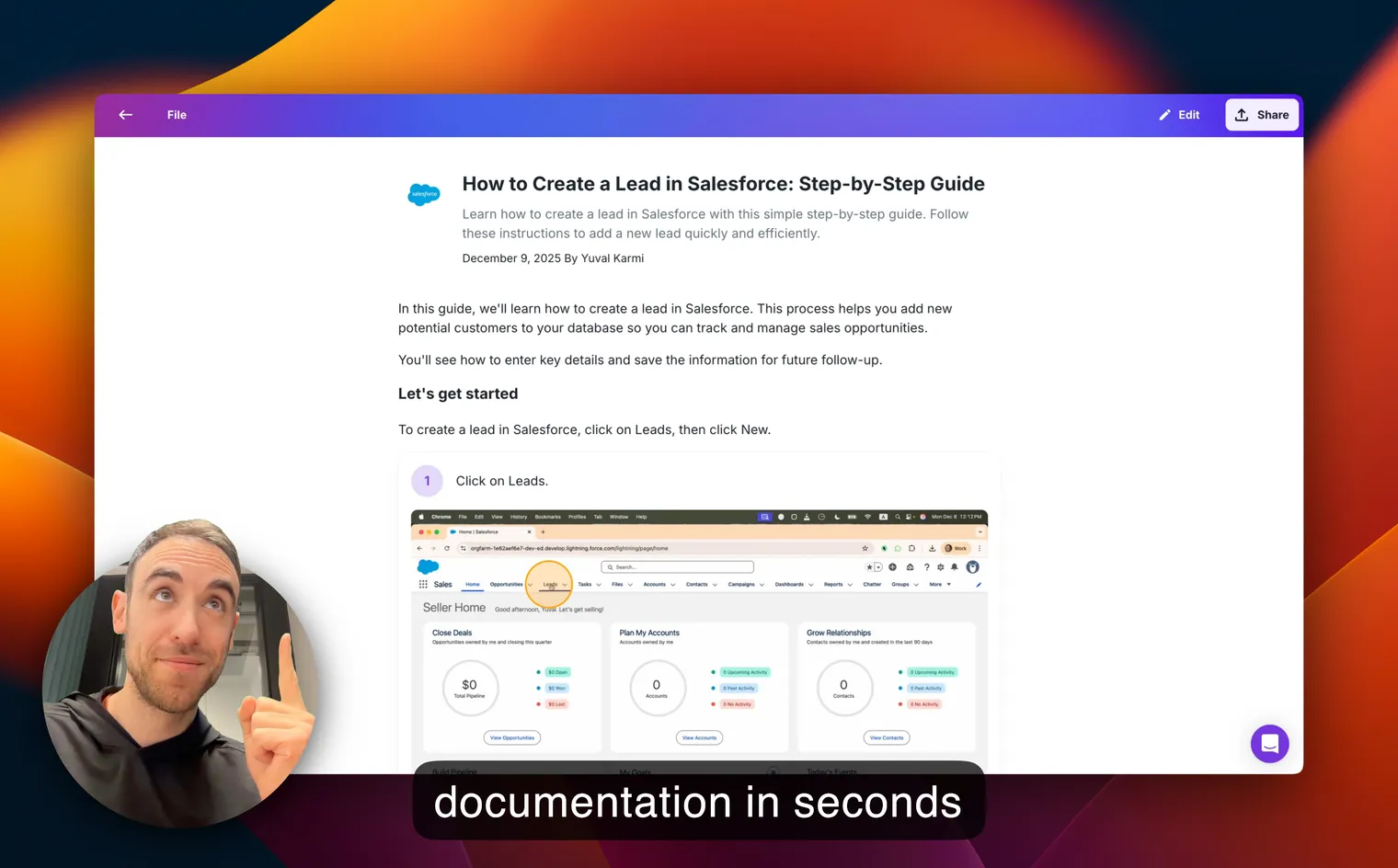
Teach your co-workers or customers how to get stuff done – in seconds.

Why Knowledge Sharing Tools Matter in 2026
The numbers tell it better than I can.
According to McKinsey’s research on social technologies, a good knowledge sharing platform can reduce time lost searching for information by up to 35% and lift organization-wide productivity by 20-25%.
What really caught my eye, though: companies with knowledge sharing software see 25% higher profitability. Better decisions and faster innovation tend to show up on the balance sheet.
If you run a remote or hybrid team (most of us do now), it matters even more. 80% of organizations now rely on cloud-based platforms to support distributed workforces.
The problem usually isn’t a lack of information. It’s that the information sits scattered across too many tools. 36% of companies use three or more knowledge base platforms, and 31% of employees don’t even know how many tools they have.
That fragmentation is exactly what we’re trying to fix.
Knowledge Sharing Platform vs. Knowledge Sharing Tool
People use these terms interchangeably. There’s a distinction worth making before you shop, though.
A knowledge sharing tool is usually point-focused. It does one job well: a wiki for docs, a screen recorder for how-tos, a chatbot that answers FAQs. A knowledge sharing platform is the broader system that ties capture, storage, search, verification, permissions, and analytics into one source of truth your whole team works inside.
In practice, most of the products below land somewhere on that spectrum. Guru, Confluence, and Bloomfire act like full platforms. A knowledge base built from scratch, or a single capture tool like Glitter AI, starts focused and grows into a platform as you add structure.
The label matters less than whether the product covers the knowledge base best practices your team actually needs. Whether people will use it comes down to your knowledge sharing culture as much as the software.
The 2026 Knowledge Sharing Landscape
A few major trends are reshaping how teams share knowledge this year.
AI-Powered Search
This is the big one. 70% of organizations now use AI-powered systems to speed up information retrieval, a shift we unpack in our guide to AI knowledge management.
It’s no longer plain keyword matching. Modern AI reads context, user intent, and workflow patterns, and it can surface knowledge before you even think to search for it.
38% of KM teams use AI to recommend content or knowledge assets. The payoff? AI-powered tools improve information retrieval by 40%.
In-Workflow Delivery
Knowledge doesn’t help much if people have to leave their workflow to find it.
The best tools now plug straight into Slack, Teams, your CRM, or wherever your team actually works. The answer shows up in context, right when you need it.
Content Health Automation
Outdated knowledge is worse than no knowledge at all.
Modern platforms lean on AI to flag stale content, catch duplicates, and suggest updates when something nearby changes. Some go further and nudge subject matter experts to re-check accuracy on a schedule.
That keeps your knowledge base trustworthy without someone babysitting it full time.
Expert Verification Workflows
Speaking of verification. 82% of employees say efficient knowledge management improves productivity, but only when they trust what they’re reading.
The best platforms now bake in a way to assign experts to verify and update content. That keeps things accurate and kills the “I’m not sure if this is still current” hesitation.
Personalized, Role-Based Content
Not everyone needs to see everything.
AI-powered platforms now tailor what surfaces to your role, department, and workflow. Sales sees sales content. Support sees support content. Everyone gets what’s relevant without wading through the noise.
Create documentation in minutes with AI. No more manual screenshots or formatting.
The Best Knowledge Sharing Tools for 2026
Alright, the actual tools. I’ve grouped them by what they do best.
Guru: AI-Powered Knowledge Delivery
Best for: Teams that need knowledge delivered everywhere they work
Guru pitches itself as the AI Source of Truth for your company, and if a wiki-style tool is more your speed, it’s worth scanning the best Tettra alternatives too. This knowledge sharing platform connects what your teams know, makes it reachable everywhere you work, and keeps it accurate on its own.
What makes it stand out:
The AI doesn’t stop at keywords. It reads context and intent, weighing your role, your current workflow, and your query patterns to surface what’s actually relevant.
Guru packages information into “knowledge cards,” bite-sized formats that can hold anything from company policies to FAQs to best practices.
The verification system is solid. Subject matter experts get prompted to confirm accuracy on a regular cadence, which keeps stale content from creeping into your knowledge base.
Integration game:
Guru hooks deeply into Slack, Salesforce, Microsoft Teams, SharePoint, Confluence, Google Drive, and pretty much every tool you already touch. Knowledge shows up in your workflow, not in some separate app you have to remember exists.
My take:
If you need verified, accurate knowledge delivered in-context across a bunch of tools, Guru is hard to beat, though it’s worth weighing against the best Guru alternatives before you commit. The AI assistant can even help create and translate content into over 100 languages, which is clutch for global teams.
Confluence: The Enterprise Standard
Best for: Large organizations already using Atlassian tools
Confluence from Atlassian has been the corporate wiki standard for years. Powerful, deeply featured, the works.
What it does well:
Confluence is at its best with hierarchical, structured documentation. Project docs, meeting notes, company-wide policies, all organized in one central workspace.
Customization runs deep. Custom templates, layouts, and integrations with a long list of third-party tools let you shape it around enterprise needs.
Already on Jira or other Atlassian tools? The integration just clicks.
The catch:
Confluence has a steep learning curve. The power is real, but so is the complexity, and smaller teams often find it overkill.
Pricing starts at $5.50 per user per month for the Standard plan.
My take:
A strong fit for larger, cross-functional teams that need structure and hierarchy, especially if you already live in the Atlassian ecosystem. If you’re a small team after something simple, look elsewhere.
Slite: Async-First Knowledge Base
Best for: Remote and async-first teams
Slite is an online knowledge base built for teams spread across time zones that need to share knowledge without live meetings, though it pays to browse the best Slite alternatives before locking in.
What makes it different:
Slite is built around asynchronous collaboration. Decision logs track the choices a team makes, topic-based channels organize content, and threaded comments keep discussions in one place.
You can “verify” documents to mark the current version, so your team always knows which pages to trust.
The interface is clean and easy to pick up. Where Confluence aims at technical audiences, Slite is meant for the whole company.
User satisfaction:
Slite carries an excellent 92% user satisfaction rating against Confluence’s 83%.
Limitations:
No built-in task management, so you’ll bolt on a separate tool for that.
My take:
Running a remote team and want something everyone can use without training? Slite is a solid pick.
Lindy: AI Assistant for Knowledge
Best for: AI-powered knowledge retrieval and automation
Lindy comes at this from a different angle. You build role-specific AI assistants that answer questions, summarize updates, or flag content that’s gone stale.
How it works:
Lindy can search CRM fields, project docs, and shared drives, then pull the full context into a single answer.
AI-powered analytics show which questions come up most and where the knowledge gaps sit.
Security:
SOC 2, SSO, 2FA, and audit logs. Enterprise-grade compliance and encrypted storage.
Pricing:
A free tier with 400 monthly credits and a 1M character knowledge base, enough to pilot most internal workflows.
My take:
Want to experiment with AI-powered knowledge retrieval without a big commitment? Lindy’s free tier is ideal. The assistant approach really shines on the repetitive questions you answer ten times a week.
Teach your co-workers or customers how to get stuff done – in seconds.
Bloomfire: Social Learning Platform
Best for: Teams that want social, collaborative knowledge sharing
Bloomfire is a cloud-based knowledge sharing platform with social learning and collaboration at its center.
Key features:
AI-generated tags take the grunt work out of organizing data and push frequently accessed information to the surface.
AI-powered search indexes the words inside every file, video included, so you can jump straight to the spot you need. Automated tagging, custom filters, and search suggestions give you several routes to the same answer.
The “self-healing knowledge base” uses AI to flag outdated or redundant content before it muddies your search results.
Integrations:
Connects cleanly with Slack, Dropbox, Google Drive, and the other usual suspects.
My take:
Bloomfire suits teams that live or die by quick, accurate access to information. Customer service departments, sales and marketing teams, and research teams sharing data-driven findings all fit the mold.
Notion: Flexible All-in-One Workspace
Best for: Teams who value flexibility and already use Notion
Notion wasn’t built for knowledge sharing, but plenty of teams bend it to the job.
Pros:
Wildly customizable. Wikis, notes, databases, and project trackers all live in one place.
Handles big knowledge bases well, with solid collaboration tools.
Fair pricing next to the enterprise options.
Cons:
The more complex setups take a while to learn, and things get messy fast without discipline.
Adding screenshots and images is clunky.
Nothing built specifically for process documentation or knowledge verification.
My take:
Notion works if you’re already invested in it. Just remember it’s a general tool, not a dedicated knowledge management one, so you’ll have to roll your own systems for verification and content health.
Knowmax: AI-Powered Single Source of Truth
Best for: Customer experience and contact center teams
Knowmax is an AI-powered knowledge management system built to give organizational knowledge a single source of truth.
What sets it apart:
AI-guided knowledge management lets teams reach accurate, relevant information across channels, which keeps the customer experience consistent and mistake-free.
It’s a no-code DIY platform, so almost anyone can get going. The content modules are built to break complex knowledge into formats people can actually digest.
Analytics:
You get a read on average content usage, engagement patterns, top-searched keywords, and time spent on each piece.
The AI search engine combs the knowledge base and returns instant answers with the source attached.
Integrations:
It connects with the CX tools you already run, like CRM, chat, and phone, so agents grab exactly what they need the moment they need it.
My take:
If your aim is mistake-proof customer support across channels, Knowmax was built for it. For general internal knowledge sharing, it’s less of a fit.
ClickUp: Work Management Meets Knowledge
Best for: Teams that want to consolidate work apps
ClickUp pulls 20+ work apps under one roof. Tasks, docs, wikis, chat, the lot.
Knowledge Management Features:
Turn any Doc into a verified wiki and build an official knowledge base for the whole company.
ClickUp Brain (their AI) can search every Doc, wiki, task, and comment across your Workspace and hand back precise answers on the spot.
Connected Search puts every file, doc, and conversation one click away from your home page.
AI Autopilot Agents read your workspace content and can surface answers, automate repetitive tasks, and deliver insights without you lifting a finger.
Version control:
Roll back changes without drama. ClickUp logs every edit with automatic version tracking.
Security:
Decide who views and edits what, down to a fine grain, with advanced permissions.
The productivity claim:
Teams reclaim 5+ hours every week with ClickUp. That’s over 250 hours a year per person.
My take:
Already managing projects in ClickUp? Using it for knowledge management is a natural extension, and the all-in-one setup cuts down on context-switching. If knowledge management is all you need, though, it’s probably more than you want.
Must-Have Features in 2026
From my own research and a few hard lessons, here’s what to look for:
AI-Powered Search
Non-negotiable. Your team shouldn’t burn hours hunting for information.
Look for tools that grasp context and intent, not ones that only match keywords.
Document Versioning
Knowledge changes. You need to see who changed what, and roll back when it goes sideways.
Real-Time Collaboration
Several people should be able to edit, comment, and contribute at once.
Permissions and Access Control
Not everyone needs to see everything. Granular permissions keep sensitive information where it belongs.
Content Verification
Subject matter experts should be able to confirm accuracy and schedule reviews.
Templates
Consistent formatting saves time and makes knowledge easier to read.
Integrations
The tool has to play nice with what you already run. Slack, Teams, Google Drive, your CRM, whatever it is.
Bonus: Multilingual Support
Running a global team? Translation features are clutch.
Bonus: Analytics
Which content gets used most? What do people keep asking? Where are the gaps?
Good analytics turn a static knowledge base into something that keeps getting better.
Capture processes before they walk out the door. Create documentation automatically with AI.
The Real Benefits of Knowledge Sharing Tools
Here’s what actually changes once a good system is in place:
Preserve Institutional Knowledge
35% higher innovation rates for organizations that promote knowledge management.
When knowledge lives only in people’s heads, it walks out the door with them. A good knowledge sharing system catches it and holds onto it.
I learned this the hard way at my last startup. Every departure cost us months of hard-won wisdom about how things really worked.
Document Best Practices
Rather than reinventing the wheel every time, teams build on what already works.
That’s a big deal for standard operating procedures and any process that has to stay consistent.
Onboard New Hires Faster
Customer support efficiency increases by 25% with knowledge management tools.
New hires can look things up instead of tapping a teammate on the shoulder every ten minutes. Onboarding speeds up, and the load on your existing team drops.
We’ve watched companies cut onboarding from weeks to days simply by having proper onboarding material that teaches the job ready to go.
Reduce Time Wasted Searching
Remember that stat from earlier? McKinsey found knowledge management can reduce time lost searching by up to 35%.
That’s huge. If your team spends even 2 hours a day searching, that’s over an hour per person, per day, back in their pockets.
Improve Collaboration
Collaboration between teams improves by 40% with shared knowledge platforms.
When everyone pulls from the same source, cross-functional projects run smoother. Fewer rounds of “I didn’t know we already had that” and “Why didn’t anyone tell me?”
Enable Remote Work
80% of organizations rely on cloud-based platforms to support remote and hybrid workforces.
Distributed teams need knowledge they can reach on their own schedule. The right tool makes location beside the point.
How to Choose the Right Tool
Here’s the framework I use:
1. Start with Your Workflow
Don’t pick a tool and bend your team around it. Pick the one that fits how you already work.
Live in Slack? Get something with deep Slack integration. All-in on Atlassian? Confluence makes sense.
2. Consider Your Team Size
Small teams (5-20 people) need simplicity. Slite, Notion, or Lindy work well as your best knowledge base platform.
Medium teams (20-100 people) want more structure without sacrificing ease of use. Guru or Bloomfire fit here.
Large enterprises (100+ people) need solid permissions, integrations, and customization. Confluence or ClickUp.
3. Evaluate Technical Expertise
Be honest about your team’s technical chops.
Got a learning & development team that loves building systems? Notion or Confluence give you room to play.
Need something that works on day one with no configuration? Slite or Guru are the safer bets.
4. Think About Content Types
What kind of knowledge are you sharing?
Process documentation: Glitter AI, Guru, or Knowmax
Meeting notes and decisions: Slite or Notion
Technical documentation: Confluence or GitBook
Customer support content: Knowmax or Bloomfire
General company wiki: Guru, Confluence, or Notion
5. Budget Realistically
Look at total cost, not just the per-seat sticker price.
Some tools charge per creator, some per viewer, some per document. Run the math for your actual team size.
Free tiers are great for kicking the tires, but factor in what happens once you scale.
6. Test Before Committing
Most tools offer free trials. Use them.
Put your real team on it doing real work. Evaluating in a vacuum tells you almost nothing.
Then watch. Do people actually use it? Does it match the workflow? Are you finding things faster?
Frequently Asked Questions
What are knowledge sharing platforms?
Knowledge sharing platforms are software systems that capture, organize, and surface a team's collective knowledge in one searchable place so the right answer is available the moment someone needs it. Modern platforms combine AI-powered search, in-workflow delivery, version control, permissions, and content verification. The leading options for 2026 include Guru, Confluence, Slite, Bloomfire, Notion, and ClickUp.
What are knowledge sharing tools?
Knowledge sharing tools are software platforms that help teams capture, organize, and access organizational knowledge in one centralized location. They typically include features like search, collaboration, version control, and integrations with other work tools.
What's the difference between knowledge sharing and knowledge management?
Knowledge sharing focuses on distributing information across teams, while knowledge management encompasses the entire lifecycle. Creating, storing, sharing, and maintaining knowledge. Good knowledge management tools include sharing capabilities, but also verification, analytics, and content health features.
How much do knowledge sharing tools cost?
Pricing varies widely. Free tiers exist for Notion, Lindy, and Confluence. Paid plans range from $5-15 per user per month for basic plans, up to $50+ per user for enterprise features. Always calculate total cost based on your actual team size and needs.
Can knowledge sharing tools integrate with existing software?
Yes. Most modern platforms integrate with Slack, Microsoft Teams, Google Workspace, Salesforce, and other common tools. The best integrations deliver knowledge directly in your workflow rather than requiring you to switch apps.
How do I get my team to actually use a knowledge sharing tool?
Make it frictionless. Choose a tool that fits existing workflows, not one that requires behavior change. Populate it with actually useful content before launch. Integrate it where people already work. And lead by example. If leadership doesn't use it, nobody will.
What are the best free knowledge sharing tools?
Notion, Lindy, and Confluence all offer free tiers with limitations. Glitter AI charges per creator with no viewer fees for embedded guides.
How do AI-powered knowledge tools work?
AI-powered tools use natural language processing to understand context and intent, not just keywords. They can surface relevant content proactively, flag outdated information, suggest updates, and even answer questions by synthesizing information from multiple sources.
Should we use one knowledge tool or multiple?
Ideally one, but reality is often messier. 36% of companies use three or more knowledge management tools. The key is integration. If your tools talk to each other and you have a universal search, multiple tools can work. But fragmentation kills productivity, so consolidate where possible.
The Bottom Line
Knowledge sharing isn’t about hoarding information. It’s about making that information reachable, trustworthy, and useful at the exact moment someone needs it.
The right tool depends on your team size, technical expertise, budget, and workflow. There’s no universal “best.”
Here’s what I’m sure of, though: the cost of not having a knowledge sharing system runs far higher than the cost of standing one up.
Those hours lost searching? The knowledge that leaves when people leave? The wheel reinvented every week because nobody wrote it down the first time?
It piles up into real productivity loss and opportunities you never see.
If process and procedure documentation is your specific need, I built Glitter AI to make it almost embarrassingly easy. Record your screen while you talk through a process, and AI writes the documentation for you. No manual screenshots, no formatting.
But honestly? Pick whatever tool your team will actually use. A simple system people open beats a sophisticated one that gathers dust.
Start small. Document one critical process or area of knowledge. See what sticks. Go from there.
Your future self (and your team) will thank you.
Create process documentation in minutes with AI. Start for free.