
Read summarized version with
I was three months into running my first startup when Sarah, our best accounting associate, gave her two weeks’ notice.
My first thought wasn’t “How will we replace her?” It was “How does she actually DO half this stuff?”
Sarah had been processing invoices, reconciling accounts, and managing vendor payments for over a year. She did it perfectly. But when I asked her to train her replacement, I realized none of it was written down. She just… knew.
We scrambled to document everything before she left. It took 60+ hours. We still missed critical details that only surfaced weeks after she was gone.
That’s when I learned about desktop procedures the hard way.
I’m Yuval, founder of Glitter AI, and after years of running companies and watching knowledge walk out the door with departing employees, I’ve become somewhat obsessed with documentation. Desktop procedures aren’t sexy, but they’re essential. Here’s everything you need to know.
Teach your co-workers or customers how to get stuff done – in seconds.

What is a Desktop Procedure?
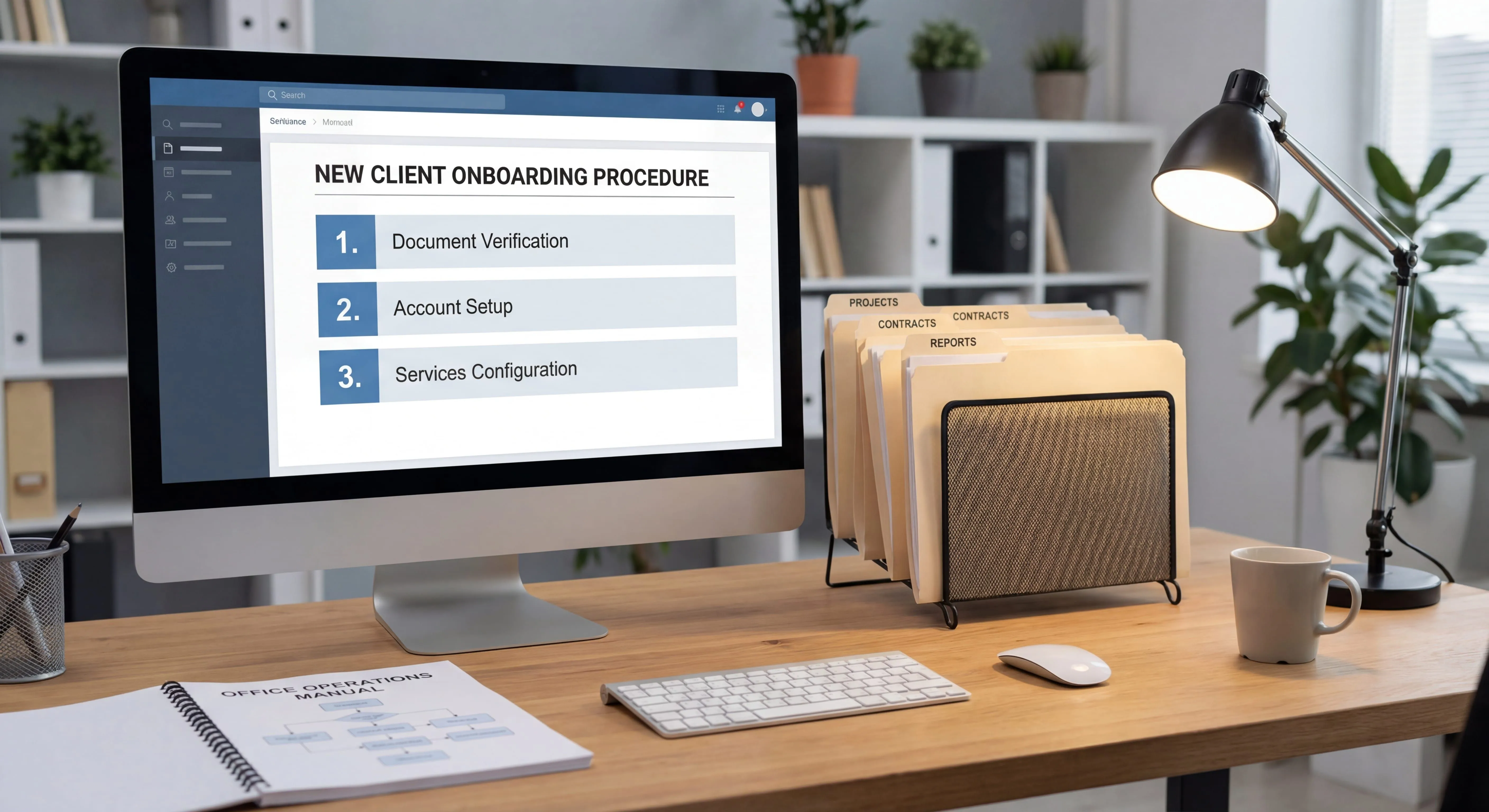
A desktop procedure (sometimes called a “desk procedure”) is a step-by-step guide for tasks performed at a computer workstation. Think of it as an instruction manual for your job.
Desktop procedures document the “how-to” for routine computer-based tasks like:
- Processing expense reports in your accounting software
- Running month-end close procedures
- Managing customer refund requests in your CRM
- Generating weekly sales reports
- Approving timesheets in your HR system
- Reconciling bank statements
The defining characteristic is that these procedures are for tasks performed primarily on a computer. They’re different from general SOPs because they focus specifically on digital workflows.
Desktop procedures originated in finance and accounting departments where knowledge transfer and accuracy are critical. But they’re valuable in any role where someone sits at a computer doing repeatable tasks, right down to a digital marketing SOP for recurring campaign work.
Why Desktop Procedures Matter
Let me give you some numbers that might make your stomach turn.
According to research, companies lose up to 20-30% of their annual revenue due to inefficient processes and poor knowledge management. Much of that comes from undocumented desktop procedures.
Here’s what happens without desktop procedures:
Knowledge lives in people’s heads. When Sarah quit, we lost a year of accumulated shortcuts, workarounds, and tribal knowledge. Her replacement spent three months getting up to speed on tasks that should have taken three weeks.
Mistakes multiply. Without documented procedures, everyone does things slightly differently. Some of those differences create errors. Those errors compound.
Training is impossible. How do you train someone when there’s nothing to reference? You watch over their shoulder for weeks. That’s expensive.
Vacation becomes a crisis. Ever been the only person who knows how to do something critical? Your vacation doesn’t feel like a vacation when you’re fielding panicked calls.
The Real Benefits of Desktop Procedures
When you actually document your desktop procedures, here’s what changes:
1. Faster Onboarding
New employees can follow documented procedures instead of interrupting busy team members every five minutes. I’ve seen onboarding times cut in half when good desktop procedures exist.
2. Consistency and Accuracy
When everyone follows the same procedure, you get the same result. This kind of process standardization matters enormously in areas like accounting, compliance, and customer service where consistency isn’t optional.
3. Business Continuity
Someone gets sick? Goes on vacation? Quits unexpectedly? If their procedures are documented, someone else can step in immediately. No scrambling, no crisis.
4. Easy Cross-Training
Desktop procedures make it simple to train team members on each other’s tasks. This creates redundancy and prevents single points of failure.
5. Easier Audits
For regulated industries, documented procedures demonstrate to auditors that you have proper controls in place. They also make it easier to identify where controls might be weak, which is a big part of why SOPs matter for any business.
Glitter AI captures your desktop procedures automatically as you work
Desktop Procedures vs SOPs vs Work Instructions
People get confused about the terminology, so let’s clarify.
Standard Operating Procedures (SOPs) are formal, structured documents that cover broader processes, and the term itself is sometimes written as a standing operating procedure. They’re used for compliance-sensitive or safety-critical procedures where following exact steps is mandatory.
Work Instructions are detailed, granular guides for specific tasks within a larger process. They’re the “zoom in” view, and the difference between SOPs and work instructions trips up a lot of teams.
Desktop Procedures fall somewhere in between. They’re more practical and less formal than SOPs, but more comprehensive than simple work instructions. They focus specifically on computer-based workflows.
Think of it this way:
- An SOP might cover “Customer Refund Process” across all channels
- A desktop procedure would cover “How to Process a Customer Refund in Shopify”
- A work instruction would cover “How to Enter Refund Amount in Shopify Payment Field”
Desktop procedures are the sweet spot for most office work. They’re detailed enough to be useful, but not so formal that they take forever to create and maintain.
What Should a Desktop Procedure Include?
I’ve reviewed hundreds of desktop procedures over the years. The good ones share common elements:
1. Clear Title and Purpose
Bad title: “Monthly Process”
Good title: “How to Run Month-End Close in QuickBooks Online”
The title should tell you exactly what task the procedure covers. The purpose section explains why this procedure exists and when to use it.
2. Prerequisites
What does someone need before starting? This might include:
- Required system access or permissions
- Information they need to have ready
- Previous tasks that must be completed first
- Tools or software required
Don’t assume people know what they need. State it explicitly.
3. Step-by-Step Instructions
This is the core. Each step should:
- Describe one action
- Be written in active voice (“Click Submit” not “The Submit button should be clicked”)
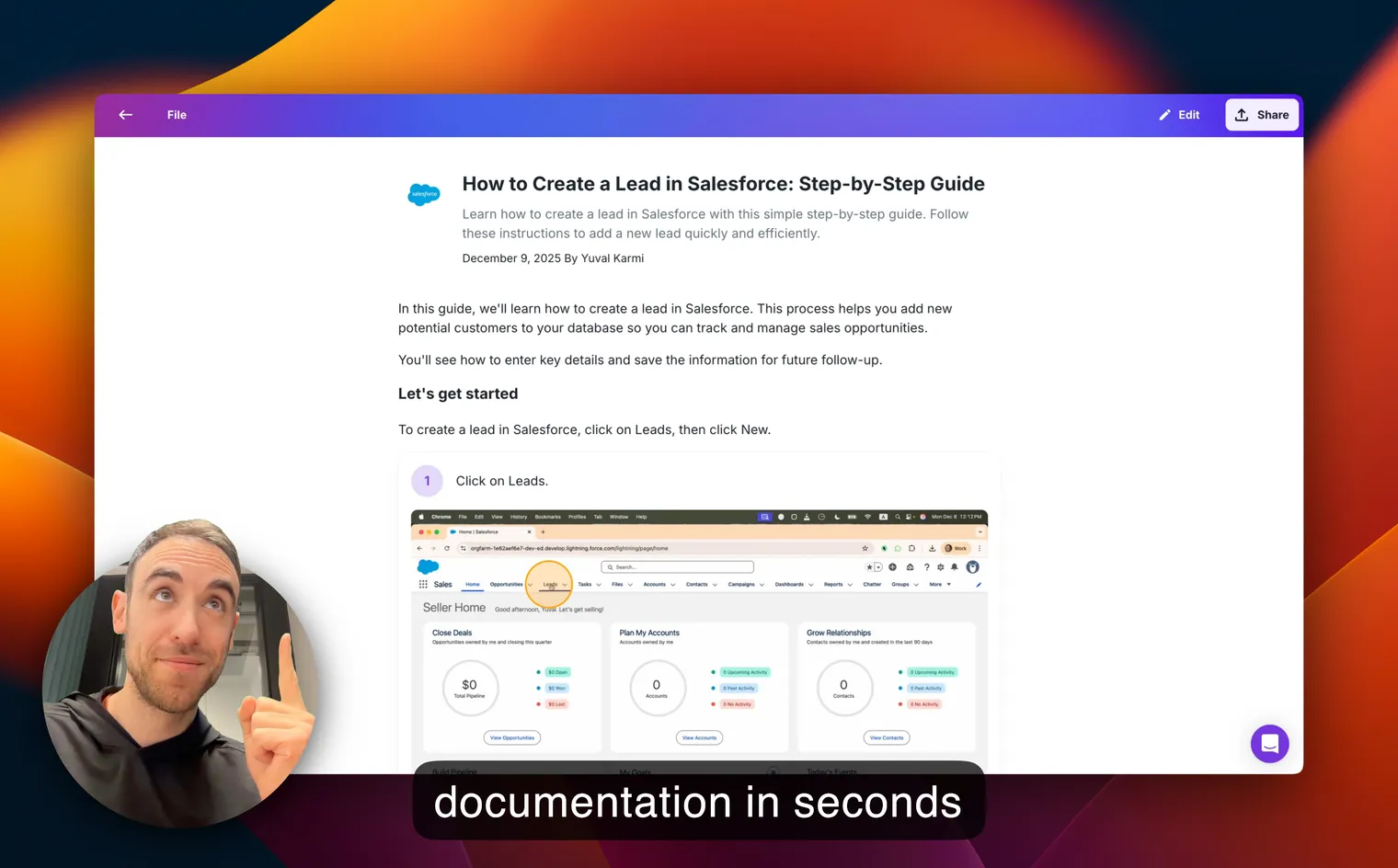
- Include a screenshot when relevant
- Explain what you’re doing and why
I can’t stress the screenshot part enough. Visual confirmation is huge. When someone sees a screenshot matching their screen, they know they’re on the right track.
4. Validation Steps
How do you know you did it right? Include checkpoints throughout the procedure where users can verify they’re getting the expected result.
For example: “After clicking Submit, you should see a green confirmation banner that says ‘Payment Processed Successfully.’”
5. Common Issues and Troubleshooting
What goes wrong most often? How do you fix it?
This section saves enormous time. Instead of people interrupting you every time they hit a snag, they can reference the troubleshooting guide.
6. Contact Information
Who can help if something goes wrong that isn’t covered in the troubleshooting section? Include a name and contact method.
7. Revision History
When was this procedure last updated? What changed? Who updated it?
This helps people know whether they’re looking at current information or a stale document that references software from three versions ago.
How to Create a Desktop Procedure
Here’s the process that actually works:
Step 1: Pick the Right Task to Document
Not everything needs a desktop procedure. Focus on tasks that are:
- Performed regularly (weekly, monthly, quarterly)
- Done by multiple people or will need to be handed off
- Complex enough that mistakes happen
- Critical to business operations
Start with one high-value procedure. Don’t try to document everything at once.
Step 2: Shadow the Expert
Find the person who does this task best. Watch them do it from start to finish. Take notes.
Ask questions:
- “Why did you do it that way?”
- “What mistakes have you made before?”
- “What do you do when X happens?”
The person doing the work daily knows things that aren’t obvious to anyone else. Capture that tribal knowledge.
Step 3: Do It Yourself While Documenting
Now perform the task yourself while writing down each step. This forces you to catch every detail.
Take screenshots as you go. You’ll need them.
This is where traditional documentation gets tedious. Opening a screenshot tool, capturing the image, pasting it into a document, adding annotations… it takes forever.
That’s actually why I built Glitter AI. It captures screenshots automatically as you click through a process. You just narrate what you’re doing, and it converts your voice to written steps. A 15-minute procedure that used to take hours to document now takes 15 minutes.
But however you do it, document while doing. Don’t rely on memory afterward.
Step 4: Test with a Beginner
This is the step everyone skips. Don’t skip it.
Find someone who has never done this task. Give them your procedure. Watch them try to follow it without helping.
You will immediately discover:
- Steps you forgot to include
- Instructions that seemed clear but aren’t
- Jargon they don’t understand
- Screenshots that don’t match what they see
Fix these issues before publishing.
Step 5: Get It Reviewed
Have the expert who does this task regularly review your documented procedure. They’ll catch inaccuracies and outdated information.
If the procedure involves compliance or financial controls, have a manager or compliance officer review it too.
Step 6: Publish and Train
Put the procedure somewhere accessible. Your team needs to know:
- That it exists
- Where to find it
- When to use it
Walk through it with the people who will use it. Answer questions. Make sure they actually know it’s available.
Step 7: Schedule Reviews
Before you publish, schedule the first review. Put it on your calendar.
Desktop procedures for tasks that involve software should be reviewed every quarter. The software changes, edge cases emerge, better ways of doing things are discovered.
Assign an owner responsible for keeping each procedure current.
Teach your co-workers or customers how to get stuff done – in seconds.
Desktop Procedure Best Practices
These tips will make your desktop procedures significantly more effective:
Use Active Voice and Present Tense
Bad: “The report should be generated by selecting the date range”
Good: “Select the date range”
Active voice is clearer and more direct. It tells people what to do instead of describing what should happen.
One Action Per Step
Bad: “Click Submit, wait for the confirmation screen, take a screenshot of the confirmation number, and paste it in the tracking spreadsheet”
Good:
- Click Submit
- Wait for the confirmation screen to appear
- Screenshot the confirmation number
- Paste the screenshot in the tracking spreadsheet
Breaking steps down makes procedures easier to follow and easier to troubleshoot when something goes wrong.
Include Screenshots for Every Screen
This can’t be overstated. Screenshots provide:
- Visual confirmation that users are in the right place
- Clarity about what buttons to click
- Context for what a completed field should look like
Annotate screenshots with arrows, circles, or highlights to draw attention to the relevant parts.
Explain the “Why” Briefly
People follow procedures better when they understand the reasoning.
Example: “Save the file as a PDF (this ensures formatting is preserved when the client opens it)”
One sentence of context can prevent shortcuts that cause problems.
Use Consistent Formatting
Pick a template and stick with it. When every desktop procedure looks different, people waste cognitive energy figuring out the format instead of focusing on the content.
I’ve included a template at the end of this guide.
Link Related Procedures
If your procedure references another procedure, link to it. Don’t make people hunt.
For example: “Before running month-end close, complete the [bank reconciliation procedure].”
Keep It Current
Stale procedures are worse than no procedures. They create a false sense of confidence while leading people astray.
Build review and updates into your workflow. When software updates or processes change, update the procedure immediately.
Common Desktop Procedure Mistakes
Learn from mistakes I’ve seen (and made):
Writing Procedures for Things You Don’t Do Yourself
Managers sitting in conference rooms writing procedures for tasks they’ve never performed create documentation that doesn’t match reality.
The best procedures come from people who do the work or are at least heavily informed by them.
Making Them Too Long
I’ve seen 40-page desktop procedures. Nobody reads them.
If your procedure is getting long, you’re probably trying to cover too much. Break it into multiple procedures for sub-tasks.
Assuming Knowledge
“Update the customer record” means different things to different people. Where? Which fields? What format?
Don’t assume people know your jargon, your systems, or your shortcuts. Be explicit.
No Validation Steps
Without checkpoints, people plow through procedures and don’t realize they made a mistake until they’re ten steps ahead. Then they have to backtrack.
Build in validation: “After completing Step 5, you should see X. If you don’t see X, do Y.”
Not Assigning Ownership
Unowned procedures become unmaintained procedures. Every desktop procedure needs someone responsible for keeping it current.
That person doesn’t have to do all the work themselves, but they ensure reviews happen and updates get made.
Record your screen and voice. Glitter AI does the rest.
Desktop Procedure Template
Here’s a template you can use:
DESKTOP PROCEDURE: [Specific Task Name]
PURPOSE:[One sentence: Why does this procedure exist?]
WHEN TO USE:[When should someone follow this procedure?]
PREREQUISITES:- [System access needed]- [Information required]- [Tools/software required]
ESTIMATED TIME: [X minutes]
PROCEDURE:
1. [First action - be specific]   [Screenshot if applicable]   Why: [Brief context if needed]
2. [Second action]   [Screenshot if applicable]   Validation: [How to verify this step worked correctly]
3. [Continue for all steps...]
TROUBLESHOOTING:
Problem: [Common issue 1]Solution: [How to fix it]
Problem: [Common issue 2]Solution: [How to fix it]
NEED HELP?Contact: [Name and contact method]
REVISION HISTORY:[Date] - [What changed] - [Who updated it]
Feel free to adapt this to your needs. The goal is clarity, not perfection.
Tools for Creating Desktop Procedures
You have several options for creating and managing desktop procedures:
Basic Options
Google Docs or Microsoft Word work fine for simple desktop procedures. They’re familiar, collaborative, and free (or included with software you already have).
The downside is manual screenshot management and no built-in version control.
Notion or Confluence add better organization, linking, and collaboration. They work well if your team is already using them.
Specialized Documentation Tools
Process Street focuses on checklists and workflow management. Good if you want procedures that are also trackable tasks.
Trainual is designed for training documentation. Works well if desktop procedures are part of a broader training program.
SweetProcess is dedicated to SOP and procedure management with features like approval workflows and version control.
AI-Powered Tools
This is where things get interesting. Glitter AI - which I built to solve exactly this problem - automatically creates desktop procedures as you work.
Instead of doing the task once to learn it, then doing it again while manually documenting and screenshotting, you do it once. The tool captures your clicks as screenshots and converts your voice narration into written steps.
That 30-step QuickBooks procedure that used to take three hours to document? You can create it in 30 minutes.
I built Glitter because I was frustrated with how tedious traditional documentation was. Nobody wants to spend hours on documentation when they could be doing actual work.
I’ve written a detailed comparison in my process documentation software guide.
Desktop Procedures in Different Departments
Desktop procedures look different depending on the department:
Finance and Accounting
This is where desktop procedures originated. Common procedures include:
- Month-end close steps
- Account reconciliation processes
- Invoice processing workflows
- Expense report approval procedures
- Financial report generation
Accuracy and auditability are critical here. Desktop procedures help ensure consistent application of accounting policies.
Customer Service
Desktop procedures for customer service often cover:
- How to process refunds
- How to escalate complex cases
- How to update customer records
- How to generate customer reports
The goal is consistency in customer experience across all service reps.
HR and Operations
Common desktop procedures include:
- New employee setup in HRIS systems
- Benefits enrollment processes
- Timesheet approval workflows
- Performance review procedures
These procedures often involve multiple systems and handoffs between departments.
Sales
Sales teams need desktop procedures for:
- CRM data entry standards
- Opportunity management workflows
- Quote generation processes
- Contract approval procedures
Good procedures help maintain data quality and ensure no opportunities fall through the cracks.
Getting Started with Desktop Procedures
If you’re starting from scratch, here’s your action plan:
1. Identify your top 3 critical procedures. What tasks, if not done correctly, cause the most problems? Start there.
2. Pick one to document first. Don’t try to do everything at once. You’ll burn out.
3. Shadow the expert. Watch them do it. Ask questions. Understand not just the “what” but the “why.”
4. Document while doing. Perform the task yourself while capturing every step and screenshot.
5. Test with a beginner. This step reveals all the gaps in your documentation.
6. Publish and train. Make sure people know it exists and how to access it.
7. Schedule a review. Put it on your calendar for three months out.
8. Repeat. Once you’ve got one solid procedure, move to the next.
The key is starting. One documented procedure is infinitely better than zero.
And if you want to speed up the process significantly, try Glitter AI. It’s free for your first 10 guides, and it’ll show you how desktop procedures can be created in minutes instead of hours.
Frequently Asked Questions
What is a desktop procedure and why do I need one?
A desktop procedure is a step-by-step guide for tasks performed at a computer workstation. You need desktop procedures because they prevent knowledge from walking out the door when employees leave, enable faster onboarding (cutting training time in half), ensure consistency across your team, and allow cross-training so you're not dependent on a single person for critical tasks. Without documented procedures, companies lose up to 20-30% of annual revenue due to inefficient processes and poor knowledge management.
What's the difference between a desktop procedure and an SOP?
Desktop procedures focus specifically on computer-based workflows and are more practical and less formal than SOPs (Standard Operating Procedures). SOPs are formal, structured documents that cover broader processes and are used for compliance-sensitive or safety-critical procedures. Desktop procedures fall between SOPs and simple work instructions - they're detailed enough to be useful but not so formal that they take forever to create and maintain. Think of desktop procedures as the sweet spot for most office work.
How long should a desktop procedure be?
Desktop procedures should be as short as possible while remaining complete. If your procedure exceeds 10-15 pages, it's probably too long and nobody will read it. When a procedure grows too long, break it into multiple procedures for sub-tasks and link them together. The goal is clarity and usability, not comprehensiveness. A concise 3-page procedure that people actually use beats a thorough 40-page document that sits unread in a shared drive.
How often should desktop procedures be updated?
Desktop procedures for tasks involving software should be reviewed every quarter since software updates frequently. For more stable processes, semi-annual or annual reviews work. The most important rule is to update procedures immediately when the underlying process or software changes. Stale procedures are worse than no procedures - they create false confidence while leading people astray. Assign an owner responsible for each procedure to ensure reviews happen and updates get made when needed.
What should be included in a desktop procedure?
Every effective desktop procedure should include: a clear title and purpose statement, prerequisites (required access, tools, or information), step-by-step instructions with one action per step, screenshots for every screen-based step, validation checkpoints to verify correct results, troubleshooting guidance for common issues, contact information for help, and revision history tracking updates. The step-by-step instructions should be written in active voice and present tense (e.g., "Click Submit" not "The Submit button should be clicked") with brief explanations of why certain steps matter.
Who should write desktop procedures?
Desktop procedures should be written by or heavily informed by the people who actually perform the tasks daily. Managers writing procedures for tasks they've never done create documentation that doesn't match reality. The person doing the work knows the shortcuts, potential mistakes, and practical details that aren't obvious on paper. However, procedures should be reviewed by managers or compliance officers before publishing, especially for tasks involving financial controls or regulatory compliance. The combination of practitioner knowledge and management oversight creates the most accurate and useful procedures.
How do you test if a desktop procedure is effective?
The best test is to have someone who has never performed the task try to follow your procedure without any assistance. Watch them work through it and resist helping unless they're completely stuck. You'll immediately discover forgotten steps, unclear instructions, confusing jargon, and screenshots that don't match what users see. If they can successfully complete the task following your procedure alone, it's effective. If they keep getting stuck or asking questions, those are the exact spots where your procedure needs improvement before you publish it.
Final Thoughts
Desktop procedures aren’t glamorous. Nobody gets excited about documentation.
But here’s what I know after years of running companies: the boring stuff is what makes businesses work.
When Sarah left, we scrambled. We stayed late. We stressed. We made mistakes. All because we hadn’t documented the basics.
Don’t wait for someone to quit to realize you need desktop procedures. Don’t wait for a critical mistake to happen because someone didn’t know the right way to do something.
Pick one procedure. Document it this week. You’ll thank yourself later.
Glitter AI makes it as easy as doing the task once