

Read summarized version with
Choosing process documentation software looks straightforward until you actually start comparing options. Then it gets complicated fast.
I know because I lived it. Back when I was running my first startup, I cycled through Google Docs, wiki tools, workflow apps, and pricey enterprise platforms, the kind of churn that wears teams down, never landing on a single source of truth. Most of them turned documentation into busy work, so the documentation never actually happened.
That pain eventually pushed me to build Glitter AI. But I want to give you a fair look at what’s out there, because different teams have different needs.
I’m Yuval, founder of Glitter AI. Here’s what I’ve learned about the best process documentation software for 2026. If you want the deeper playbook alongside this tool roundup, see how an AI SOP generator fits into it.
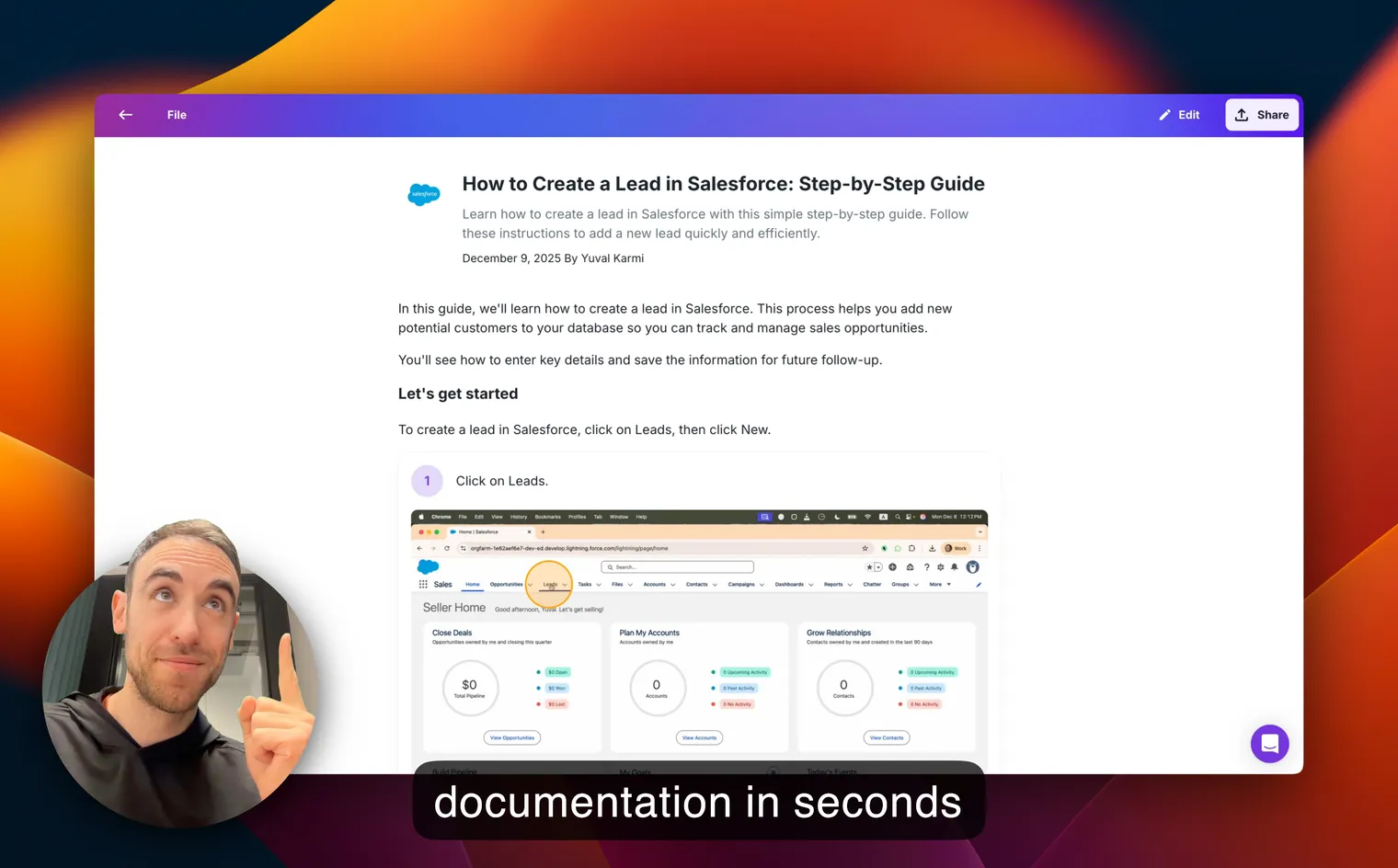
Teach your co-workers or customers how to get stuff done – in seconds.

What to Look for in Process Documentation Software
Before we get into specific tools, let’s cover what really matters when you’re evaluating options.
Ease of Use
A complicated documentation tool is a tool nobody uses. The good ones feel natural right away.
Visual Capabilities
Screenshots and images make or break documentation. Adding them should be quick and painless. That’s why visual work instructions are so effective.
Collaboration
You’re not writing docs alone. Teams need to create, review, and update together.
Searchability
Docs that people can’t find are worthless. Strong search is non-negotiable.
Integrations
Whatever you pick should work with the tools your team already relies on.
Maintenance Features
Docs get outdated quickly. Version control, review reminders, and easy editing help keep documentation current.
Price
Think about total cost, not just the sticker price. Some tools charge per creator, some per viewer, some per document.
Category 1: General-Purpose Tools
These weren’t built for process documentation specifically, but plenty of teams make them work.
Google Docs / Microsoft Word
Best for: Small teams with basic needs
Pros:
- Free or already bundled in your subscription
- Everybody knows how they work
- Collaboration is simple
- Offline access
Cons:
- No structure built for documentation
- Managing lots of docs gets chaotic
- Screenshot and annotation tools are limited
- No way to schedule reviews or track versions
My take: Fine for getting started. But once your doc library grows, you’ll feel the pain.
Notion
Best for: Teams who value flexibility and already live in Notion
Pros:
- Very customizable
- Works well for big knowledge bases
- Solid collaboration tools
- Fair pricing
Cons:
- Takes time to learn the more complex setups
- Can get messy without discipline
- Adding screenshots isn’t great
- No features designed for processes
My take: Notion works if you’re already invested in it, though teams outgrowing a lightweight wiki often weigh the best Tettra alternatives too. Just know it’s a general tool, not purpose-built for documentation.
Confluence
Best for: Teams deep in the Atlassian world (Jira users, basically)
Pros:
- Tight integration with Atlassian products
- Technical teams tend to like it
- Good templates and macros
- Strong permission controls
Cons:
- Feels heavy
- Non-technical folks often struggle with it
- Gets expensive as you scale
- Probably overkill for simple docs
My take: If you’re already paying for Confluence, use it. Otherwise, look elsewhere, the same way you’d weigh the best Coda alternatives or other contenders before committing, and if you’re torn between the two general-purpose heavyweights, this Notion vs Confluence breakdown helps.
Category 2: Dedicated Documentation Tools
These tools were made for creating and managing documentation, not shoehorned into it.
Document360
Best for: Customer-facing docs and knowledge bases
Pros:
- Clean, modern interface
- Search works well
- Analytics show you what people actually read
- AI suggestions for improvements
Cons:
- Geared more toward external docs than internal SOPs, so it’s worth weighing the best Document360 alternatives
- Price can climb
- Not built around process documentation
Pricing: Starts around $199/month
Helpjuice
Best for: Support teams building customer knowledge bases
Pros:
- Search is a strong point
- Useful analytics
- Readers get a nice experience
Cons:
- Really aimed at external audiences
- Internal process features are lacking
- On the pricier side
Pricing: Starts around $120/month
Tettra
Best for: Small teams managing internal knowledge
Pros:
- Clean and simple
- Slack integration is handy
- Affordable
Cons:
- Formatting options are limited
- Wasn’t designed with SOPs in mind
- Feature set is thinner than competitors
Pricing: Starts around $8.33/user/month
Category 3: Training & Compliance Platforms
These tools help you manage, track, and execute procedures your team has already written. They’re less about creating documentation and more about making sure people follow it.
Whale
Best for: Teams who want SOPs and training tracking in the same tool
Pros:
- Documentation and training live together, no wiki-to-LMS handoff
- Quizzes and read assignments with due dates
- E-signatures for policy sign-off
- AI drafts SOPs and turns videos into guides
- Unlimited members on paid plans, you pay per creator
Cons:
- Training is only as good as the docs behind it
- Someone has to own review cycles or content drifts
- AI features run on monthly credits
- Entry price is steep for a small team
Pricing: Free plan available, paid starts around $249/month
My take: Whale puts a training layer on top of a documentation library, which is genuinely useful if you need completion tracking and sign-off in one place. The catch is the one every training platform has: keep the docs current, or you’re training people on last year’s process.
Trainual
Best for: Onboarding-heavy teams who need to track training completion
Pros:
- Made for training new employees
- Tracks who’s completed what
- Built-in quizzes and tests
- Helpful templates
- E-signatures for policy acknowledgment
Cons:
- You still have to write all the documentation yourself
- Less useful for docs outside of training
- Costs add up with more users
- Takes some time to learn
Pricing: Starts around $300/month
My take: this onboarding-focused platform is really a learning management system (LMS) disguised as SOP software. Great if you need course completion tracking and quizzes. But the actual documentation? You’re still writing that from scratch.
SweetProcess
Best for: Teams who need structured policy and procedure hierarchies
Pros:
- Clear structure: policies → processes → procedures
- Version control included
- Good for compliance-heavy industries
- AI can help draft initial SOPs
Cons:
- The interface feels a bit dated
- Visual options are limited
- You’re still spending time writing (even with AI drafts)
Pricing: Starts around $99/month
My take: SweetProcess is solid for organizing and managing procedures you’ve already documented. The hierarchy system is genuinely useful for compliance. But creating those docs still takes real time.
Process Street
Best for: Repeatable, checklist-driven workflows that need automation
Pros:
- Really shines for recurring processes
- Strong automation features
- Clean interface
- Integrates with 1000+ tools
- Good for compliance audits
Cons:
- More about workflow execution than documentation creation
- Setup can get complicated
- Pricing is usage-based
Pricing: Free tier available, paid starts around $100/month
My take: Process Street is workflow automation software with a documentation layer. If you need to run the same checklist hundreds of times with tracking and automation, it’s excellent. But it assumes you’ve already written the procedures.
Teach your co-workers or customers how to get stuff done – in seconds.
Category 4: Automatic Documentation Capture
This is fundamentally different from everything above. Instead of writing documentation, you capture it while doing the work.
Glitter AI
I built Glitter AI because I’d lived through the pain of manual documentation too many times.
Best for: Teams who never seem to have time to document
How it works: You do the task while talking through it. Glitter captures your clicks as screenshots and turns your voice into written steps. A process that might take an hour to document the old way takes maybe five minutes.
Pros:
- Documentation creates itself as you work
- Screenshots are built in
- Supports 99 languages
- No viewer fees for embedded guides
- Takes minutes, not hours
Cons:
- You need to talk out loud (awkward in open offices)
- Newer product, still adding features
- Works best for screen-based tasks
Pricing: First 10 guides are free, paid plans after that
My take: I built this because even “good” documentation tools demand hours of work. Every tool in categories 1-3 assumes someone will sit down and write. Glitter changes that equation. Documentation becomes a side effect of doing your job.
Scribe
Best for: Quick guides for software tasks
How it works: this screen-capture tool records your screen and spits out step-by-step guides with screenshots - clicks and screenshots only, no voice narration, so the output often needs editing before it’s useful.
Pros:
- Creating docs is fast
- Chrome extension makes it accessible
- Works well for simple walkthroughs
Cons:
- Steps tend to be generic without narration
- Customization is limited
- Some features sit behind the paywall
Pricing: Free tier exists, Pro runs around $29/user/month
Tango
Best for: Software walkthroughs
How it works: Like Scribe. Captures what you do on screen and builds guides from it.
Pros:
- Simple to use
- Output looks clean
- Free tier is pretty generous
Cons:
- You’ll probably need to edit the output
- Struggles with more complex processes
- Only works for software
Pricing: Free tier available, paid plans vary
How to Choose the Right Tool
Here’s a simple way to think through it:
If you’re just getting started…
Go free. Google Docs, Notion’s free tier, Glitter AI. Build the documentation habit before spending money on software.
If you need compliance-grade documentation…
Check out SweetProcess or Trainual. They offer version control, approval workflows, and audit trails that auditors actually care about.
If documentation keeps falling through the cracks…
Consider AI-powered tools like Glitter AI. Traditional documentation takes too long, and that’s usually why it never happens. When documentation creates itself, that problem goes away.
If you’re constantly onboarding new people…
Trainual and Whale were designed for exactly this. Learning paths, progress tracking, quizzes. Both are good at turning new hires into capable team members, and Whale pairs the training layer with SOP creation rather than assuming the docs already exist.
If you’re documenting for customers…
Document360 and Helpjuice were built for external-facing knowledge bases. They have the search and analytics that matter when customers are the audience.
If budget is your main concern…
Google Docs and a thoughtful folder structure can go further than you’d expect. Not glamorous, but free and familiar to everyone.
Frequently Asked Questions
What is the best free process documentation software?
Glitter AI's free tier gives you 10 guides with automatic capture - including desktop and web support - which is more generous than most free plans. Google Docs and Notion also work well for basic needs if you prefer manual writing. The key difference is time: Glitter creates documentation in minutes while you work, whereas traditional tools require hours of dedicated writing time. Start with whichever matches your biggest bottleneck.
Do I need dedicated documentation software or can I use general tools?
Google Docs or Notion work fine for small teams with basic needs. Dedicated software becomes valuable when documentation keeps getting delayed, you need compliance features like version control, or you're managing dozens of documents. If time is your real blocker, tools like Glitter AI that capture documentation automatically can turn a one-hour writing task into five minutes of narrated work.
How do I get my team to actually use documentation software?
Remove friction. Documentation falls through the cracks because it feels like extra work on top of the actual job. Automatic capture tools like Glitter AI help because documentation becomes a side effect of doing work - you narrate while you do the task, and the guide creates itself. Leadership should document first to set the example, and pick tools that integrate with how your team already works.
Is AI-powered documentation software accurate?
Tools like Glitter AI that capture your actual work - recording clicks as screenshots and transcribing your narration - are accurate reflections of what you did. This is different from AI writing tools that generate content from scratch. The documentation accuracy depends on performing the task correctly, not on AI making things up. Always review before publishing, especially for compliance-critical processes.
How much does process documentation software cost?
Glitter AI starts free (10 guides), then $20/month for Pro or $16/month annually - with no viewer fees for embedded guides so you only pay for creators. SweetProcess starts around $99/month, Trainual starts at $249/month (billed annually) plus an implementation fee. Many tools charge per viewer, which adds up fast. Google Docs is free but requires hours of manual work per document. Factor in time cost: a "free" tool that takes hours per doc may cost more than a paid tool that takes minutes.
What features matter most in process documentation software?
Speed of creation matters most - if documentation takes too long, it won't happen. Look for automatic screenshot capture (adding images manually is tedious), strong search, no viewer fees for embedded content, and version control. Glitter AI captures everything as you work including screenshots and voice narration in 99 languages. The best features are ones that remove friction from both creating and using documentation.
What is the difference between documentation software and training platforms?
Documentation software helps you create procedures. Training platforms like Trainual (starting at $249/month billed annually, plus implementation fee) assume documentation exists and focus on delivery - tracking completion, quizzes, e-signatures. They don't solve the creation problem. Glitter AI is documentation software that makes creation fast through automatic capture. If you need compliance tracking and quizzes, pair a creation tool with a training platform.
My Recommendation
I have a bias toward Glitter AI, obviously. But here’s what I genuinely believe:
The best documentation tool is whatever you’ll actually use.
If documentation has never stuck for you, the issue probably wasn’t motivation. It was time. Traditional documentation just takes too long. That’s exactly why I built something that handles most of the work for you.
But if something else already works for your team, keep using it. The point is documented processes, not any specific software.
If you’re curious about a different approach, Glitter AI is free for your first 10 guides. You might find documentation easier than you thought.
Create your first guide in minutes with Glitter AI