
Read summarized version with
What is an As-Is Process?
An as-is process captures how work actually happens right now. Not how it should happen. Not how people think it happens. It’s a baseline snapshot of your current state that documents every step, decision point, handoff, and workaround that exists in a workflow today. You can’t really improve something unless you understand what you’re starting with.
Organizations tend to use as-is process documentation as the jumping-off point for process improvement projects. When you map the as-is state, inefficiencies, bottlenecks, and redundancies that might otherwise stay hidden start to surface. It also gives teams a shared understanding of what’s actually going on rather than a collection of assumptions, which becomes especially important when multiple departments touch the same workflow.
Here’s the thing about getting an accurate as-is picture: you have to talk to the people who actually do the work, not just review whatever documented procedures exist. Written procedures tend to drift from practice over time. Sometimes significantly. The as-is process map closes that gap by reflecting what’s genuinely happening on the ground.
Key Characteristics of As-Is Process
- Current Reality Focus: Documents how work flows today, including workarounds, exceptions, and informal practices that may not appear in official procedures
- Baseline for Comparison: Serves as the reference point for measuring improvements and designing a future “to-be” state
- Stakeholder Input Required: Built by a process analyst from interviews, observations, and input from people who perform the work daily
- Exposes Hidden Issues: Often reveals inefficiencies, redundant steps, and unclear handoffs that weren’t visible before mapping
- Time-Bound Snapshot: Represents the process at a specific moment; should be updated when significant changes occur
As-Is Process Examples
Example 1: Expense Reimbursement
A finance team maps their as-is expense reimbursement process and finds it involves 12 steps across four departments. Employees submit paper forms to their manager, who signs and forwards to accounting. Accounting enters data manually into two different systems, then routes to a second approver for anything over $500. What the as-is map shows is that 40% of submissions get rejected and sent back due to missing information. That creates a loop that adds days to the cycle.
Example 2: Customer Onboarding
A SaaS company documents their current customer onboarding workflow. The as-is process reveals that sales, customer success, and implementation teams each maintain separate spreadsheets to track progress. Handoffs between teams happen through email, with no standardized checklist in sight. The as-is map makes visible something nobody realized: customers often wait 3-5 days between signing and receiving login credentials because no one owns that specific step.
As-Is Process vs To-Be Process
These two concepts work together as the foundation of any process improvement effort.
| Aspect | As-Is Process | To-Be Process |
|---|---|---|
| Purpose | Document current state exactly as it exists | Design the improved future state |
| Time Frame | Present reality | Desired future outcome |
| Source | Observation and stakeholder input | Analysis, design, and best practices |
| When to use | Before starting any improvement initiative | After analyzing as-is and identifying improvements |
How Glitter AI Helps with As-Is Process
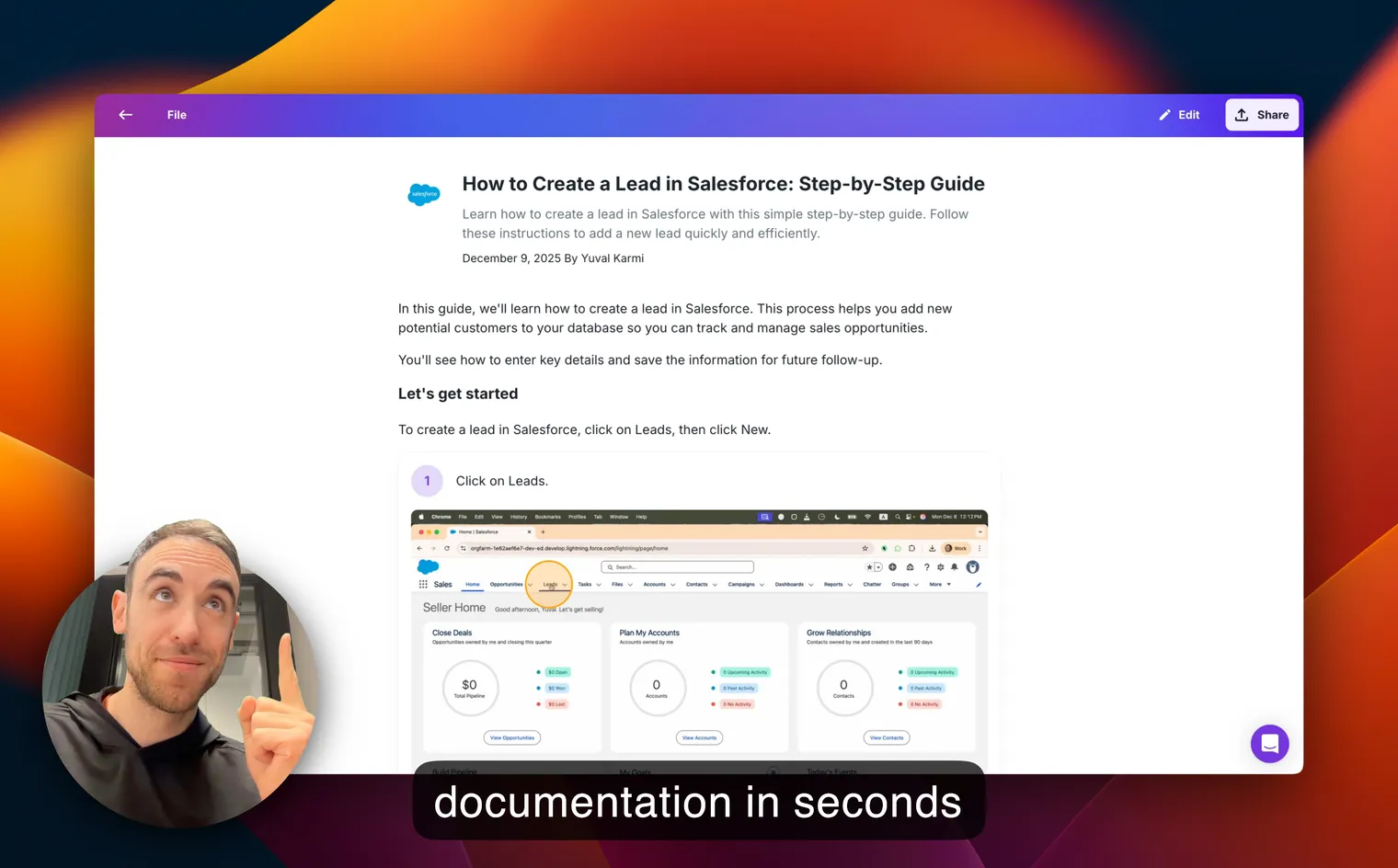
Glitter AI makes capturing your as-is process much easier than traditional methods. Instead of scheduling interviews and manually drawing flowcharts, teams can record themselves performing actual workflows. Glitter automatically generates step-by-step documentation from those recordings, turning process discovery into an accurate process map that shows exactly how work happens in practice.
This approach solves a problem we see all the time: as-is documentation often reflects what people say they do rather than what they actually do. Screen recordings capture the real clicks, the actual systems used, and the genuine sequence of steps. Teams get an accurate current state baseline without the manual effort, which means you can move from as-is analysis to designing your to-be process much faster.
Teach your co-workers or customers how to get stuff done – in seconds.

Frequently Asked Questions
What is an as-is process?
An as-is process is a representation of how a business workflow currently operates. It documents the existing steps, decision points, and handoffs before any improvements are made, serving as a baseline for process improvement efforts.
What is the difference between as-is and to-be process?
The as-is process documents how work happens today, including all current inefficiencies and workarounds. The to-be process represents the improved future state after changes are implemented. As-is comes first and informs the design of to-be.
Why is as-is process documentation important?
As-is documentation reveals hidden inefficiencies, bottlenecks, and redundancies in current workflows. Without understanding the current state accurately, improvement efforts may miss key problems or introduce changes that don't address root causes.
How do you create an as-is process map?
Start by interviewing the people who actually perform the work. Observe the process in action, document each step including workarounds and exceptions, and validate the map with stakeholders. Tools like Glitter AI can capture workflows automatically through screen recording.
What is as-is process analysis?
As-is process analysis examines the current state documentation to identify inefficiencies, bottlenecks, redundant steps, and improvement opportunities. It typically involves measuring cycle times, counting handoffs, and spotting where work gets stuck.
What should be included in as-is process documentation?
Include all steps in sequence, decision points and branches, roles responsible for each step, systems and tools used, inputs and outputs, time estimates for each step, and any known pain points or workarounds that exist today.
How often should as-is processes be updated?
Update as-is documentation when significant changes occur to workflows, systems, or team structures. Many organizations review key processes annually or before major improvement initiatives to ensure the baseline remains accurate.
What are common mistakes in as-is process mapping?
Common mistakes include documenting how work should happen instead of how it actually happens, skipping input from frontline workers, not capturing informal workarounds, and failing to validate the map with multiple stakeholders.
What is the purpose of current state process mapping?
Current state or as-is mapping creates a shared understanding of reality before improvement work begins. It helps teams see the full picture, identify where problems actually exist, and measure the impact of changes by comparing against the baseline.
How does as-is process mapping support digital transformation?
As-is mapping identifies which manual steps, handoffs, and inefficiencies exist in current workflows. This clarity helps organizations prioritize which processes to automate and ensures digital solutions address real problems rather than assumptions.