
Read summarized version with
What is a Desktop App?
A desktop app is software built to run on personal computers, laptops, or workstations. Unlike web applications that live inside a browser, desktop apps get installed directly on your machine and operate independently. People also call them desktop applications, native apps, or simply desktop software.
So what sets desktop apps apart from everything else? They get direct access to your computer’s resources: the CPU, memory, file system, and hardware like cameras and microphones. That means they can tackle resource-heavy tasks, keep working when you’re offline, and integrate with other software on your machine in ways that web apps struggle to match. Video editing software, CAD programs, or really any tool where performance matters tends to fall into this category.
The desktop app landscape keeps shifting, particularly with cross-platform frameworks like Electron, Flutter, and .NET MAUI gaining traction. These tools allow developers to build apps that run across Windows, macOS, and Linux without juggling separate codebases. For businesses, this translates to more options and quicker update cycles.
Key Characteristics of Desktop Apps
- Local Installation: Desktop apps live on your hard drive and run from your machine’s operating system, not from some remote server
- System Resource Access: They tap directly into CPU power, RAM, GPU, local storage, and connected hardware like printers, webcams, and external drives
- Offline Functionality: Most desktop apps work just fine without an internet connection, though certain features might need connectivity for syncing or pulling updates
- Operating System Integration: Desktop apps hook into OS features like notifications, file associations, and keyboard shortcuts in ways web apps simply cannot replicate
- Persistent Local Storage: Your files and data remain on your device, giving you control over where information lives and how it gets backed up. Many apps also support syncing with cloud services for API integration with other tools.
Desktop App Examples
Example 1: Documentation and Training
A manufacturing company relies on a desktop app to create and manage their documented procedures. The plant floor computers don’t always have reliable internet, so having the app installed locally means workers can pull up SOPs and step-by-step task guides without worrying about connectivity. The app syncs changes whenever the network comes back, but it keeps working regardless.
Example 2: Creative and Technical Work
An engineering firm depends on CAD desktop software for their design work. These applications require direct GPU access and substantial processing power to handle complex 3D models without stuttering. Running this kind of software through a browser would mean lag, limited features, and frustrated engineers. The desktop app delivers the performance that serious design work demands.
Example 3: Business Operations
A financial services company runs accounting desktop software that connects to local printers for check printing and links to secure local databases. The desktop app gives them the control and security they need for sensitive financial data, while still letting them sync with cloud services when it makes sense.
Desktop App vs Web App
Both can handle similar tasks, but they approach the problem differently and come with different trade-offs.
| Aspect | Desktop App | Web App |
|---|---|---|
| Installation | Downloaded and installed locally | Accessed through a web browser |
| System Access | Full access to hardware and OS features | Limited to browser sandbox capabilities |
| Offline Use | Works without internet connection | Typically requires internet (with exceptions) |
| Updates | Requires downloading and installing updates | Updated automatically on the server |
| Performance | Generally faster for intensive tasks | Dependent on browser and network speed |
| Accessibility | Only on devices where installed | Available on any device with a browser |
Neither approach is inherently better. Desktop apps make sense when you need raw performance, offline access, or deep system integration. Web apps win when you need to reach any device and push updates without asking users to do anything.
Types of Desktop Applications
Productivity Software includes word processors, spreadsheets, presentation tools, and similar applications. Microsoft Office and Adobe Creative Suite are the obvious examples. These applications handle complex documents with features that push past what web browsers can efficiently manage.
Communication Tools like Slack, Microsoft Teams, and Zoom typically offer desktop apps alongside their web versions. The desktop versions usually provide tighter notification integration, better audio and video performance, and system-level features like capturing your screen with computer audio.
Development Environments such as VS Code, IntelliJ, and Xcode run as desktop apps because developers need fast file system access, terminal integration, and the ability to run compilers and debuggers locally. This kind of work demands performance that web-based IDEs are still working to match.
Media and Creative Applications for video editing, 3D modeling, music production, and graphic design almost always run as desktop apps. The processing requirements and hardware access needs make this the natural choice.
Utility Software covers antivirus programs, backup tools, and system optimization apps. These need deep system access to do their jobs properly, something browser-based apps simply cannot provide. Many organizations also use desktop utilities for process automation.
How Glitter AI Supports Desktop App Documentation
Glitter AI offers a desktop app that captures workflows and builds documentation directly from your screen activity. Because it runs locally, it can record across any application on your computer, not just whatever happens in a browser.
This matters for teams working with desktop software like ERP systems, design tools, or accounting packages. You can record a full on-screen walkthrough of a process in QuickBooks, Photoshop, or any installed software, and Glitter turns it into structured documentation. The desktop app handles the heavy lifting of processing video locally, which means snappier performance and the ability to work even when your connection is unreliable. Your documented processes become part of a searchable knowledge library that stays current with how work actually happens.
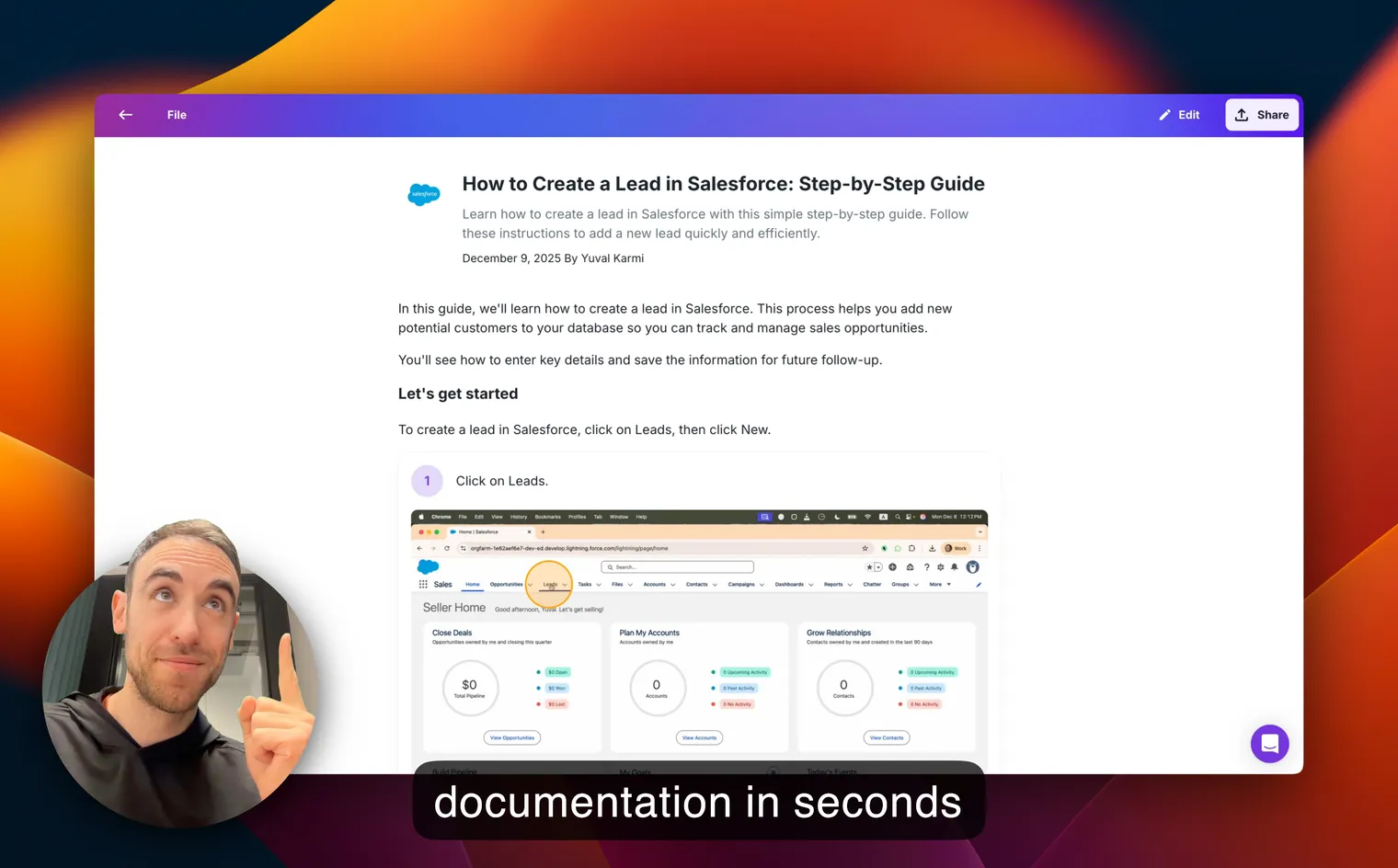
Teach your co-workers or customers how to get stuff done – in seconds.

Frequently Asked Questions
What is a desktop app?
A desktop app is software installed directly on a computer that runs independently of a web browser. Desktop apps have direct access to system resources like the CPU, storage, and hardware, making them well-suited for performance-intensive tasks and offline work.
What is the difference between a desktop app and a web app?
Desktop apps are installed on your computer and run locally with full system access. Web apps run in a browser and are accessed through the internet. Desktop apps typically offer better performance and offline capability, while web apps provide easier updates and access from any device with a browser.
What are examples of desktop applications?
Common desktop applications include Microsoft Office (Word, Excel, PowerPoint), Adobe Creative Suite (Photoshop, Premiere), video conferencing tools like Zoom, development environments like VS Code, and media players like VLC. Any software you install on your computer rather than access through a browser qualifies.
Are desktop apps still relevant in 2026?
Desktop apps remain essential for work requiring high performance, offline access, or deep system integration. Video editing, 3D design, software development, and specialized business applications still favor desktop software. Many organizations use a mix of desktop and web apps based on specific needs.
What is a native desktop application?
A native desktop application is software built specifically for a particular operating system (Windows, macOS, or Linux) using that platform's development tools and languages. Native apps typically offer the best performance and integration with OS features, though cross-platform frameworks have narrowed this gap.
How do I install a desktop app?
Download the installer from the developer's website or an app store like the Microsoft Store or Mac App Store. Run the installer, follow the prompts, and the application will be added to your system. Most installers handle creating shortcuts and registering the app with your operating system.
Can desktop apps work offline?
Yes, most desktop apps can function without an internet connection since they run locally on your computer. Some features that depend on cloud services or real-time data won't work offline, but core functionality typically remains available.
What programming languages are used for desktop app development?
Common choices include C# and .NET for Windows apps, Swift for macOS, Java for cross-platform development, and C++ for performance-critical applications. Cross-platform frameworks like Electron (JavaScript), Flutter (Dart), and .NET MAUI (C#) let developers target multiple operating systems from a single codebase.
Are desktop apps more secure than web apps?
Desktop apps and web apps have different security profiles. Desktop apps can access more system resources, which creates risk if the software is malicious, but they're also less exposed to web-based attacks. Web apps face threats like cross-site scripting but benefit from browser sandboxing. Security depends more on how well the app is built than on which type it is.
How do desktop apps help with documentation?
Desktop documentation apps like Glitter AI can capture workflows across any software on your computer, not just browser-based tools. They record screen activity, process files locally for faster performance, work offline, and integrate with your file system to organize documentation alongside other work.