
Read summarized version with
What is a Knowledge Article?
A knowledge article is a standalone piece of content in a knowledge base that tackles a specific topic, question, or problem. The goal is pretty straightforward: give users clear, accurate information so they can find solutions on their own without contacting support or tracking down a colleague. These articles often include written instructions, screenshots, videos, and links to make things easier to follow.
Think of knowledge articles as the building blocks of self-service support within a centralized library of company answers. They’re different from FAQ entries, which tend to be quick question-and-answer pairs. A knowledge article goes deeper, covering everything from troubleshooting steps and how-to guides to policy documentation and technical specs. When done well, they let users solve problems on their own, which takes pressure off support teams and tends to make everyone happier.
For most organizations today, knowledge articles are essential for scaling support and keeping institutional knowledge from walking out the door. They turn the expertise that lives in people’s heads into searchable documentation that actually helps the whole team.
Key Characteristics of Knowledge Articles
- Single Topic Focus: Each article sticks to one subject, problem, or question. This makes it much easier for users to find what they need without wading through unrelated stuff.
- Structured Format: Good knowledge articles use clear headings, step-by-step instructions, and a logical flow. The structure should guide someone from “I have a problem” to “I solved it.”
- Searchable and Discoverable: Articles need relevant keywords, tags, and metadata so users can actually find them through search or browsing.
- Actionable Information: The content should give practical guidance people can act on right away, not just abstract concepts or background theory.
- Version Controlled: These articles need regular updates when processes, products, or policies change. Version history helps track what changed and when.
Knowledge Article Examples
Example 1: Troubleshooting Knowledge Article
Say a SaaS company creates a knowledge article called “How to Reset Your Password.” It might include numbered steps walking through the process, screenshots of each screen, a section on common error messages and how to fix them, plus a video for people who prefer watching over reading. When someone gets locked out, they can follow the article and get back in without waiting on a support ticket.
Example 2: Process Documentation Knowledge Article
A manufacturing company might publish an internal knowledge article titled “Equipment Calibration Procedure for Model X-500.” This one would cover the calibration steps in detail, safety precautions, what tools you’ll need, quality checkpoints to hit, and photos showing what a proper setup looks like, much like a dedicated equipment calibration procedure guide. Technicians across different production lines can reference it to make sure everyone’s doing calibration the same way.
Knowledge Article vs FAQ
Both knowledge articles and FAQs help people find information, but they serve different purposes.
| Aspect | Knowledge Article | FAQ |
|---|---|---|
| Purpose | Full explanation with detailed solution | Quick answer to a common question |
| Scope | In-depth coverage of a topic | Brief, to-the-point response |
| Length | 300-1500+ words, often with multimedia | 50-200 words, usually text-only |
| When to use | Complex issues that need detailed guidance | Simple, straightforward questions |
Types of Knowledge Articles
How-To Guides
These walk users through a specific task or feature from start to finish. The format is usually step-by-step instructions that anyone can follow.
Troubleshooting Articles
Troubleshooting articles help users figure out what’s wrong and fix it. They typically start with identifying symptoms, then move to possible causes and solutions.
Reference Documentation
This covers technical specs, definitions, or background info about products, processes, or concepts. Users dip into these when they need to look something up.
Policy and Process Documentation
These are usually internal-facing articles that spell out procedures, company policies, workflows, and compliance requirements that employees need to follow.
How Glitter AI Helps with Knowledge Articles
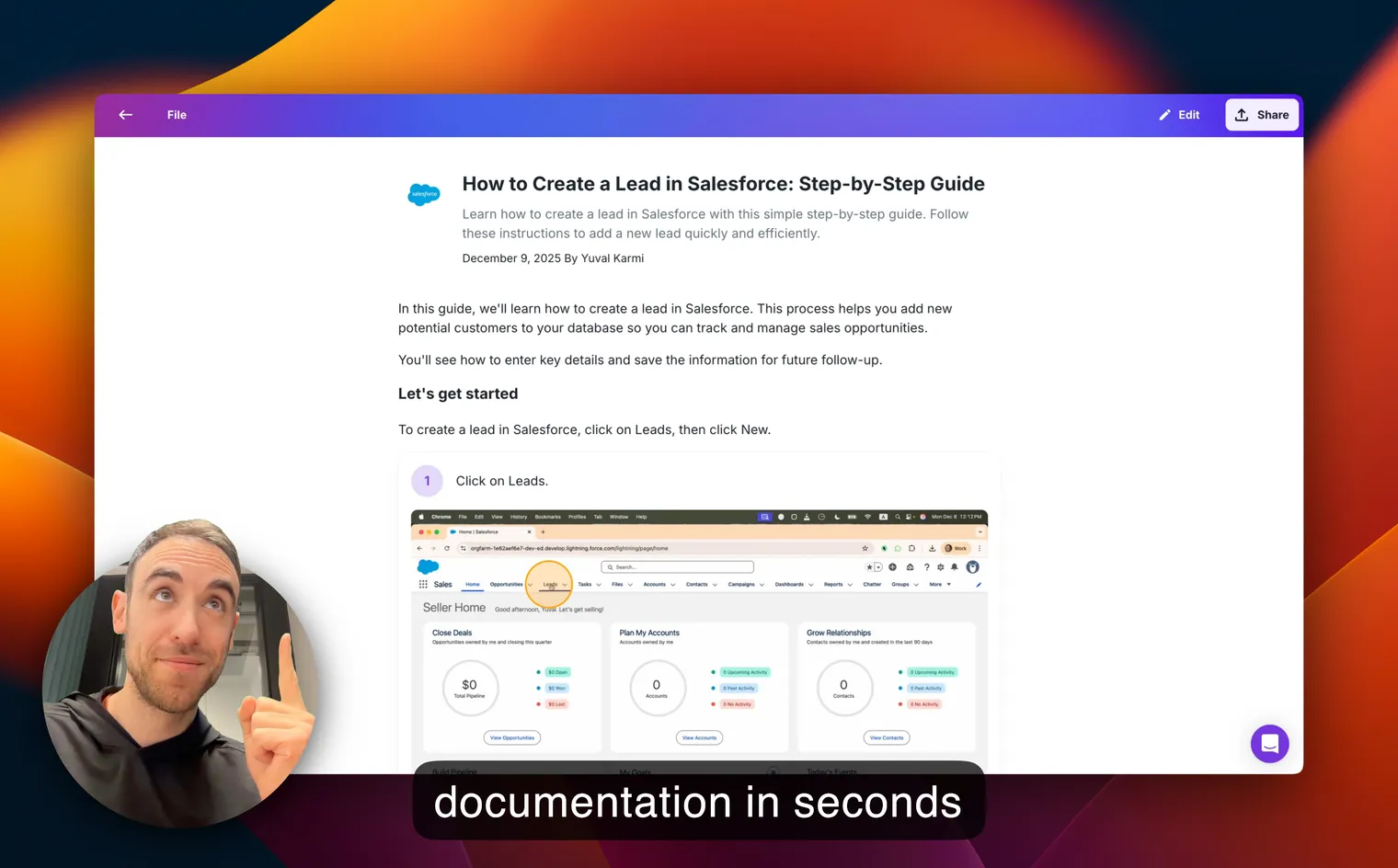
Creating knowledge articles the traditional way takes forever. You have to write everything out, format it, capture screenshots, annotate them. Glitter AI cuts through all that. Subject matter experts just do the task once while Glitter records their screen, and a one-click HTML export drops the finished article straight onto your site. The AI then generates a complete knowledge article with step-by-step instructions, annotated screenshots, and video tutorials built right in, growing into a reusable library of vetted best practices over time.
This solves what’s probably the biggest pain point with knowledge articles: keeping them up to date. When a process changes, you just record the new workflow and you’re done, a habit that lines up with proven knowledge base practices. No more stale documentation that nobody trusts. With Glitter AI, organizations can build a knowledge base step by step, apply disciplined knowledge curation so only accurate articles survive, collect proven procedures in one place, and stand up the kind of self-service knowledge resources users actually rely on, without the usual documentation headache.
Teach your co-workers or customers how to get stuff done – in seconds.

Frequently Asked Questions
What does knowledge article mean?
A knowledge article is a structured document in a knowledge base that gives people information, instructions, or solutions to specific questions or problems. The idea is to help users find answers on their own without having to contact support.
What is an example of a knowledge article?
A classic example is a 'How to Reset Your Password' article in a software help center. It would include step-by-step instructions, screenshots of each screen, solutions for common error messages, and maybe a video walkthrough for people who prefer that format.
Why are knowledge articles important?
They make self-service support possible, which means faster answers for users and fewer tickets for support teams. Knowledge articles also preserve institutional knowledge, keep information consistent across the organization, and let you scale support without hiring proportionally more staff.
How do I create a knowledge article?
Start with a common question or problem. Structure your solution with clear headings and steps, add screenshots or videos where they help, and use relevant keywords so people can find the article. Tools like Glitter AI can speed this up by recording your screen and generating the documentation for you.
What makes a good knowledge article?
Good knowledge articles stick to one topic, use clear language, include visuals, give actionable steps, stay up to date, and are easy to find through search. The test is simple: can someone solve their problem completely without needing to reach out for more help?