
Read summarized version with
What is a Getting Started Guide?
To get started with a product means clearing the essential first steps - creating an account, doing the basic setup, landing a first successful action - that carry a new user from sign-up to real value. A getting started guide is the introductory document that helps people get started. It covers the foundational knowledge, the initial setup instructions, and a walk through basic functionality. Quick start guides focus purely on immediate action; getting started guides tend to give more context and conceptual grounding while still keeping that early adoption phase in view. The point is that users come away understanding not just how to do something, but why it matters.
Guides like these shape a user’s first experience more than most teams expect. Done well, they hand people an early win. Done poorly, users get frustrated and walk. A getting started guide assumes the reader knows little to nothing and needs orientation to the core concepts, terminology, and workflows before they go poking at specific features. You’ll see them attached to software applications, hardware products, business processes, and internal systems, basically anywhere foundational understanding ends up affecting long-term success. They often work hand in hand with an onboarding checklist to track how a new user is progressing.
The tricky part is balance. A good getting started guide gives users enough context to understand what they’re doing, without burying them under the kind of detail you’d expect from a full user manual or training manual. That leaves it sitting somewhere in the middle: more grounded than a quick start guide, which prizes speed over understanding, and far lighter than reference documentation written for people who already know their way around.
Key Characteristics of Getting Started Guide
- Foundational Scope: They cover the concepts and terminology users need before anything else clicks. That’s context a purely procedural document skips, though they stop short of advanced features.
- Progressive Structure: A good guide moves in a logical sequence, from initial setup through basic tasks to a first valuable outcome. Confidence builds step by step instead of arriving as a pile of disconnected instructions.
- Beginner-Friendly Tone: No prior knowledge assumed. Terminology gets defined the moment it appears, jargon stays out, and the “why” rides alongside the “how” so understanding actually takes root.
- Multiple Learning Paths: Users don’t all need the same thing. Well-designed guides make it easy to move between setup, core concepts, and hands-on tutorials, so people pick the route that matches how they like to learn.
- Success Milestones: The best guides mark clear achievement points along the way. Users can tell when they’ve made progress, and they know when the getting started phase is behind them.
Getting Started Guide Examples
Example 1: Software Platform Onboarding
A project management platform builds a getting started guide that introduces concepts like projects, tasks, and workflows before it shows a single setup step. It explains how the platform organizes information, walks through account configuration and team setup much like structured Smartsheet training, shows how to spin up a first project with tasks, and closes with next steps for exploring more features. A quick start guide might just show task creation. The broader approach here helps users actually grasp the system’s logic.
Example 2: Business Process Introduction
A company rolling out new expense management software puts together a getting started guide for employees. It runs through the policy overview, system access and login, expense categories and approval workflows, submitting a simple expense claim, and the questions that always come up. Employees walk away understanding why the system exists and where it fits in company processes. That beats a bare list of mechanical submission steps, because it lifts compliance and quiets the flood of support requests. Once they finish the getting started guide, employees can move on to more detailed how-to guides for specific expense scenarios.
Example 3: Product Feature Adoption
A SaaS company shipping a new analytics feature writes a getting started guide covering what insights the feature actually provides, how it differs from existing reporting, how to connect data sources, how to explore the default dashboard, and how to customize views. It keeps conceptual understanding and practical steps in balance, so users see the feature’s value while they pick up the basic operations.
Getting Started Guide vs Quick Start Guide
People swap these two terms constantly, but they’re built for different jobs.
| Aspect | Getting Started Guide | Quick Start Guide |
|---|---|---|
| Purpose | Build foundational understanding and enable initial productive use | Get immediate results with minimal steps |
| Depth | Broader coverage of concepts, setup, and multiple basic tasks | Laser-focused on one or two essential actions |
| When to use | When users benefit from context and understanding core concepts | When users need instant value and can learn concepts later |
How to Help Users Get Started
Any getting started experience is really chasing one thing: move a new user to their first success as fast as you can. Research from the Nielsen Norman Group suggests onboarding works best when it teaches through action rather than upfront explanation. These steps help people get started and cut early drop-off:
- Define the first success. Pin down the single outcome that proves value (the “aha” moment), then work backward to the shortest path there.
- Strip setup to the essentials. Ask only for what’s required to reach that first win. Everything else, the advanced configuration, can wait.
- Explain the “why” as you go. Give each step a one-line reason so users build the right mental model, not just muscle memory.
- Show, don’t just tell. Back up instructions with screenshots, short videos, or an interactive walkthrough so users can follow along visually.
- Signal progress. Mark milestones and completion so people know they’ve finished getting started and are ready to explore.
When you’re supporting a lot of new users at once, pairing a getting started guide with an onboarding checklist and clear training documentation keeps everyone on the same proven path.
How Glitter AI Helps with Getting Started Guide
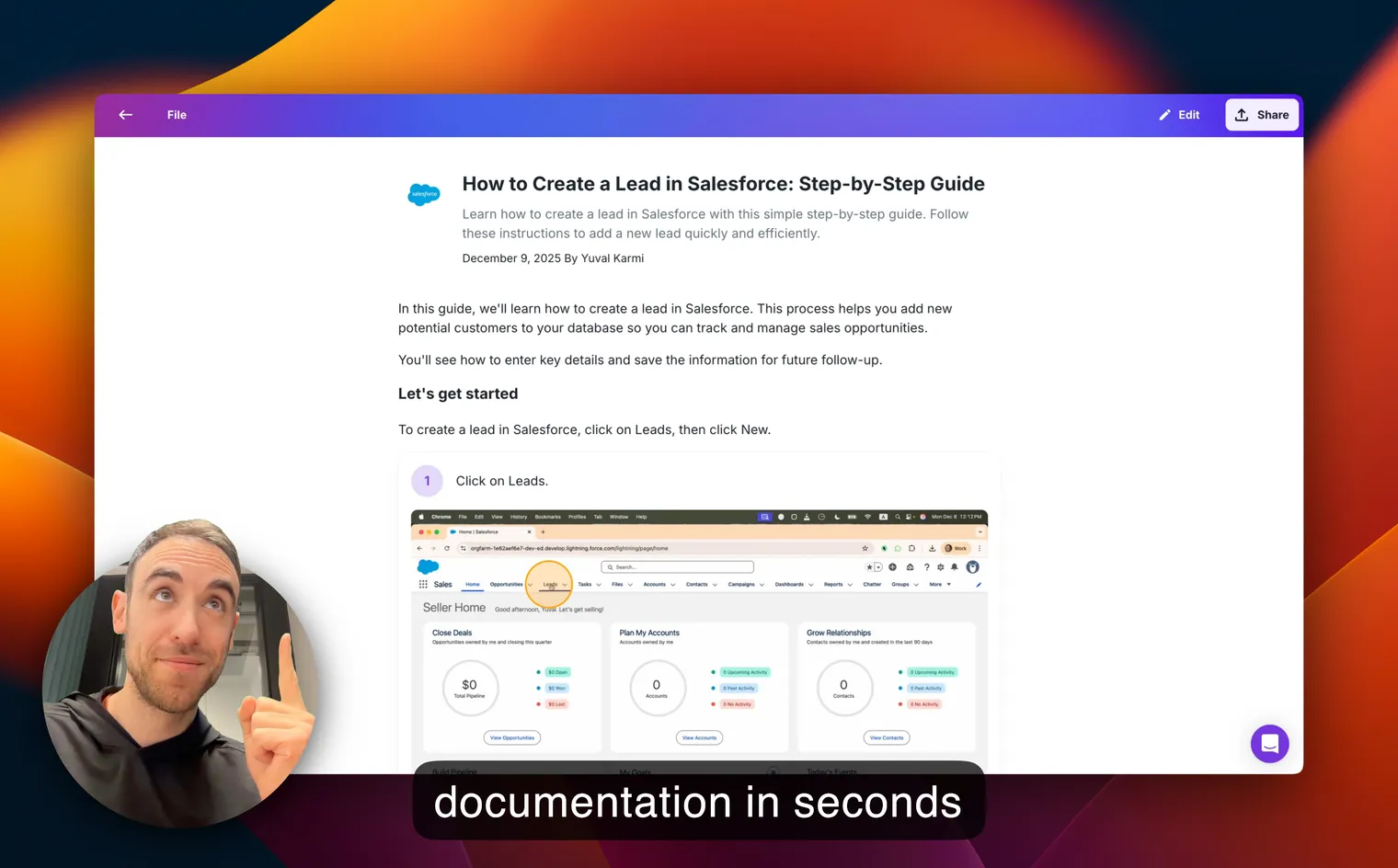
Glitter AI turns getting started guide creation from a documentation chore into an automated workflow. Walk through your setup processes and basic workflows, and Glitter captures every step, generating visual guides with screenshots, annotations, and clear instructions as you go. No more wrangling technical writers, subject matter experts, and designers to produce onboarding documentation that goes stale before it’s even published.
Updates are the part that usually hurts, and here they’re quick. When interfaces change, features get updated, or best practices shift, you re-record the workflow and regenerate the guide in minutes rather than weeks, the same way you’d maintain broader end-user documentation. Glitter AI also keeps things consistent across multiple products or features, so every new user gets the same quality onboarding experience and finds contextual help no matter which corner of your ecosystem they land in first. That consistency in onboarding and training docs feeds directly into better adoption rates, supports broader digital adoption efforts, and shortens time-to-value.
Teach your co-workers or customers how to get stuff done – in seconds.

Frequently Asked Questions
What is a Getting Started Guide?
A getting started guide is an introductory document that helps new users begin using a product, service, or system successfully. It covers initial setup, foundational concepts, and basic functionality, providing broader context than quick start guides while remaining focused on the early adoption phase rather than comprehensive coverage.
What is an example of a Getting Started Guide?
A common example is a software platform's getting started guide that explains core concepts like how the system organizes information, walks through account setup and initial configuration, demonstrates creating first projects or records, and guides users to their first valuable outcome while explaining why each step matters.
Why is a Getting Started Guide important?
Getting started guides shape critical first impressions, reduce early abandonment by preventing confusion and frustration, accelerate time-to-value by building both skill and understanding, decrease support burden by answering foundational questions proactively, and improve long-term engagement by establishing correct mental models from the beginning.
How do I create a Getting Started Guide?
Identify what concepts and terminology beginners must understand, outline the logical progression from setup through first valuable outcome, document each step with context explaining why it matters, use visual aids like screenshots and diagrams to reinforce instructions, and test with actual new users to identify gaps or confusing sections. Tools like Glitter AI can automate guide creation from screen recordings.
How do I get started with a new product?
To get started with a new product, create your account, complete only the setup steps required to reach a first useful result, then follow the getting started guide to your first success ('aha') moment. Focus on one core task first, learn why each step matters, and defer advanced configuration until you're comfortable with the basics.
What is the difference between a Getting Started Guide and a user manual?
A user manual provides comprehensive documentation covering all features, configurations, and use cases for complete product reference. A getting started guide focuses exclusively on helping new users successfully begin using the product, covering only foundational concepts and initial tasks needed during the early adoption phase without attempting comprehensive coverage.