
Read summarized version with
What is Screenshot Capture?
Screenshot capture refers to taking a static image of whatever appears on your computer, tablet, or smartphone screen at a given moment. Sometimes called screen capture or screen grab, it creates a digital snapshot that shows exactly what was visible on the display. While recording the screen captures continuous video of on-screen activity, screenshot capture freezes just a single frame.
Pretty much every major operating system has built-in screenshot capture tools. Windows comes with the Snipping Tool, macOS lets you use keyboard shortcuts like Command+Shift+4, and mobile devices rely on button combinations for quick captures. If you need more than these native options, dedicated screen capture tools add features like scrolling capture for long web pages, annotation, and automatic cloud sharing.
Organizations depend on screenshot capture for documentation, troubleshooting, and training purposes. One well-annotated screenshot can often replace paragraphs of written explanation, which makes it a go-to tool for documenting how a process works, visual work instructions, and training materials.
Key Characteristics of Screenshot Capture
- Static Image Output: Creates a single image file (PNG, JPG, or similar format) that captures one moment, as opposed to video recordings
- Multiple Capture Modes: Most tools let you capture the full screen, a specific window, a selected region, or a freeform area
- Instant Sharing: Screenshots produce lightweight files you can quickly share through email, chat, or documentation platforms
- Annotation Capabilities: Many screen capture tools have built-in editors for adding arrows, highlights, text callouts, and blur effects
- Scrolling Capture: More advanced tools can grab entire web pages or documents that extend beyond the visible screen
Screenshot Capture Examples
Example 1: Software Documentation
A technical writer puts together how-to guides for a CRM application. Rather than describing where to click, they capture screenshots of each step, add numbered callouts pointing to the relevant buttons, and include brief captions. New users follow along visually, and support tickets drop by about 40%.
Example 2: Bug Reporting
A QA tester runs into an error message during software testing. They take a screenshot that shows the error, the current page state, and the browser console. This single image gives developers context that would otherwise take paragraphs to describe, and average bug resolution time gets cut in half.
Example 3: Training Materials
An HR team builds learning resources for new hires learning the payroll system. Each procedure features annotated screenshots showing exactly which fields to fill out and which buttons to click. Employees keep these screenshots handy during their first few weeks until the process becomes familiar.
Screenshot Capture vs Screen Recording
Both tools document what happens on screen, but they serve different purposes.
| Aspect | Screenshot Capture | Screen Recording |
|---|---|---|
| Output | Static image file | Video file |
| File Size | Small (KB to few MB) | Large (MB to GB) |
| Audio | None | Can include narration |
| Best For | Single steps, error messages, quick references | Multi-step workflows, tutorials, demonstrations |
| Searchability | Text in images harder to search | Can include transcripts for searching |
| Editing Time | Minimal (add annotations) | Often requires trimming and production |
Types of Screenshot Capture Tools
Built-in System Tools ship with every operating system. Windows has the Snipping Tool and the Print Screen key. macOS provides keyboard shortcuts and the Screenshot app. These handle basic capture needs without extra software.
Browser Extensions like Awesome Screenshot and Nimbus capture web content directly from your browser. They work especially well for scrolling captures of long pages and let you annotate before sharing.
Dedicated Screenshot Software such as Snagit, Greenshot, and Lightshot give you more control, often shipping as a native desktop application you install locally. You get features like delayed captures, custom keyboard shortcuts, built-in editors, and organized screenshot libraries.
AI-Powered Documentation Tools like Glitter AI go further than simple capture. They automatically integrate screenshots into structured documentation, turning visual captures into searchable knowledge bases with step-by-step context.
How Glitter AI Helps with Screenshot Capture
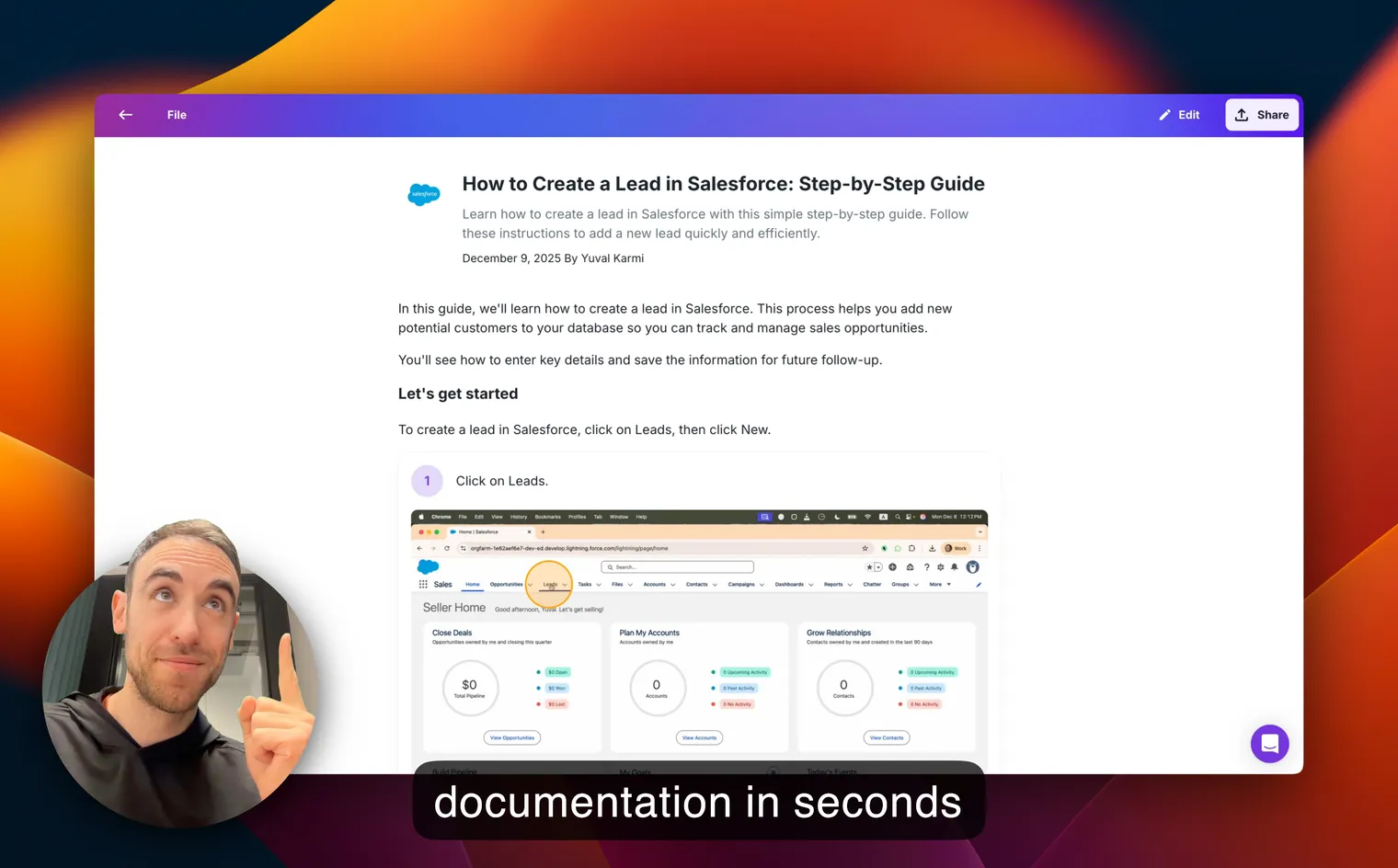
Glitter AI turns basic screenshot capture into structured documentation. When you record a workflow, Glitter automatically spots key moments and generates annotated screenshots with step-by-step instructions, going well beyond what a basic tool like the Windows Steps Recorder can produce. You skip the manual work of capturing, cropping, and annotating each image.
The platform converts these visual captures into searchable, organized documentation, replacing the disjointed output of a basic steps recorder with something teams actually want to read. Teams build knowledge bases and illustrated step-by-step instructions in minutes rather than hours. Each screenshot becomes part of a larger, interconnected system where anyone can find the exact visual guidance they need.
Teach your co-workers or customers how to get stuff done – in seconds.

Frequently Asked Questions
What is screenshot capture?
Screenshot capture is the process of taking a static image of what appears on your computer, phone, or tablet screen. Also called screen capture or screen grab, it creates a digital picture you can save, share, or use in documentation.
How do I take a screenshot on my computer?
On Windows, press Print Screen for full screen or use the Snipping Tool for selected areas. On Mac, press Command+Shift+3 for full screen or Command+Shift+4 to select a region. Most systems save screenshots to the desktop or clipboard.
What is the difference between screenshot and screen capture?
Screenshot and screen capture mean the same thing: taking a static image of your screen. Some people use 'screen capture' more broadly to include video recording, but when referring to images, the terms are interchangeable.
What is the best screen capture tool?
The best tool depends on what you need. Built-in options like Windows Snipping Tool work fine for basic captures. Snagit offers professional features and editing. Lightshot provides quick sharing. For documentation workflows, AI tools like Glitter AI automatically turn captures into structured guides.
Why is screenshot capture important for documentation?
Screenshots show exactly what users will see, eliminating confusion from text-only instructions. A single annotated screenshot can replace paragraphs of description, making documentation clearer and faster to follow. Visual guides reduce errors and support questions.
Can I capture a scrolling screenshot of a whole web page?
Yes, many screen capture tools support scrolling capture. Browser extensions like Awesome Screenshot, desktop apps like Snagit, and some built-in browser developer tools can capture entire pages that extend beyond the visible screen area.
What file format should I use for screenshots?
PNG works best for screenshots with text or sharp edges because it preserves quality without loss. JPEG is better for photographs or when file size matters. Most screen capture tools default to PNG, which maintains quality and supports transparency.
How do I annotate screenshots?
Most screen capture tools include annotation features. You can add arrows, circles, text boxes, highlights, and blur effects right after capturing. Tools like Snagit, Greenshot, and the macOS Preview app all have built-in annotation editors.
What are screenshot captures used for in business?
Businesses use screenshot capture for training documentation, software tutorials, bug reporting, customer support, compliance records, and process documentation. Screenshots provide visual proof and clear instructions that text alone cannot match.
How do I organize and manage many screenshots?
Use dedicated tools like Snagit or Droplr that include screenshot libraries. Create consistent naming conventions and folder structures. For documentation purposes, platforms like Glitter AI automatically organize screenshots within their generated guides and knowledge bases.