
Read summarized version with
What is a Subject Matter Expert?
A Subject Matter Expert (SME) is someone who knows their field inside and out. They’ve built their expertise through formal education, certifications, or simply years of getting their hands dirty in a particular domain. When questions come up that nobody else can answer, SMEs are the ones people turn to.
When it comes to documentation and knowledge management, SMEs are often the make-or-break factor. They don’t just understand the technical details; they can actually explain them in ways that make sense to everyone else. Companies depend on these experts to check that documentation is accurate, bring new employees up to speed, tackle thorny problems, and keep critical knowledge from walking out the door when people change roles. Working alongside a documentation owner, SMEs help organizations build lasting knowledge assets. A knowledge champion often drives that effort across teams.
According to Deloitte research, organizations that do a good job of tapping into SME knowledge are 52% more productive and 92% more likely to innovate. That’s a pretty compelling case for identifying who your experts are and giving a knowledge manager ownership of making sure their knowledge gets shared.
Key Characteristics of Subject Matter Expert
- Deep Domain Knowledge: An SME’s understanding goes well beyond the basics. They know the nuances, the edge cases, and the “why” behind processes, usually because they’ve spent years figuring things out firsthand.
- Credentials That Back It Up: Most SMEs have the degrees, certifications, or industry recognition to match their experience. These credentials help establish their credibility both inside and outside the organization.
- Ability to Teach Others: Knowing something and explaining it are two different skills. Good SMEs can break down technical concepts for people who aren’t experts, helping teammates learn to do things on their own.
- The Person You Call When Things Get Tricky: When something goes wrong or a decision needs specialized input, SMEs are the ones who get pulled into the room. Their judgment helps reduce risk and keeps projects on track.
- Always Learning: The best SMEs don’t rest on what they already know. They stay up to date with industry changes, new technologies, and shifting best practices so their expertise stays relevant.
Subject Matter Expert Examples
Example 1: Manufacturing Quality SME
Picture a quality engineer who’s spent 15 years in automotive manufacturing. She’s become the go-to person for anything related to ISO 9001 compliance. When the company needs to create standard operating procedures for quality control inspections, she reviews the documentation to catch technical errors, makes sure everything aligns with regulatory requirements, and trains new technicians on how to actually perform the inspections. Without her input, the company would be at real risk of compliance violations and inconsistent product quality.
Example 2: HR Compliance SME
An HR director who specializes in employment law serves as the SME for onboarding documentation at her company. Whenever the organization updates its onboarding checklist or employee handbook, she’s the one who checks that all the legally required disclosures are there, confirms everything meets labor regulations, and advises on how to handle new hire orientation. Her expertise protects the company from legal headaches and makes sure every new employee has a consistent experience.
Subject Matter Expert vs Process Owner
These two roles can seem similar since both require a solid grasp of how things work. But they actually serve pretty different purposes.
| Aspect | Subject Matter Expert | Process Owner |
|---|---|---|
| Primary Focus | Domain expertise and knowledge validation | End-to-end process accountability and performance |
| Key Responsibility | Provides technical accuracy, answers questions, validates documentation | Owns process efficiency, maturity, and continuous improvement |
| Authority | Advisory and consultative role | Decision-making authority over process changes |
| When to engage | Documentation creation, training development, technical questions | Process redesign, performance optimization, strategic improvements |
Here’s the key difference: a process owner is on the hook for how well a process actually performs, while an SME makes sure the technical details are correct. In practice, SMEs often give input and recommendations to process owners, who then have the final say on what changes get made.
How Glitter AI Helps with Subject Matter Expert
Glitter AI makes it much easier to capture knowledge from subject matter experts without eating up their entire day. Instead of asking busy SMEs to sit down and write lengthy documents from scratch, or routing everything through a technical writer, teams can have them record their screen while they actually do the task and explain what they’re doing. Glitter then automatically turns that recording into a step-by-step guide, complete with screenshots and annotations. That matters most when the expert isn’t the one at the keyboard: documenting a process someone else owns means leaning on the SME to narrate rather than guessing at their workflow yourself.
This approach works well because it respects the fact that SMEs are usually stretched thin. Their undocumented institutional know-how gets captured before someone leaves or forgets the details. When the documentation is generated, the SME just needs to review it and make quick edits rather than starting from a blank page. The end result is documentation that actually reflects how things are done, making the handoff of expertise and broader knowledge sharing to a team lead and other team members far more effective. If a recording alone doesn’t get you what you need, running a structured SME interview fills in the gaps a screen capture can’t show.
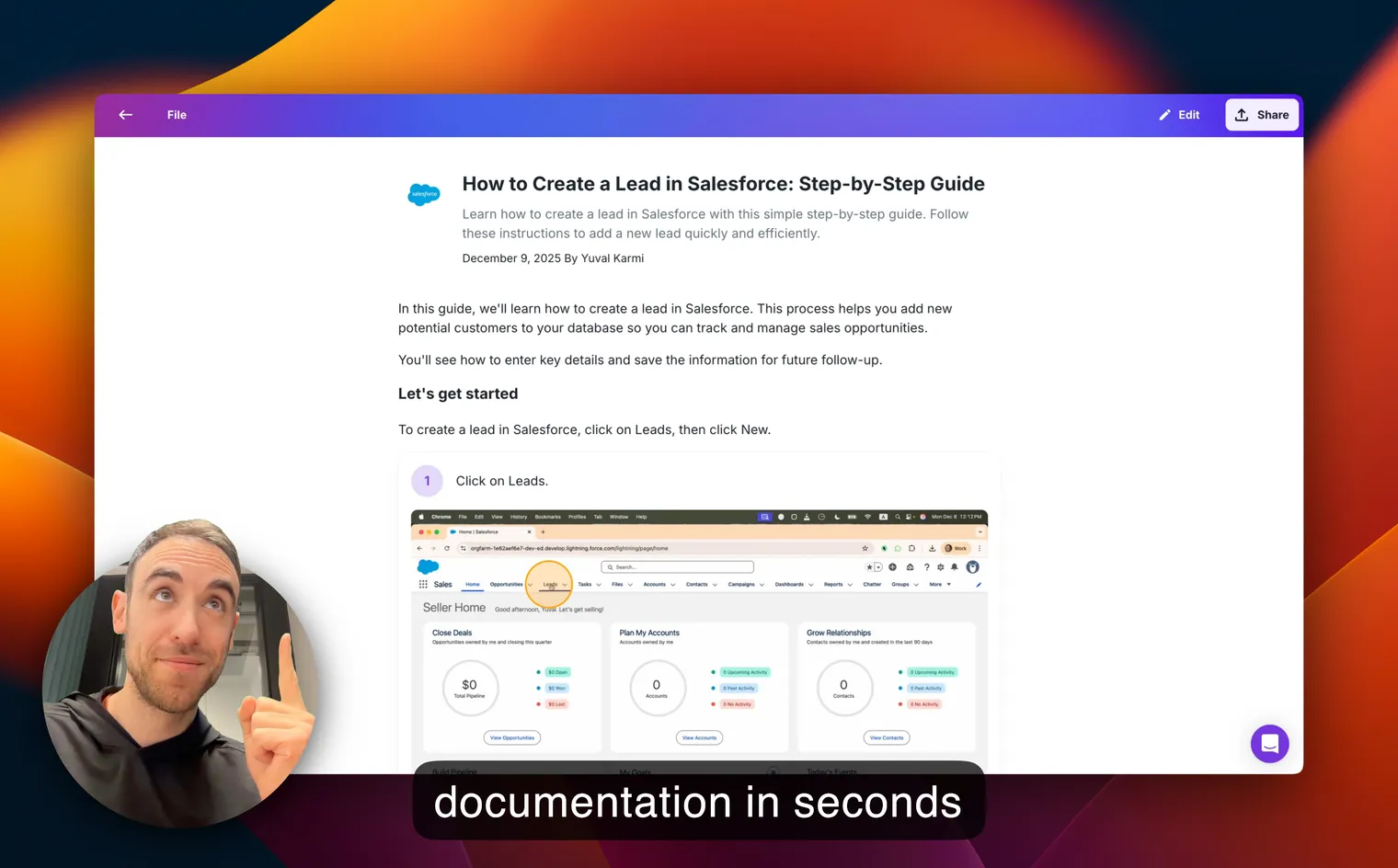
Teach your co-workers or customers how to get stuff done – in seconds.

Frequently Asked Questions
What does Subject Matter Expert (SME) mean?
A Subject Matter Expert is someone with deep knowledge and hands-on experience in a specific field, technology, or process. Organizations turn to SMEs when they need authoritative input on documentation, training, or technical decisions.
What is an example of a subject matter expert?
A quality engineer with 15 years of experience in automotive manufacturing is a good example. She might validate ISO compliance procedures, train new technicians, and review documentation for accuracy in quality control processes.
Why are subject matter experts important?
SMEs keep documentation accurate, make knowledge transfer actually work, and help organizations avoid costly mistakes. According to Deloitte, companies that leverage SME knowledge well are 52% more productive and 92% more likely to innovate.
How do you become a subject matter expert?
There's no single path, but it typically involves a combination of formal education, years of hands-on work, continuous learning, relevant certifications, and a track record of solving problems and sharing what you know in your area of focus.
What is the difference between an SME and a process owner?
SMEs provide technical knowledge and validate that content is accurate. Process owners have decision-making authority and are accountable for how well a process performs overall. Put simply: SMEs advise, process owners decide.