
Read summarized version with
What is Support Documentation?
Support documentation is the collection of written and visual resources that help customers find answers, troubleshoot issues, and understand products on their own. Think troubleshooting guides, FAQs, how-to articles, and product manuals. The point is simple: give people what they need to solve problems without waiting on hold.
You can break support documentation into two camps. Internal documentation is for your support team. It covers process guides, escalation procedures, and the technical know-how agents need to handle customer questions. External documentation is what customers see directly, including help centers, knowledge bases, and product guides.
When done well, support documentation does a lot of heavy lifting. It cuts down support ticket volume, speeds up how fast issues get resolved, and makes customers happier because they can get answers right away. Something like 81% of customers actually prefer figuring things out themselves before contacting support, which makes sense when you think about it. A well-organized FAQ section often handles the most common inquiries before they become tickets.
Key Characteristics of Support Documentation
- Clarity and Accessibility: The content uses plain language that customers can actually understand, steering clear of technical jargon unless there’s really no way around it
- Searchable Structure: Articles are organized logically and tagged properly so people can find what they need without digging through irrelevant pages
- Visual Elements: Screenshots, diagrams, and video walkthroughs help make complex processes less intimidating
- Regular Updates: The documentation keeps pace with product changes, bug fixes, and new features
- Multiple Formats: Articles, videos, FAQs, and step-by-step guides work together to match different learning styles
Support Documentation Examples
Example 1: SaaS Product Support Library
A project management software company builds out comprehensive support docs that cover account setup, feature tutorials, integration guides, and troubleshooting for common errors. Users can search by keyword or browse categories, and each article includes annotated screenshots showing exactly where to click.
Example 2: Internal Support Playbook
A customer service department puts together internal documentation for their agents. This might include decision trees for handling complaints, templates for common responses, escalation procedures, and deep product knowledge. The result? Agents resolve issues faster and with more consistency.
Support Documentation vs Help Center
These terms get used interchangeably, but they’re not quite the same thing.
| Aspect | Support Documentation | Help Center |
|---|---|---|
| Purpose | All documentation related to customer support, both internal and external | The customer-facing portal specifically built for self-service |
| Scope | Covers internal processes, training materials, and external resources | Focused on external content customers can access |
| When to use | When talking about the full ecosystem of support resources | When referring to the public-facing support portal |
How Glitter AI Helps with Support Documentation
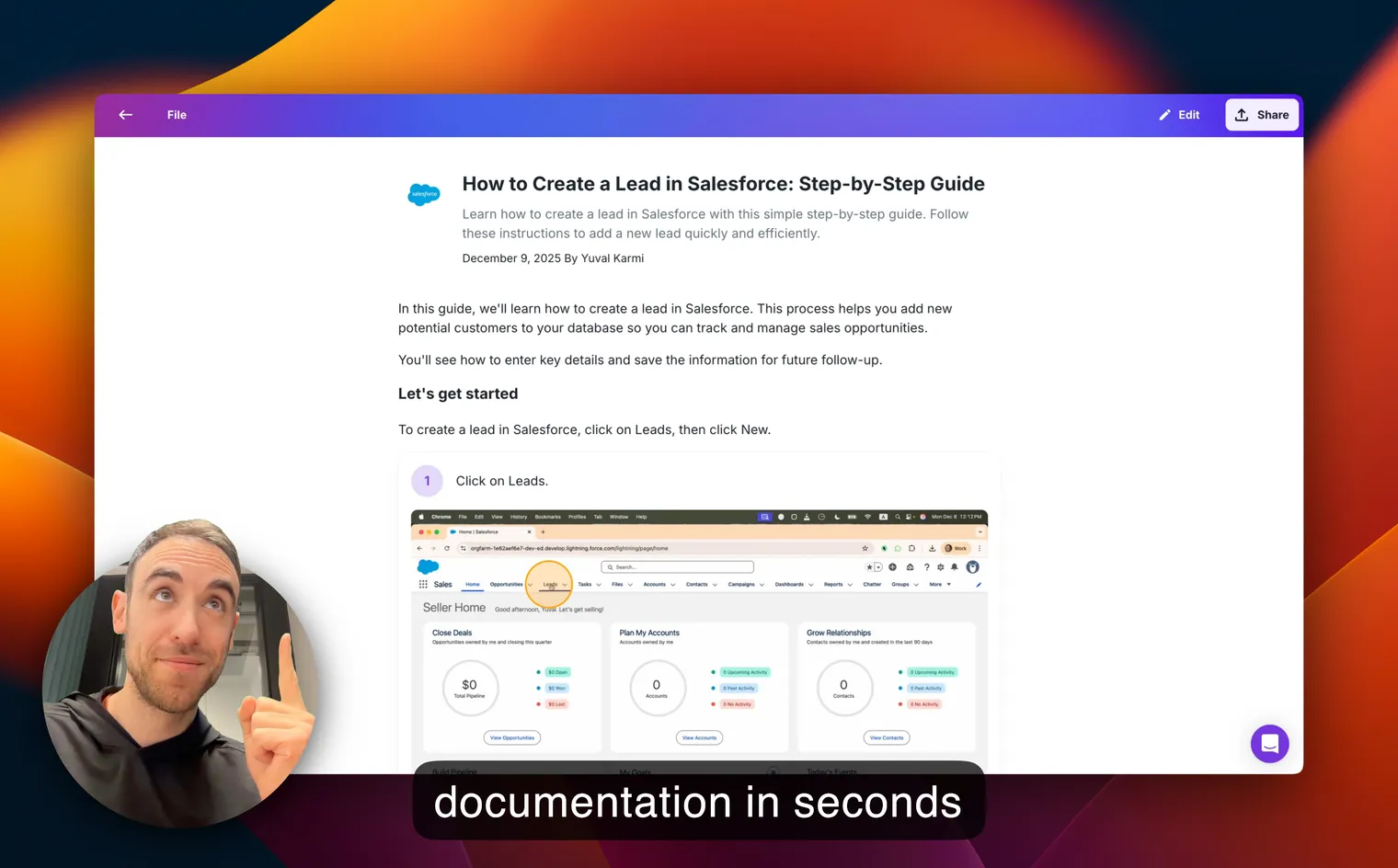
Building and maintaining support documentation becomes a lot less painful with Glitter AI. Rather than writing articles from scratch and manually capturing screenshots, teams can just record their screen while walking through a process. Glitter takes that recording and generates clear documentation with annotated visuals, turning what used to take hours into something you can finish in minutes, which is why it works so well as a SaaS documentation tool. You can serve a global audience with multi-language docs and move content into your own stack through a clean Markdown export.
You can narrate as you go and let voice to text turn your explanation into clean written steps, share editing duties so docs stay accurate, and build a strong self-service knowledge base that deflects routine tickets. For customer success teams building SaaS help docs by recording, this makes it realistic to keep documentation current, and the same approach speeds up onboarding work while bringing the discipline of agile, well-organized documentation to fast-moving products. When products change or new features ship, you record the updated workflow and publish fresh docs. Your support documentation stays accurate, which means fewer confused customers and fewer tickets that didn’t need to happen.
Teach your co-workers or customers how to get stuff done – in seconds.

Frequently Asked Questions
What is support documentation?
Support documentation covers all the written and visual resources that help customers and support teams troubleshoot issues, understand products, and solve problems through self-service or with guided assistance.
What are the types of customer support documentation?
You'll typically see troubleshooting guides, FAQs, how-to articles, product manuals, video tutorials, knowledge base articles, release notes, and internal playbooks for support agents.
Why is support documentation important?
Solid support documentation cuts ticket volume, speeds up issue resolution, and makes customers happier. Most people actually prefer finding answers on their own rather than contacting support.
How do you create effective support documentation?
Start with the questions customers ask most often and the pain points they run into. Write clearly with plenty of visuals like screenshots. Keep things organized and searchable, and update content whenever your product changes.
What is the difference between internal and external support documentation?
Internal documentation gives support teams process guides and technical knowledge. External documentation is customer-facing, including self-service resources like help centers and FAQs.
How often should support documentation be updated?
Update documentation whenever products change, new features go live, or bugs get fixed. Running a quarterly audit helps catch outdated content before it confuses customers.
What makes technical support documentation effective?
The best technical support documentation uses clear language, includes helpful visuals, follows a logical structure, and is easy to search. It also stays current and addresses the problems customers actually have.
How does support documentation reduce support costs?
When customers find answers through self-service documentation, support teams deal with fewer tickets. That frees agents to focus on the complex issues that genuinely need a human touch.
What tools are used for creating support documentation?
Teams commonly use knowledge base platforms, help desk software with documentation features, screen capture tools like Glitter AI, and content management systems built for technical writing.
How do you organize customer support documentation?
Group content by topic or product area, use clear category names, build in strong search, tag articles with relevant keywords, and design navigation that matches how customers think about their problems.