
Read summarized version with
What is a Technical Manual?
A technical manual is essentially the definitive reference for anyone who needs to truly understand how a piece of complex equipment, software system, or machinery actually works. It goes beyond basic instructions, offering detailed technical specifications, step-by-step maintenance procedures, and troubleshooting guidance that technical staff rely on daily. Unlike a user guide aimed at everyday users, a technical manual dives into the engineering details.
These documents aren’t written for casual users. They’re built for technicians, engineers, maintenance crews, and specialists who need precise engineering details, diagnostic procedures, and accurate specifications to do their jobs well. The language tends to be specialized, and that’s by design.
Why do technical manuals matter so much? They keep equipment running properly, minimize costly downtime, help teams stay compliant with safety standards, and often protect warranty coverage. You’ll typically find schematics, wiring diagrams, parts lists, calibration steps, and troubleshooting flowcharts inside, giving technical personnel the information they need to diagnose and fix issues when things go wrong.
Key Characteristics of Technical Manual
- Technical Depth: These manuals include detailed specifications, tolerances, engineering drawings, and technical parameters. Interpreting them usually requires specialized training or experience.
- Systematic Organization: Content is structured logically, often by system, subsystem, or component. Good technical manuals have thorough tables of contents, indexes, and plenty of cross-references.
- Diagnostic Tools: Expect troubleshooting guides, diagnostic flowcharts, error code references, and systematic approaches to problem-solving.
- Maintenance Schedules: Preventive maintenance procedures, service intervals, replacement part specs, and calibration requirements are all covered. These often connect to detailed task-level instructions for specific tasks.
- Safety Information: Safety warnings, hazard notifications, regulatory compliance requirements, and proper handling procedures get prominent placement.
Technical Manual Examples
Example 1: Industrial Equipment Technical Manual
Imagine a manufacturing company installs a new automated packaging machine. Along with the equipment comes a 300-page technical manual covering electrical schematics, pneumatic diagrams, PLC programming details, sensor calibration steps, preventive maintenance schedules, spare parts catalogs, and troubleshooting decision trees. When maintenance technicians need to perform scheduled service or figure out why the machine is acting up, they turn to specific sections of this manual.
Example 2: Software System Technical Manual
An enterprise software vendor ships a technical manual alongside their database management system. It covers system architecture, installation procedures, configuration settings, performance tuning tips, backup and recovery workflows, security configurations, API documentation, and common troubleshooting scenarios. This complements their day-to-day administration guide covering routine operations. Database administrators keep this manual close when they’re optimizing performance or working through technical problems.
Technical Manual vs User Guide
Both documents help people operate systems, but they serve different purposes and audiences.
| Aspect | Technical Manual | User Guide |
|---|---|---|
| Purpose | Provides technical details for maintenance and troubleshooting | Teaches basic operation for everyday users |
| Scope | Covers comprehensive technical specifications and procedures | Focuses on essential functions and common tasks |
| Audience | Technicians, engineers, and technical specialists | General users who may have limited technical background |
| When to use | During maintenance, repairs, optimization, and advanced operations | For initial learning and routine daily use |
How Glitter AI Helps with Technical Manual
Creating a technical manual from scratch can take forever. Glitter AI speeds things up by letting subject matter experts demonstrate complex procedures visually through screen recordings. Rather than spending hours writing out every technical step in text, you can capture procedures as they happen, the same approach behind creating effective work instructions, and Glitter automatically generates screenshots, step-by-step instructions, and organized documentation. The same recordings can feed a simpler guide for everyday operators or a step-by-step training manual for new technicians.
This shifts much of the technical writing effort away from the keyboard and toward simply demonstrating the work. It pairs naturally with an equipment maintenance plan when the manual covers service intervals. The platform’s annotation and blur tools work particularly well for technical documentation. You can highlight critical components, mark measurement points, and protect proprietary information while keeping everything clear for your technical audience.
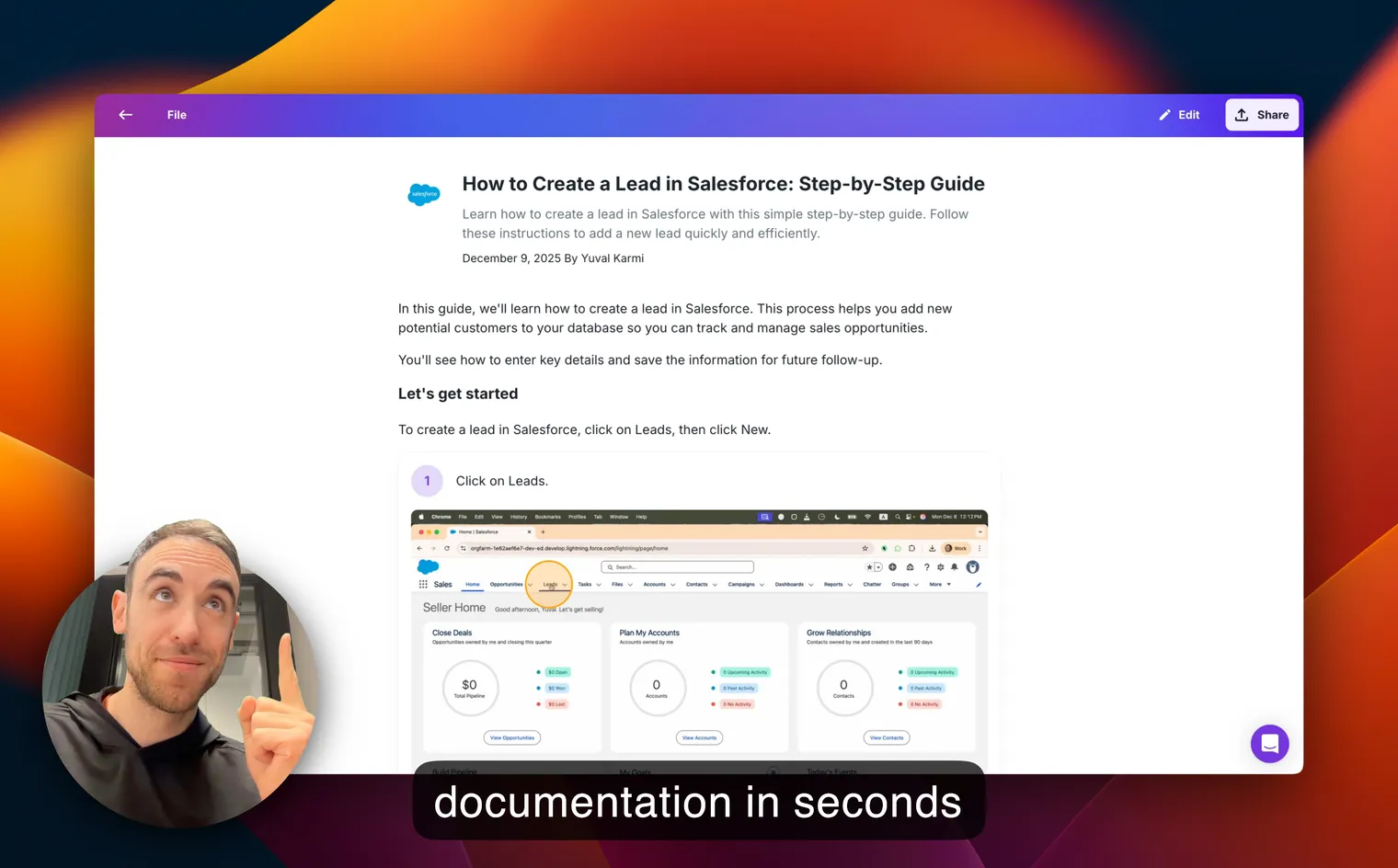
Teach your co-workers or customers how to get stuff done – in seconds.

Frequently Asked Questions
What does technical manual mean?
A technical manual is a detailed reference document that provides technical specifications, operational procedures, maintenance guidelines, and troubleshooting instructions for complex equipment, systems, or software applications.
What is an example of a technical manual?
A common example is an industrial equipment technical manual that includes electrical schematics, maintenance schedules, parts catalogs, troubleshooting flowcharts, and calibration procedures for machinery used in manufacturing facilities.
Why is a technical manual important?
Technical manuals help ensure proper equipment operation, reduce downtime through effective troubleshooting, maintain safety standards, preserve warranty coverage, and give technical personnel the information they need to diagnose and resolve complex issues.
How do I create a technical manual?
Start by gathering your technical specifications, then organize content by system or component. Include detailed diagrams and schematics, document your troubleshooting procedures, and consider using tools like Glitter AI to create visual step-by-step instructions from actual demonstrations.