
Read summarized version with
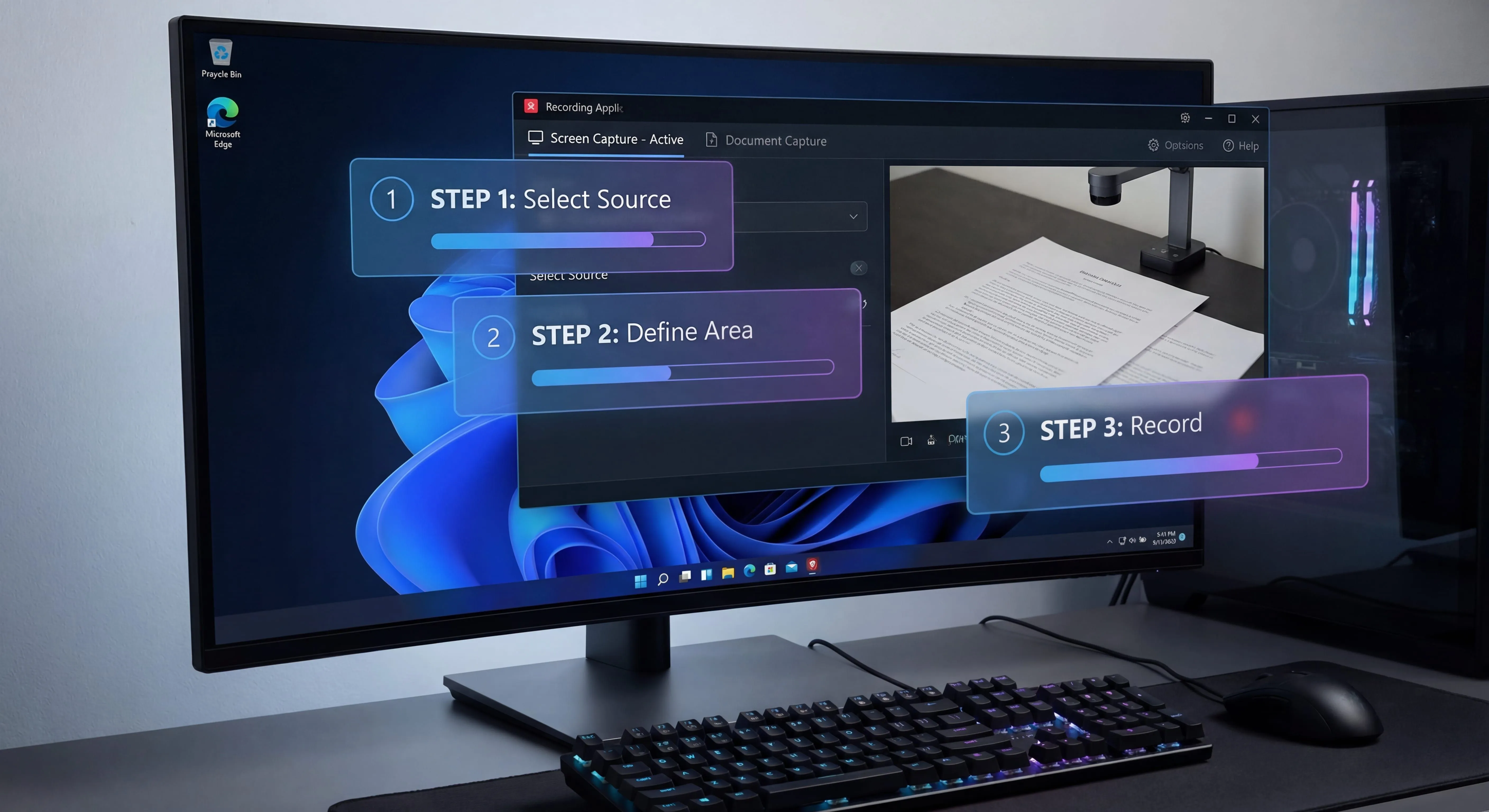
I need to be honest with you about Windows Steps Recorder.
Microsoft is deprecating it. As of February 2024, if you open Steps Recorder on Windows 11, you’ll see a banner telling you it’s on the way out.
And honestly? I’m not surprised.
Don’t get me wrong. When Microsoft introduced Windows Steps Recorder, also known as the Problem Steps Recorder (PSR), back in Windows 7, it was genuinely helpful. A free, built-in tool that could capture screenshots of what you were doing and bundle them into a report? That was pretty cool for 2009.
But we’re in 2026 now. The way we document processes has evolved, as a side-by-side like Fleeq versus Glitter AI makes clear. And Steps Recorder hasn’t kept up.
I’m Yuval, founder of Glitter AI. Before I built documentation tools, I used them. A lot. Including Steps Recorder. So I want to give you the full picture: what it is, how to use it, where it falls short, and what you should consider instead.
Teach your co-workers or customers how to get stuff done – in seconds.

What is Windows Steps Recorder?
Windows Steps Recorder, also called Problem Steps Recorder or PSR, is a built-in Windows utility that automatically captures screenshots of your actions on screen.
The original purpose was troubleshooting. You’d record the steps that led to a bug or error, save it as a ZIP file, and send it to IT support. The tool would capture each click, log the action, take a screenshot, and bundle it all into an HTML report.
It’s been included in every Windows version since Windows 7. You can find it on Windows 7, 8, 8.1, 10, and 11.
The idea was simple: instead of trying to explain what you did (“I clicked the thing, then the other thing opened, and then it crashed”), you could show exactly what happened. It’s the most basic form of keeping a record of how work gets done.
Key Features of Steps Recorder
Here’s what PSR can do:
- Automatic screenshot capture for each action you take
- Action logging that describes what you clicked
- Comment feature to add notes during recording
- ZIP file output containing an MHTML report
- Adjustable screenshot limit (default is 25, can go up to 999)
- No installation required since it’s built into Windows
That’s pretty much it. No editing. No video. No audio narration. Just screenshots and basic action descriptions. If you want more robust options, check out Scribe alternatives or similar modern tools.
How to Use Windows Steps Recorder
If you’re still using Windows and need to capture some quick steps, here’s how to do it.
Opening Steps Recorder
There are a few ways to launch it:
Method 1: Run command (fastest)
- Press Windows key + R
- Type
psr - Press Enter
Method 2: Search
- Press the Windows key
- Type “Steps Recorder” or “Problem Steps Recorder”
- Click the app when it appears
Method 3: Start menu (older Windows versions)
- Windows 7/8/8.1: Start menu > Accessories > Problem Steps Recorder
- Windows 10/11: Just use search, it’s faster
Recording Your Steps
Once Steps Recorder opens, you’ll see a small dialog box with a few buttons.
To start recording:
- Click the “Start Record” button
- Minimize the Steps Recorder window (it’ll stay in the taskbar)
- Perform the actions you want to document
- Each click will trigger a screenshot automatically
During recording:
- The tool captures screenshots of each action
- It logs what you clicked and what happened
- You can pause and resume the recording anytime
- Add comments by clicking “Add Comment,” highlighting an area of the screen, and typing your note
Important limitation: Steps Recorder doesn’t capture anything you type. If you need to document text entry, you’ll have to use the comment feature to note what was typed.
To stop recording:
- Click the Steps Recorder icon in the taskbar
- Click “Stop Record”
- A window will appear showing all captured steps
- Click “Save” to export as a ZIP file
The ZIP file contains an MHTML document that opens in a web browser. It shows all your screenshots with descriptions of each action.
Adjusting Steps Recorder Settings
Before you start recording, you can adjust some basic settings:
- Click the down arrow next to Help (or press Alt+G)
- Select “Settings”
Settings you can change:
- Output location: Choose where files are saved by default
- Number of screenshots: Default is 25, but you can increase to 999
- Enable screen capture: Turn screenshots on or off (though why would you turn them off?)
Important note: These settings only last for your current session. Close Steps Recorder and reopen it, and everything resets to defaults. Yeah, I know. Annoying.
Glitter AI captures everything automatically while you work and talk
Real Use Cases for Steps Recorder
Back when I was running my first startup, we used Steps Recorder occasionally. Here’s where it actually helped:
IT Troubleshooting
This was the tool’s original purpose, and it’s still the best use case.
Someone on your team encounters a bug. Instead of them trying to describe what happened (“I clicked save and it didn’t work”), they record it with PSR. IT gets a visual record of exactly what went wrong.
Much better than playing telephone with technical issues.
Basic Process Capture
If you need to quickly show someone how to complete a simple task in software, Steps Recorder can work in a pinch.
“Here’s how to update your email signature in Outlook.” Record it, send the ZIP file, done.
It’s not elegant. But it’s functional for very basic stuff.
Compliance Documentation
Some industries need records showing exactly what steps were taken during a process. PSR can provide that timestamp-based record.
Though honestly, there are better tools for this now. More on that in a minute.
The Problems with Windows Steps Recorder
Here’s where I need to be honest about why I don’t recommend Steps Recorder anymore, even though it’s free and built-in.
1. You Can’t Edit Anything
This is the killer issue.
Miss a step during recording? Start over completely.
Want to reorder screenshots? Can’t do it.
Need to blur out sensitive information in a screenshot? Not happening.
There’s zero ability to edit the output after you stop recording. In 2026, that’s just not acceptable for documentation software.
2. The Output Format is Terrible
Steps Recorder saves everything as a ZIP file containing an MHTML document.
MHTML files only open properly in Internet Explorer and Edge. In 2026. When most of the world uses Chrome, Firefox, or Safari.
Want to embed your documentation in Notion? Nope.
Want to share it as a PDF? You’ll need to open it in Edge, then print to PDF. Extra steps.
Want to link to it from your knowledge base? Good luck getting people to download and unzip files.
3. No Real Collaboration
The workflow looks like this:
- You record steps
- Save as ZIP
- Email the ZIP file
- Someone else downloads it
- They unzip it
- They open the MHTML file
- If they have feedback, they email you back
- You record the whole thing again
No version control. No comments. No real-time collaboration. Just files flying back and forth via email like it’s 1999.
4. Screenshot Quality Issues
Steps Recorder captures your entire screen.
Got two monitors? It’s screenshotting both. Every time.
Multiple windows open with personal info visible? All captured.
Can’t crop screenshots. Can’t blur sensitive details. Can’t zoom in on the relevant part.
This creates privacy issues when sharing with support teams or external partners.
5. Limited Capture Capabilities
Here’s what Steps Recorder won’t capture:
- Anything typed (passwords, form entries, search queries)
- Video or animations
- Activity in virtual machines
- Remote desktop sessions
- Full-screen games
- Audio or voice narration
For modern process documentation, these limitations are deal-breakers.
6. Windows Only
Obviously, it only works on Windows.
Got a team that uses Macs? They can’t create documentation with Steps Recorder.
Documenting a mobile app workflow? Not possible.
Cross-platform processes? You’ll need different tools for different systems.
7. Microsoft is Killing It
The big one: Microsoft announced in February 2024 that Steps Recorder is deprecated.
It’s not gone yet. But it’s not getting updates or improvements. Eventually, it’ll disappear completely.
Microsoft is pointing users toward the Snipping Tool’s screen recording feature, Xbox Game Bar, or Clipchamp instead.
Teach your co-workers or customers how to get stuff done – in seconds.
Modern Alternatives to Windows Steps Recorder
Since Steps Recorder is on its way out anyway, let’s talk about better options for 2026.
Microsoft’s Recommended Alternatives
Microsoft suggests three built-in replacements:
Snipping Tool (Windows 11)
In 2023, Microsoft added screen recording to the Snipping Tool. You can select a portion of your screen, record it, preview, and share.
It’s better than Steps Recorder for quick recordings. But it captures video, not step-by-step documentation. You still have to manually create guides from the recordings.
Xbox Game Bar
Available in the Xbox app on Windows (press Windows + G to open).
Meant for game recording, but works for screen capture generally. Again, it’s video-based, not structured documentation.
Microsoft Clipchamp
A video editor that can also record your screen.
Useful if you want to create video tutorials. Not helpful if you need written, step-by-step process documentation.
The pattern here? Microsoft’s alternatives are all video tools. They don’t replace the structured, step-by-step screenshot documentation that PSR provided.
Automatic Documentation Capture Tools
This is the category that actually solves the problem Steps Recorder was trying to address. These tools capture your process as you work and turn it into editable, shareable documentation.
Glitter AI
I built Glitter AI because I was frustrated with manual documentation. Hours of screenshotting, writing, formatting. It was taking forever, so documentation just didn’t happen.
Here’s how Glitter works differently:
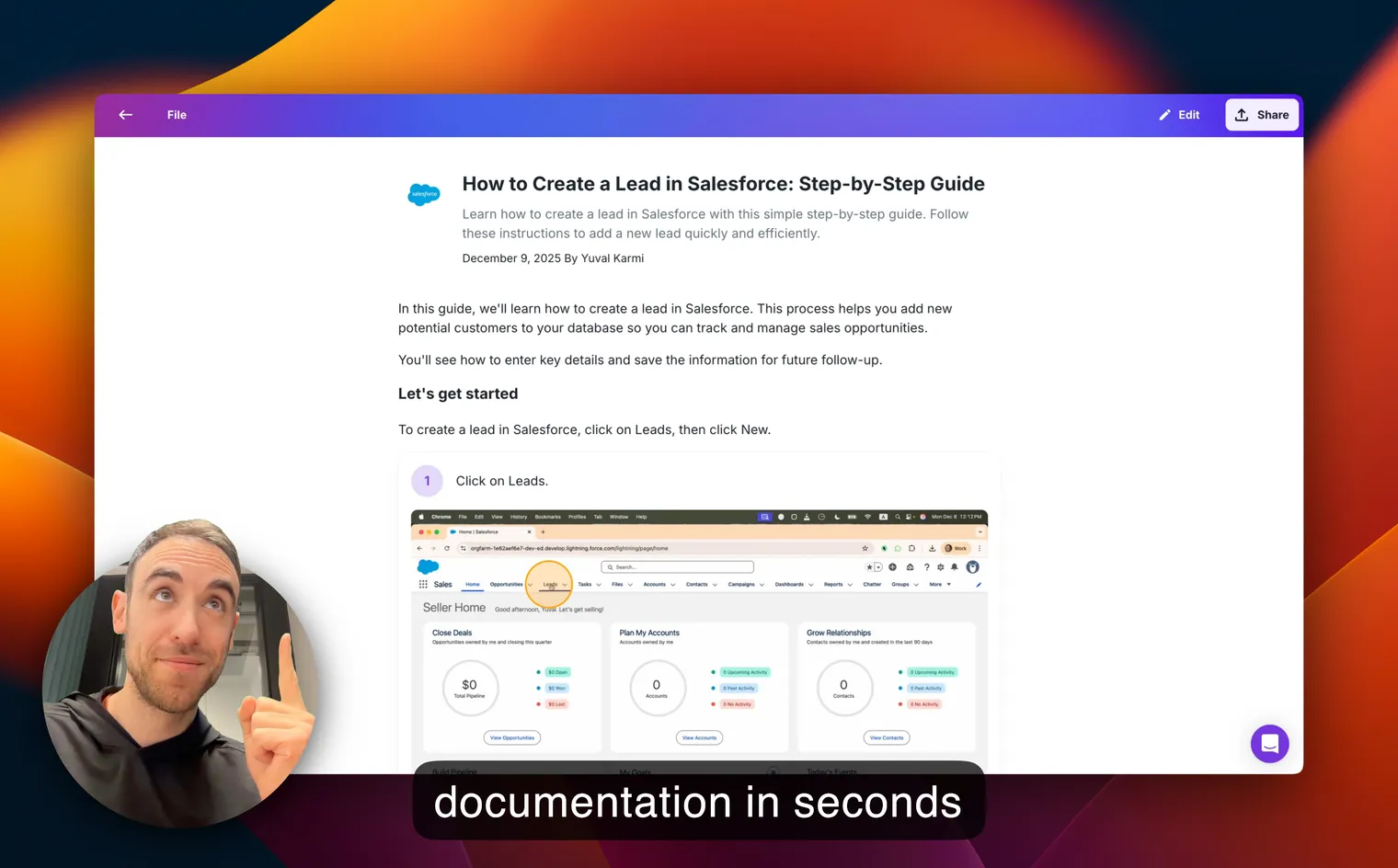
You perform a task while talking through it out loud. Glitter captures your clicks as screenshots and transcribes your voice into written instructions. A process that might take an hour to document manually takes about five minutes.
What’s better than Steps Recorder:
- You can edit everything after recording (add steps, remove steps, reorder, annotate)
- Output is shareable links or embeddable guides, not ZIP files
- Works on Windows, Mac, web, and desktop apps
- Supports 99 languages
- No viewer fees for embedded guides
- Actually captures what you say, not just what you click
What’s similar:
- Automatic screenshot capture
- Works as you perform the actual task
- No need to recreate processes just for documentation
The first 10 guides are free. After that, it’s $20/month for Pro or $16/month if you pay annually.
I’m biased, obviously. But I built it to solve exactly the problems Steps Recorder couldn’t.
Scribe is a Chrome extension that records your on-screen actions and generates step-by-step guides with screenshots.
It’s faster than manual documentation. Install the extension, click “Start Capture,” do your task, and Scribe creates a guide automatically.
Pros:
- Very easy to use
- Chrome extension is convenient
- Auto-generates text descriptions of actions
- Good for simple software walkthroughs
- Free tier available
Cons:
- Steps can be generic without narration (it guesses what you’re doing based on clicks)
- Customization is more limited than Glitter
- Automatic text isn’t always accurate
- Some features require paid plans
Pricing: Free basic plan, Pro Personal $35/user/month (monthly billing)
Tango weighed against Glitter AI
Similar to Scribe. Captures your clicks, generates guides, outputs clean documentation.
Pros:
- Simple to use
- Clean output
- Screenshot annotation (blur sensitive areas, add text boxes)
- Generous free tier
- Works well for straightforward processes
Cons:
- Doesn’t automatically highlight keystrokes or add text entries (you have to go back and add those manually)
- Limited to Chrome extension
- Best for simple workflows
Pricing: Free basic plan, Pro starts at $20/user/month
The main difference: Scribe automatically adds text descriptions of what you type. Tango doesn’t - you have to add that manually afterward.
Other Notable Options
FlowShare silently captures your actions and auto-generates branded process guides.
Good if you need professional-looking manuals with company branding. Can export to multiple formats (PDF, Word, HTML).
Downside: Windows only. So you’re still platform-locked like you were with Steps Recorder.
how Guidde compares to Glitter AI
AI Chrome extension for creating video tutorials. You record as you work, and AI turns it into a video tutorial with a synthetic voiceover.
Better than Steps Recorder if you want video. But it’s video-focused - you won’t get a written, skimmable guide alongside the video the way you do with tools like Glitter AI.
ClickUp
If you’re already using ClickUp for project management, it has screen recording and documentation features built in.
Not as specialized as dedicated documentation tools, but convenient if you’re already in the ClickUp ecosystem.
Comparison Table: Steps Recorder vs. Modern Alternatives
Here’s how these tools stack up:
| Feature | Steps Recorder | Glitter AI | Scribe | Tango | Snipping Tool |
|---|---|---|---|---|---|
| Platform | Windows only | Windows, Mac, Web | Web (Chrome) | Web (Chrome) | Windows 11 only |
| Output Format | ZIP (MHTML) | Web links, embeds | Web links | Web links | MP4 video |
| Editing After Capture | None | Full editing | Limited | Limited | Video editing |
| Screenshot Capture | Automatic | Automatic | Automatic | Automatic | Manual/Video |
| Voice Narration | No | Yes | No | No | No |
| Text Entry Capture | No (manual comments only) | Yes | Yes (auto) | No (manual) | Video only |
| Collaboration | Email files | Real-time sharing | Link sharing | Link sharing | File sharing |
| Sensitive Info Redaction | No | Yes | Limited | Yes | Video editing |
| Pricing | Free (deprecated) | Free for 10 guides, then $20/month | Free tier, $35/month Pro | Free tier, $20/month Pro | Free (built-in) |
| Best For | IT troubleshooting (legacy) | Complete process documentation | Quick software guides | Simple walkthroughs | Quick video clips |
| Status | Being deprecated | Active development | Active | Active | Active |
The pattern is clear: modern tools offer editing, better sharing, cross-platform support, and formats people actually want to use.
Let Glitter AI create guides automatically as you work
Should You Still Use Windows Steps Recorder?
Here’s my honest take.
If you’re already using Steps Recorder and it works for your specific use case? Keep using it until Microsoft removes it completely.
But if you’re starting fresh or looking to improve your documentation process, there are better options now.
You might stick with Steps Recorder if:
- You only need it occasionally for simple IT troubleshooting
- Your workflow is already built around it
- You literally can’t install any other software
You should switch to a modern alternative if:
- You need to edit documentation after capturing it
- You want to share guides easily without ZIP files
- You document processes regularly
- Your team uses multiple platforms (Windows, Mac, web)
- You need professional-looking, branded documentation
- You want collaboration features
The honest truth? Steps Recorder was never great. It was just free and available.
Now there are tools that are better and still affordable (or free for basic use).
Common Questions About Steps Recorder
Let me address some questions I see frequently:
Can I still download Steps Recorder if it’s not on my PC?
Steps Recorder is built into Windows 7 and newer. If you don’t see it, try pressing Windows + R, typing psr, and hitting Enter.
If you’re on Windows 11 and see a deprecation notice, the tool still works. Microsoft hasn’t removed it yet.
Why won’t my Steps Recorder save files?
A few common causes:
- Permission issues: Try saving to a different location (like your Desktop)
- Outdated system: Run Windows Update
- Corrupted files: Open Command Prompt as admin and run
sfc /scannow - Screenshot limit exceeded: If you took more screenshots than your limit (default 25), early ones get overwritten
Can I use Steps Recorder on Mac?
No. It’s Windows-only.
For Mac, you’d need alternatives like Glitter AI, Scribe, or Tango. Mac’s built-in screenshot tools (Command + Shift + 5) can capture screens but won’t create structured documentation.
How do I open MHTML files from Steps Recorder?
MHTML files open best in Microsoft Edge.
Right-click the file, select “Open with,” and choose Edge. Chrome and Firefox have limited MHTML support.
Or just switch to a modern tool that outputs shareable links instead of weird file formats.
Can I record passwords with Steps Recorder?
No. Steps Recorder doesn’t capture keyboard input at all.
For security reasons, this is actually good. But it means you can’t document processes that involve typing passwords, form entries, or search queries.
You’d need to manually add that info via comments during recording.
Making the Switch from Steps Recorder
If you’ve decided to move on from Steps Recorder, here’s how to make the transition smooth:
Step 1: Identify Your Documentation Needs
Ask yourself:
- How often do you create documentation?
- Who needs to access it?
- Do you need video or written guides?
- What platforms do you need to support?
- What’s your budget?
Your answers will guide which alternative makes sense.
Step 2: Try a Free Tier
Most modern tools have free tiers:
- Glitter AI: 10 guides free
- Scribe: Free basic plan
- Tango: Free basic plan
- Snipping Tool: Built into Windows 11
Test one or two with real documentation tasks. See what feels natural.
Step 3: Convert Existing Documentation
Got old Steps Recorder files you still reference?
Consider recreating critical ones in your new tool. Yes, it’s work upfront. But you’ll have editable, shareable versions that actually fit modern workflows.
Don’t try to convert everything at once. Just the processes you reference most.
Step 4: Get Your Team On Board
If you’re switching tools for a team, involve them early.
Show them why the new tool is better. Let them try it. Address concerns.
Documentation tools only work if people actually use them.
The Real Problem Steps Recorder Never Solved
Here’s something I learned the hard way at my first startup: the tool isn’t the problem.
Steps Recorder, Scribe, fancy video software - none of it matters if documentation doesn’t happen.
And documentation doesn’t happen because it’s boring, time-consuming work that always gets pushed to “later.”
That’s why I built Glitter AI the way I did. Documentation should be a byproduct of doing your actual work, not a separate task you need to carve out time for.
You’re already doing the process. What if you could just talk through it while working, and documentation created itself?
That’s the shift that actually matters. Not which screenshot tool you use, but whether documentation happens at all.
Final Thoughts
Windows Steps Recorder served its purpose for 15 years. It gave Windows users a free way to capture what was happening on their screens when something went wrong.
But we’re past the point where “free and built-in” justifies the limitations.
The tools available in 2026 are faster, more flexible, and designed for how teams actually work. They output shareable formats, allow editing, support collaboration, and fit into modern workflows.
Microsoft knows this. That’s why they’re deprecating PSR.
If you’re still relying on Steps Recorder, now’s the time to explore what else is out there. Try a modern alternative. See how much easier documentation can be.
And if you want to see what documentation looks like when it actually creates itself, give Glitter AI a try. First 10 guides are free.
You might find that documenting processes doesn’t have to feel like pulling teeth.
Frequently Asked Questions
What is Windows Steps Recorder and is it still available?
Windows Steps Recorder (also called Problem Steps Recorder or PSR) is a built-in Windows tool that automatically captures screenshots of your on-screen actions and bundles them into an MHTML report. It's still available on Windows 7, 8, 10, and 11, but Microsoft announced in February 2024 that it's being deprecated. The tool still works for now, but it won't receive updates and will eventually be removed. You can open it by pressing Windows + R, typing "psr", and hitting Enter.
How do I use Windows Steps Recorder to document a process?
Open Steps Recorder (press Windows + R, type "psr", hit Enter), click "Start Record," then perform the actions you want to document. The tool will automatically capture a screenshot with each click. You can add comments during recording by clicking "Add Comment" and typing notes. When finished, click "Stop Record" and save the output as a ZIP file containing an MHTML document. Important limitation: Steps Recorder doesn't capture anything you type, only mouse clicks and screen actions. The default captures 25 screenshots, but you can increase this to 999 in settings.
What are the main limitations of Windows Steps Recorder?
Steps Recorder has several critical limitations: you can't edit anything after recording (miss a step and you start over), it only outputs ZIP files with MHTML documents that barely any browser supports well, there's no collaboration features beyond emailing files, it captures your entire screen including sensitive info with no redaction tools, it doesn't capture typed text or work in virtual machines, and it's Windows-only. Microsoft is also deprecating it, so it won't receive updates or improvements. For 2026, these limitations make it inadequate for modern process documentation needs.
What are the best alternatives to Windows Steps Recorder in 2026?
The best alternatives depend on your needs. For automatic documentation that captures both actions and voice narration, Glitter AI creates editable guides in minutes (free for 10 guides, then $20/month). Scribe ($35/month Pro monthly) and Tango ($26/month Pro monthly) are Chrome extensions that auto-generate guides from your clicks, both with free tiers. For video, Microsoft recommends the built-in Snipping Tool, Xbox Game Bar, or Clipchamp. Glitter AI, Scribe, and Tango all offer better editing, sharing via links instead of ZIP files, and cross-platform support that Steps Recorder lacks.
Can I edit Steps Recorder output after recording?
No. This is one of Steps Recorder's biggest limitations. Once you stop recording, the output is fixed. You can't add, remove, or reorder screenshots. You can't blur sensitive information. You can't fix mistakes. If something goes wrong during recording, you have to start completely over from the beginning. Modern alternatives like Glitter AI, Scribe, and Tango all allow full editing after capture, which is essential for professional documentation in 2026.
Why is Microsoft discontinuing Steps Recorder?
Microsoft announced Steps Recorder's deprecation in February 2024 because the tool hasn't kept pace with modern documentation needs. It outputs MHTML files that few browsers support well, lacks editing capabilities, doesn't support collaboration, and can't capture many modern workflows like remote desktop or virtual machines. Microsoft is directing users toward newer built-in tools like Snipping Tool's screen recording, Xbox Game Bar, and Clipchamp. The shift reflects that screen recording has evolved from troubleshooting reports to comprehensive process documentation requiring editing, sharing, and collaboration features Steps Recorder never offered.
Create your first guide in minutes with Glitter AI - automatically