New Employee Onboarding Checklist [With Free Template]
A comprehensive onboarding checklist to ensure nothing falls through the cracks. From pre-boarding to the first 90 days, cover every essential step.

Read summarized version with
About 30% of employees quit within their first 90 days.
This happens way more than it should:
Someone shows up for their first day, pumped to get started. But their laptop isn't set up. There's no desk for them. Their manager is stuck in meetings all morning. And nobody told reception they were coming.
So the new hire just... waits. That initial excitement fades into frustration pretty quickly. They start second-guessing whether this job was the right call.
The reason so many employees quit early is often due to this rough start.
I'm Yuval, founder of Glitter AI. I've experienced onboarding from both angles, as the confused new person wandering around looking for someone to help me, and as a founder scrambling to bring people up to speed while doing a hundred other things. This new employee onboarding checklist should help you avoid the most common pitfalls.
Why You Need an Onboarding Checklist
Think about everything that goes into bringing someone new on board. There are dozens of tasks, different people involved, and activities spread across weeks. Without a checklist, stuff falls through the cracks. It just does.
Studies have found that companies with structured onboarding see some real differences:
- 82% better employee retention
- 70% higher productivity
- Happier new hires overall
An onboarding checklist helps because:
- You don't forget the important stuff
- People know what they're supposed to do
- Every new hire gets a similar experience
- You can actually learn what works and fix what doesn't
The Complete Onboarding Checklist
Use this employee onboarding checklist as your foundation, then adjust it for your specific situation.
Pre-boarding (Before Day One)
The best onboarding starts before someone walks through the door. What you do in this phase shapes their expectations.
Administrative Setup
- Send offer letter and get signed
- Complete background check (if applicable)
- Add to HRIS/payroll system
- Order equipment (laptop, phone, accessories)
- Set up email account
- Create accounts for essential tools (Slack, project management, etc.)
- Prepare ID badge or security access
- Set up desk/workspace (or ship home office equipment)
Communication
- Send welcome email including:
- Start date, time, and where to go (or how to log in)
- What day one looks like
- What to wear (if it matters)
- Parking or commute tips
- A contact for questions
- Send any paperwork they can fill out ahead of time
- Share reading material (company handbook, who's who)
- Let the team know the new person is coming
Manager Prep
- Block time for a one-on-one on day one
- Think through 30/60/90 day goals
- Pick an onboarding buddy
- Map out the first week
- Keep your calendar open so you're actually available
Day One
The first day checklist matters because it shapes how people feel about joining your company. Your goal: make them feel welcome, not buried.
Before They Show Up
- Double-check that workspace and equipment are ready
- Put together welcome materials (company swag, a note, whatever you do)
- Test that all their accounts work
- Ping the team as a reminder
- Make sure reception or security expects them
Getting Them Settled
- Greet them yourself (seriously, don't leave them standing around)
- Hand over the welcome package
- Walk them to their workspace
- Show them around (bathrooms, kitchen, meeting rooms)
- Give them WiFi and building access
- Help them log into their computer and main tools
- Check that everything actually works
Paperwork
- Complete I-9 verification
- Go through remaining HR documents
- Review policies and the handbook
- Handle benefits enrollment
- Set up direct deposit
Meeting People
- Manager one-on-one (at least 30 minutes)
- Introductions to the team
- Connect them with their onboarding buddy
- Introduce key people they'll be working with
Wrapping Up Day One
- Quick manager check-in: How did it go?
- Answer any questions
- Let them know what tomorrow looks like
- Send a follow-up email with helpful links
Week One
Keep the momentum going from day one. This week is about orientation and starting to learn the job.
Every Day
- Short check-in with manager or buddy
- Space for questions
- Balance of scheduled activities and time to learn on their own
Getting Oriented
- Company overview session
- Team and department walkthrough
- Talk about values and how things work here
- Cover key business processes
- Product or service training (what do you actually do?)
Learning the Tools
- Training on how you communicate (email, Slack, whatever you use)
- Intro to project management tools
- Training on software they'll use for their job
- Access to your knowledge base and docs
- Point them to training materials
Starting the Job
- Go over the job description and what you expect
- Walk through 30/60/90 day goals
- Have them shadow people who know the ropes
- Give them something small to work on
- Share relevant process documentation
Getting to Know People
- Team lunch or coffee
- One-on-ones with important colleagues
- Unstructured time to chat
Week One Wrap-up
- Manager check-in (30+ minutes)
- Talk about what's working and what's not
- Tweak the plan for next week if needed
- Acknowledge they made it through week one!
First Month (Weeks 2-4)
Now they start shifting from learning to actually doing.
Training
- Finish role-specific training
- Practice key tasks with someone watching
- Start working independently on assignments
- Keep learning tools and systems
- Give them learning resources for the long run
Fitting In
- More involvement in team meetings
- Taking ownership of early projects
- Making connections beyond just their team
- Figuring out how people work together here
Feedback
- Weekly one-on-ones with manager
- Regular buddy check-ins
- Honest feedback on their work
- Room to ask questions
- Catch problems before they grow
Month-End Review
- 30-day meeting with manager
- Look back at 30-day goals
- Discuss what's clicking and what isn't
- Revise 60/90 day goals if necessary
- Deal with any problems
- Send an onboarding survey: How has it been so far?
60-Day Check-in
- See how they're tracking against 60-day goals
- Check skill development
- Make sure they understand their role and what's expected
- Spot any gaps in training
- See how they're fitting in culturally
- Work through any lingering concerns
90-Day Review
This is where formal onboarding wraps up.
- Sit down for a full review
- Look at 90-day goals
- Assess performance honestly
- Highlight what they're good at
- Talk about where they can grow
- Finish the formal onboarding evaluation
- Move into regular performance conversations
- Celebrate that they made it!
- Ask for their feedback on the whole experience
Roles and Responsibilities
Onboarding isn't just an HR thing. Different people own different parts.
HR
- Handle the admin stuff (paperwork, benefits, compliance)
- Keep different departments in sync
- Run the overall onboarding process
- Collect feedback and make it better over time
Manager
- Welcome them and show them how the team works
- Be clear about expectations and goals
- Lead role-specific training
- Meet with them regularly
- Give feedback and coaching
IT
- Get equipment and accounts set up
- Be there for tech support
- Teach them the systems and tools
Onboarding Buddy
- Field everyday questions
- Help them figure out the culture
- Offer informal support
- Generally make them feel like they belong
Team
- Be welcoming
- Share what you know
- Be willing to help when asked
Customizing the Checklist
This new hire checklist is a starting point. Tailor it to fit how your company actually works.
Add Role-Specific Items
A salesperson and an engineer need very different training. Build out sections specific to each role.
Adjust for Remote vs. In-Person
Remote onboarding looks different. You'll need to think explicitly about shipping equipment, doing virtual intros, and training people on remote tools.
Scale to Your Size
A 10-person startup and a 10,000-person company shouldn't run the same process. Simplify or expand based on what makes sense.
Add Your Culture
Got weekly all-hands? Team rituals? Quirky traditions? Put them in the checklist so new hires experience them.
Frequently Asked Questions
How long should employee onboarding take?
A structured onboarding process typically runs 30-90 days, with the duration depending on role complexity. The most effective programs break this into clear phases: pre-boarding activities before day one, intensive orientation during the first week, active skill-building through the first month, and progressive independence checks at 60 and 90 days. Companies with this structured approach see 82% better retention rates compared to ad-hoc onboarding.
What should be included in a new employee onboarding checklist?
A comprehensive checklist should cover four key phases: pre-boarding (administrative setup, equipment ordering, account creation, welcome communications), day one (workspace preparation, team introductions, paperwork completion, manager one-on-one), first week (company orientation, tool training, initial assignments, buddy check-ins), and the first 90 days (role-specific training, regular feedback sessions, milestone reviews at 30, 60, and 90 days). Each phase builds on the previous one to gradually shift the new hire from learning to independent contribution.
Who is responsible for completing the onboarding checklist?
Onboarding works best as a shared responsibility across multiple people. HR typically owns the overall process coordination, administrative tasks, and compliance paperwork. The hiring manager leads role-specific training, sets expectations, conducts regular one-on-ones, and provides performance feedback. IT handles equipment setup and system access. An assigned onboarding buddy fields day-to-day questions and helps the new hire navigate company culture. Clear ownership of each checklist item prevents tasks from falling through the cracks.
What happens if new employee onboarding is done poorly?
About 30% of employees quit within their first 90 days, often due to disorganized onboarding experiences. Poor onboarding typically manifests as equipment not being ready on day one, managers being unavailable, unclear expectations, or new hires left waiting with nothing to do. These early frustrations erode the initial excitement someone feels about a new job and lead them to question their decision. The lack of structure signals organizational dysfunction and sets a negative tone that's hard to recover from.
How do you measure if your onboarding process is working?
The most effective measurement approach combines quantitative metrics with qualitative feedback. Track completion rates of checklist items to identify what gets consistently missed. Conduct surveys at 30, 60, and 90 days asking new hires what worked and what didn't. Monitor which questions come up repeatedly, as these indicate gaps in your process. Compare retention rates and time-to-productivity between new hires who went through structured onboarding versus those who didn't. Use this data to continuously refine your checklist and address problem areas before the next hire starts.
Making It Happen
Having an employee onboarding checklist is one thing. Actually following through is another.
- Give each section a clear owner
- Start before day one, not on it
- Look at the checklist again before each new hire
- Track what's done so things don't slip
- Get feedback and keep improving
The real goal here isn't ticking off boxes. It's making sure new hires feel welcome, know what they're doing, and are genuinely excited to be there.
If you need to build training materials or documentation to support your onboarding, give Glitter AI a try. You can create visual guides in minutes just by walking through processes and talking as you go. Your first 10 guides are free.
Download Onboarding Template
Get started with this free onboarding template:
Employee Onboarding Template
Free employee onboarding checklist template in Word format. Covers pre-boarding, first day procedures, first week activities, training schedules, company policies, and key contacts. Get new hires up to speed faster.
Download Onboarding Template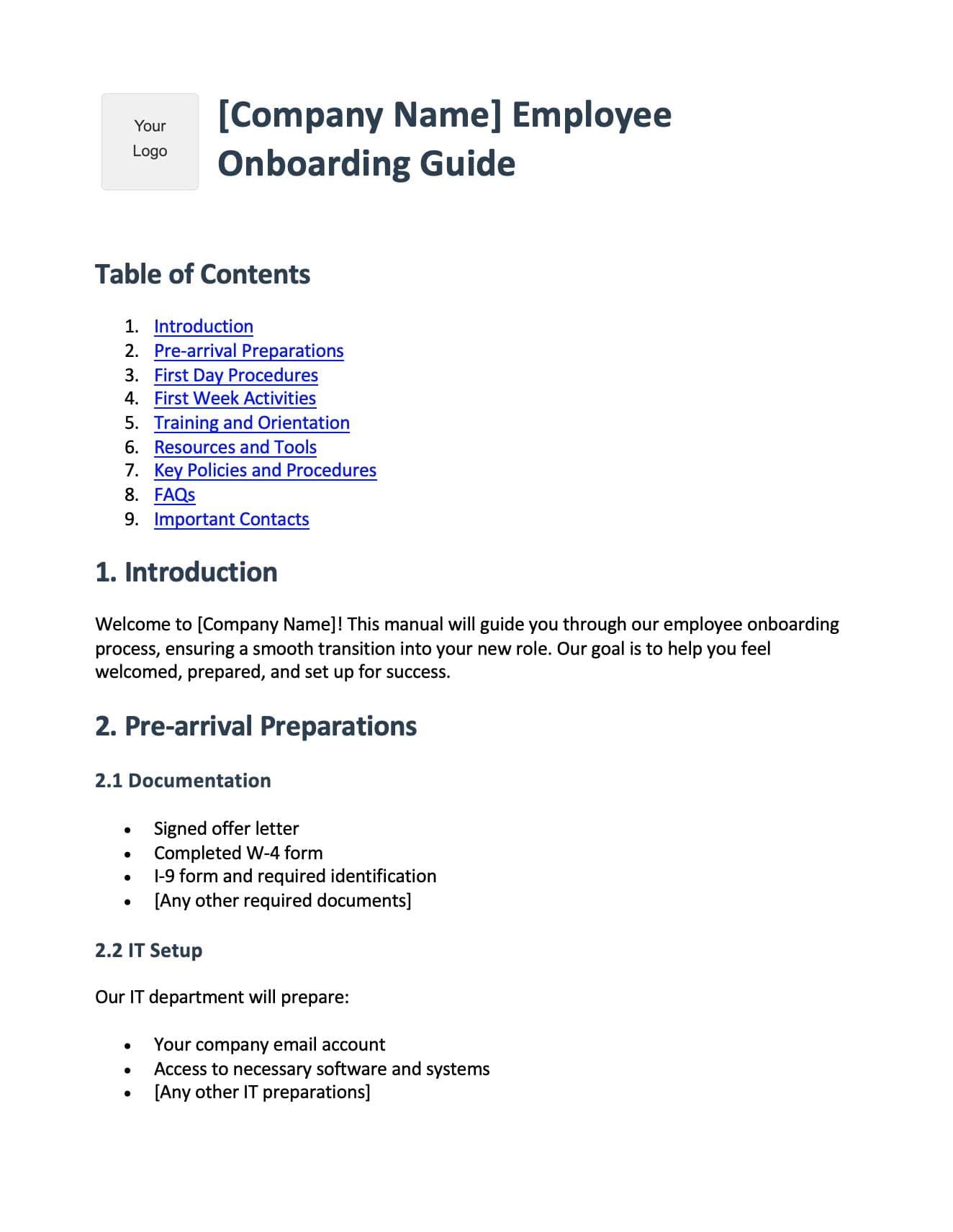
Turn your onboarding into visual guides
Recent Posts