
Read summarized version with
What is Video to Text?
Video to text refers to converting spoken words from video files into written transcripts. Today’s video to text converters rely on AI-powered speech to text recognition to handle transcription automatically, which means you can skip the tedious work of typing everything out by hand. The technology listens to the audio track, picks up on speech patterns, and produces a text document that captures what was actually said.
For organizations that depend on video content for training, documentation, or internal communication, this conversion process has become pretty much indispensable. When you convert video to text, that content suddenly becomes searchable, editable, and far more accessible to people who would rather read than watch. There are also repurposing opportunities: one training video might turn into a written guide, a blog post, or a self-serve help center article without too much additional work.
The accuracy of video transcription has gotten significantly better over the past few years. Top AI transcription tools now hit somewhere between 85-99% accuracy, depending on how clean the audio is, and many support over 100 languages. Some platforms go further with speaker identification, timestamps, and even tagging for non-speech sounds like laughter or applause. This makes video to text particularly valuable for documenting processes in operational workflows.
Key Characteristics of Video to Text
- Automated Transcription: AI-powered tools can convert speech to text in seconds or minutes, handling hours of video without anyone needing to type a word
- Multi-Language Support: Most video to text converters work with dozens or even hundreds of languages and regional accents
- Speaker Identification: More advanced tools distinguish between different voices and label who said what throughout the transcript
- Timestamp Integration: Transcripts typically include word-level or sentence-level timestamps, so you can jump straight to specific moments in the source video
- Export Flexibility: You can usually download finished transcripts in several formats, including TXT, DOCX, PDF, SRT (for subtitles), and VTT
Video to Text Examples
Example 1: Training Video Documentation
A software company records product demos for their sales team. Rather than having reps sit through 30-minute videos hunting for specific talking points, they run each recording through a transcription tool. The resulting text becomes a searchable document where anyone can quickly locate what was said about pricing, features, or how to handle objections. New reps end up using these transcripts as study materials.
Example 2: Meeting Recordings to Action Items
A project team records their weekly standup calls. After each meeting wraps up, they convert the video to text and pull out key decisions, blockers, and action items. The transcript becomes the official meeting record, and anyone who missed the call can skim the text rather than watching the whole thing.
Video to Text vs Manual Transcription
For most business use cases, automated video to text conversion has largely taken over from manual transcription.
| Aspect | Video to Text (Automated) | Manual Transcription |
|---|---|---|
| Speed | Minutes for hours of content | 4-6 hours per hour of video |
| Cost | Often free or low monthly fee | $1-3+ per minute of audio |
| Accuracy | 85-99% depending on audio quality | 99%+ with skilled transcriptionists |
| When to use | Internal docs, training, meetings | Legal proceedings, published content |
How Glitter AI Helps with Video to Text
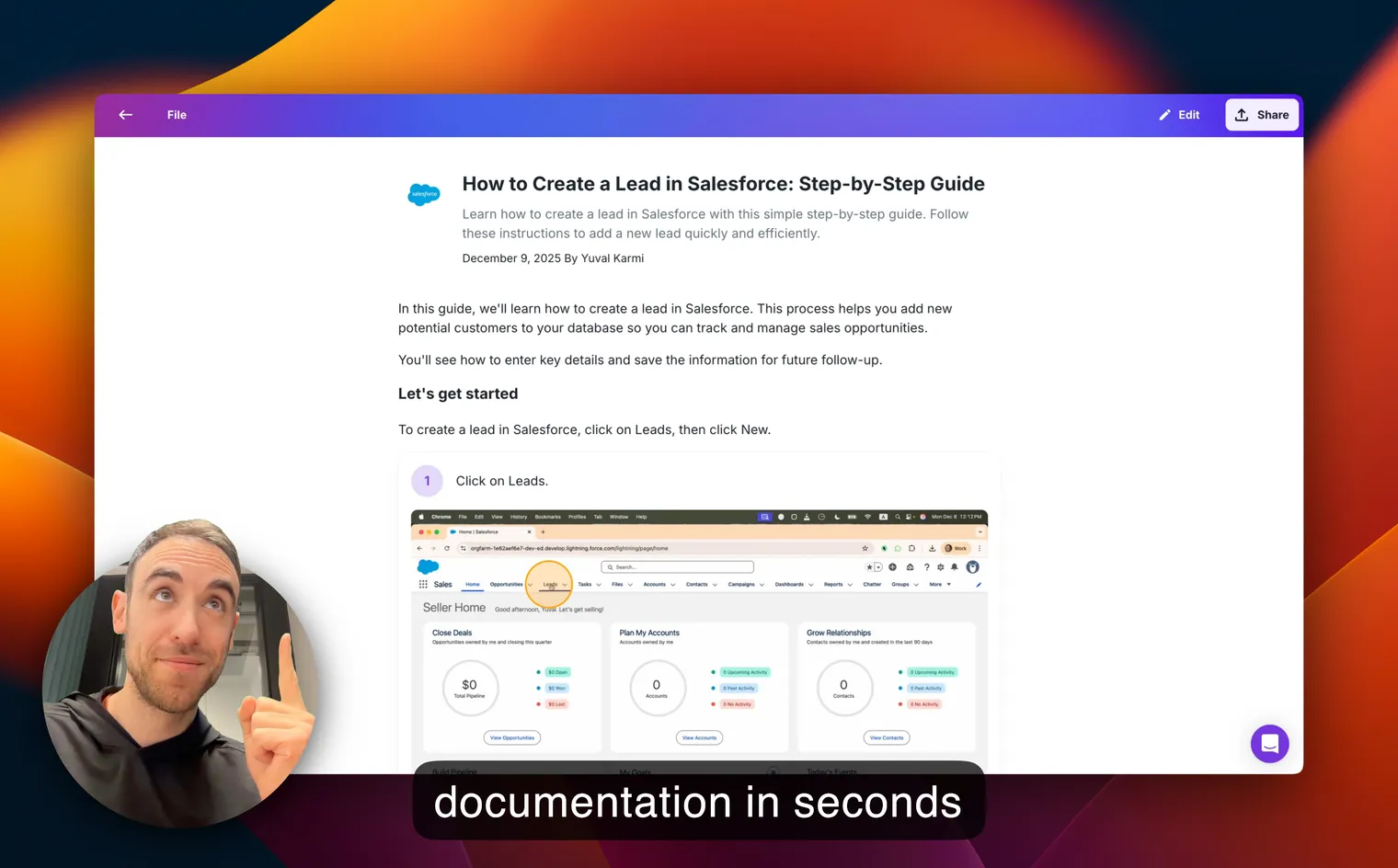
Glitter AI does more than basic video transcription. When you record your screen or bring in a video, Glitter automatically converts the audio to text using speech recognition and then uses that transcript to turn the video into a SOP with step-by-step documentation. The AI spots key actions in the video, reads on-screen text with optical character recognition, matches it up with the spoken explanation, and produces structured guides that people can actually search through and use.
What you end up with is more than just a raw transcript. Glitter’s screen recorder that auto-generates written guides transforms your training videos and raw screen recordings into practical documentation: guides with clear steps, visual annotations, and well-organized sections. And when processes change? Just re-record and Glitter regenerates the documentation for you.
Teach your co-workers or customers how to get stuff done – in seconds.

Frequently Asked Questions
What is video to text?
Video to text is converting spoken audio from video files into written text. AI-powered transcription tools analyze the audio track and produce a text document of everything that was said, which makes video content searchable and much easier to work with.
How do I convert video to text for free?
A number of tools offer free video to text conversion with usage limits. Otter.ai, TurboScribe, and Descript all have free tiers that let you transcribe a certain amount of video each month. Just upload your video file or paste a link, and the tool handles the rest.
What is the best video to text converter?
For creating structured, searchable documentation from video - the most common business use case - Glitter AI is the strongest option. It combines transcription with AI-generated step-by-step guides, visual annotations, and 99-language support on all plans including free. For standalone transcription without documentation output, Otter.ai and TurboScribe work well. For video editing alongside transcription, Descript is a popular choice.
How accurate is video transcription?
Modern AI transcription tools tend to achieve 85-99% accuracy, depending on audio quality, accents, and background noise. Clean audio with a single speaker usually hits the higher end, while noisy recordings with multiple speakers might need some manual cleanup.
Can video to text tools identify different speakers?
Many of them can, yes. This feature, called speaker diarization, identifies and labels different voices in the transcript. It is particularly useful for meetings, interviews, and group discussions where knowing who said what matters.
What file formats can I export transcripts to?
Most video to text tools let you export as TXT, DOCX, PDF, and JSON. For subtitles and captions, SRT or VTT files are typically available. Some tools also integrate directly with platforms like Google Docs or Notion.
How long does video transcription take?
With AI-powered video to text conversion, you are usually looking at seconds to a few minutes, even for longer videos. A 10-minute video might be transcribed in under a minute. The exact time depends on the tool, video length, and server load.
Does video to text work with multiple languages?
Absolutely. Leading video transcription tools support over 100 languages and regional accents. Glitter AI supports 99 languages on all plans including free - useful if your team spans multiple regions. Happy Scribe and ElevenLabs also offer multilingual transcription, though language access may depend on plan tier.
What are common uses for video to text conversion?
Businesses typically use video to text for creating searchable training documentation, generating meeting notes, adding subtitles to videos, turning video content into written articles, improving accessibility, and building searchable knowledge bases from recorded material.
How do I improve video transcription accuracy?
Record in a quiet space with minimal background noise, use a decent microphone, speak clearly at a steady pace, and keep audio levels consistent. For existing videos, pick content with clean audio and minimal overlapping speech to get the best results.