
Read summarized version with
The best manufacturing work instruction I’ve ever seen was laminated, coffee-stained, and zip-tied to a workbench. The worst one I’ve ever seen was a 40-page Word document that lived on a shared drive nobody opened.
Both were trying to do the same thing: get an operator to do a job the same way, every time, without a supervisor standing over their shoulder. Only one of them worked.
I’m Yuval, founder of Glitter AI. We make software that turns a screen or workflow recording into a step-by-step guide. A big chunk of our customers are manufacturing and production ops teams, all of them fighting the same battle: getting tribal knowledge out of people’s heads and onto the floor. Over the last couple of years I’ve read through a lot of work instructions, the good and the genuinely awful. This post is more or less what I’d tell a plant or ops lead who pulled me aside and asked, “How do I write these so people actually follow them?”
Teach your co-workers or customers how to get stuff done – in seconds.

What a manufacturing work instruction actually is
Let’s get the definitions straight, because people use these terms loosely and it causes real confusion on the floor.
A work instruction is the most granular document in your process hierarchy. It tells one person how to perform one specific task: torque this bolt to this spec, in this sequence, with this tool. It’s not a policy. It’s not a process map. It’s the “do exactly this” layer.
That sits underneath your standard operating procedures. An SOP describes a whole procedure end to end, usually across roles. A work instruction zooms all the way in on one task inside it. Ever argued with a colleague about whether something is an “SOP” or a “work instruction”? Here’s the short version: SOPs say what and why, work instructions say exactly how. I wrote more about that split in SOP vs work instructions if you want the longer take.
On a shop floor, the work instruction is the document that touches reality. It’s what a new hire reads on day three. It’s what gets pulled up when the line stops. Get it wrong and you get scrap, rework, and safety incidents - and those aren’t small numbers. The American Society for Quality puts the total cost of quality issues - scrap, rework, inspection, and failure - at 15 to 20 percent of annual sales for a typical manufacturer. Get it right and quality stops depending on who happens to be working that shift.
Why most shop-floor work instructions fail
I’ve seen the same failure modes over and over. They almost never come from people not caring. They come from documents written by someone who already knows the job, for someone who doesn’t.
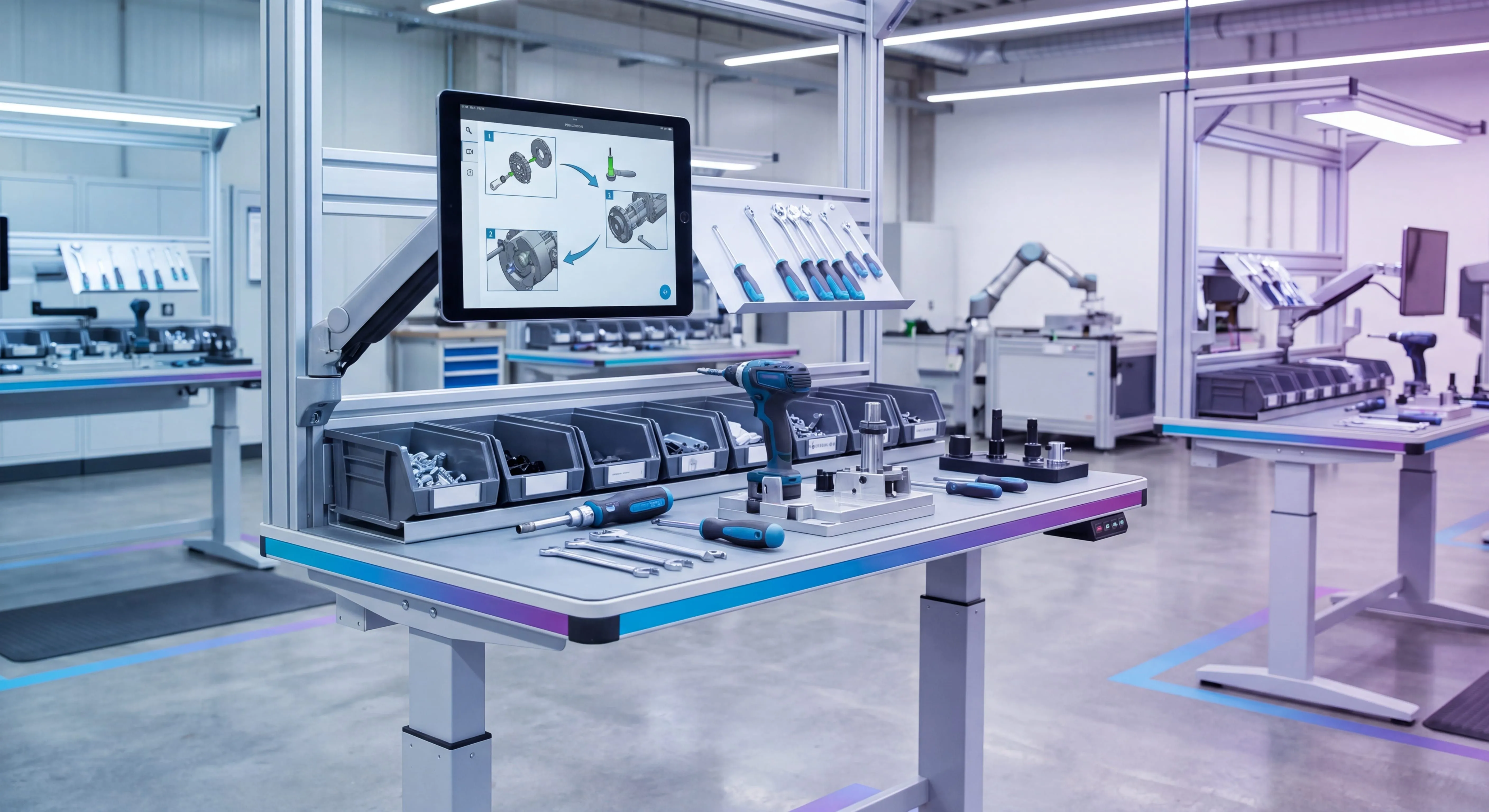
They’re walls of text. An operator at a station isn’t reading three paragraphs. They glance, act, glance, act. Dense prose is invisible on the floor. That’s the single biggest reason visual work instructions outperform written ones in a production environment.
They assume context the operator doesn’t have. “Verify the assembly is seated correctly.” Seated how? Compared to what? The person who wrote that knows what correct looks like. The person reading it on day three does not.
They live somewhere nobody goes. A work instruction sitting on a shared drive, three folders deep, behind a VPN, is a work instruction that doesn’t exist. If it’s not at the station, nobody’s using it.
They’re out of date and everyone knows it. The fastest way to kill trust in your documentation is to let one instruction be wrong. After that, operators stop trusting all of them and go back to asking the guy who’s been here 15 years. Deloitte and the Manufacturing Institute estimate that 2.8 million manufacturing positions will need to be filled by retirements alone through 2033 - which means the “guy who’s been here 15 years” is a timer, not a permanent resource.
They were written once and never watched in action. Nobody stood at the station with the document and the actual job and checked whether the steps matched what the hands were doing.
None of these are about writing skill, if you look closely. They’re about format, location, freshness, and verification. Good news, really, because all four are fixable.
How to write a manufacturing work instruction that gets followed
Here’s the approach I’d actually use, in order.
1. Scope it to one job at one station
One work instruction = one task, one station, one role. If you’re tempted to write “Line 3 Operations,” stop. That’s an SOP or a manufacturing SOP made of many work instructions. The granular ones are the ones operators use. Resist the urge to combine.
2. Capture it from the person who actually does it
Don’t write the instruction from memory at your desk. Go to the station. Watch your best operator do the job, ideally the one whose parts never come back. The gap between how a job is supposed to be done and how it’s actually done well is where all your real knowledge lives.
This is the step most teams skip. It’s also the one that matters most. The standard work that produces good parts lives in someone’s hands, not in the engineering binder.
3. Make it visual-first, words-second
For each step, lead with an image of the actual part, tool, or screen, then add the minimum words needed to kill any ambiguity. A photo of the correctly seated assembly does more than a paragraph describing it ever will. Annotate it too: an arrow, a circle, a “this gap should be zero.”
Structure each step like this:
- One action per step. “Torque the four M6 bolts to 9 Nm in a star pattern.” Not a paragraph that contains four actions.
- A picture of the result, not just the action. Show what done correctly looks like so the operator can self-check.
- The spec, inline. Torque values, tolerances, part numbers right there in the step, not in an appendix.
- A callout for the failure mode. If there’s a common mistake here, say so at the exact step where it happens, not in a “common errors” section at the end nobody reads.
This is the same logic behind standard work instructions in lean: reduce variation by making the right way the obvious way.
Teach your co-workers or customers how to get stuff done – in seconds.
4. Write for the newest qualified person, not the expert
The right reading level is “a competent new hire in their first week at this station.” Not the 15-year veteran (they don’t need it) and not someone off the street (they’re not qualified to run the station yet). If a step would make a week-one operator hesitate, it isn’t specific enough.
Cut every word that doesn’t change what the hands do. “In order to ensure proper seating, the operator should carefully” becomes “Press until you hear a click.” Manufacturing instructions get worse the more they read like a corporate memo.
5. Put it where the work happens
The instruction has to be at the station, at eye level, in the operator’s hands or on a screen they can see without stepping away from the work. Laminated card, mounted tablet, kiosk, whatever fits your environment. Format matters far less than location here. A perfect instruction in a binder in the supervisor’s office is worth nothing.
If you run a multilingual floor (most plants I talk to do), the instruction needs to exist in the languages your operators actually read, not just the one corporate writes in. That’s a real quality and safety issue, not a nice-to-have.
6. Validate it against the real job
Before you call it done, have someone who doesn’t know the job follow the instruction exactly, doing only what it says, while the person who does know the job watches and stays quiet. Every place the new person hesitates, guesses, or gets it wrong is a defect in the document, not the person. Fix those, then it’s done.
A faster way to build them
Here’s the honest problem with everything above: it’s all correct, and almost nobody does it, because writing good visual work instructions by hand is slow. Take photos, crop them, annotate them, write the steps, format the document, then do the whole thing again every time the line changes. Two engineers can burn a quarter documenting one line and it’s stale by the time they finish.
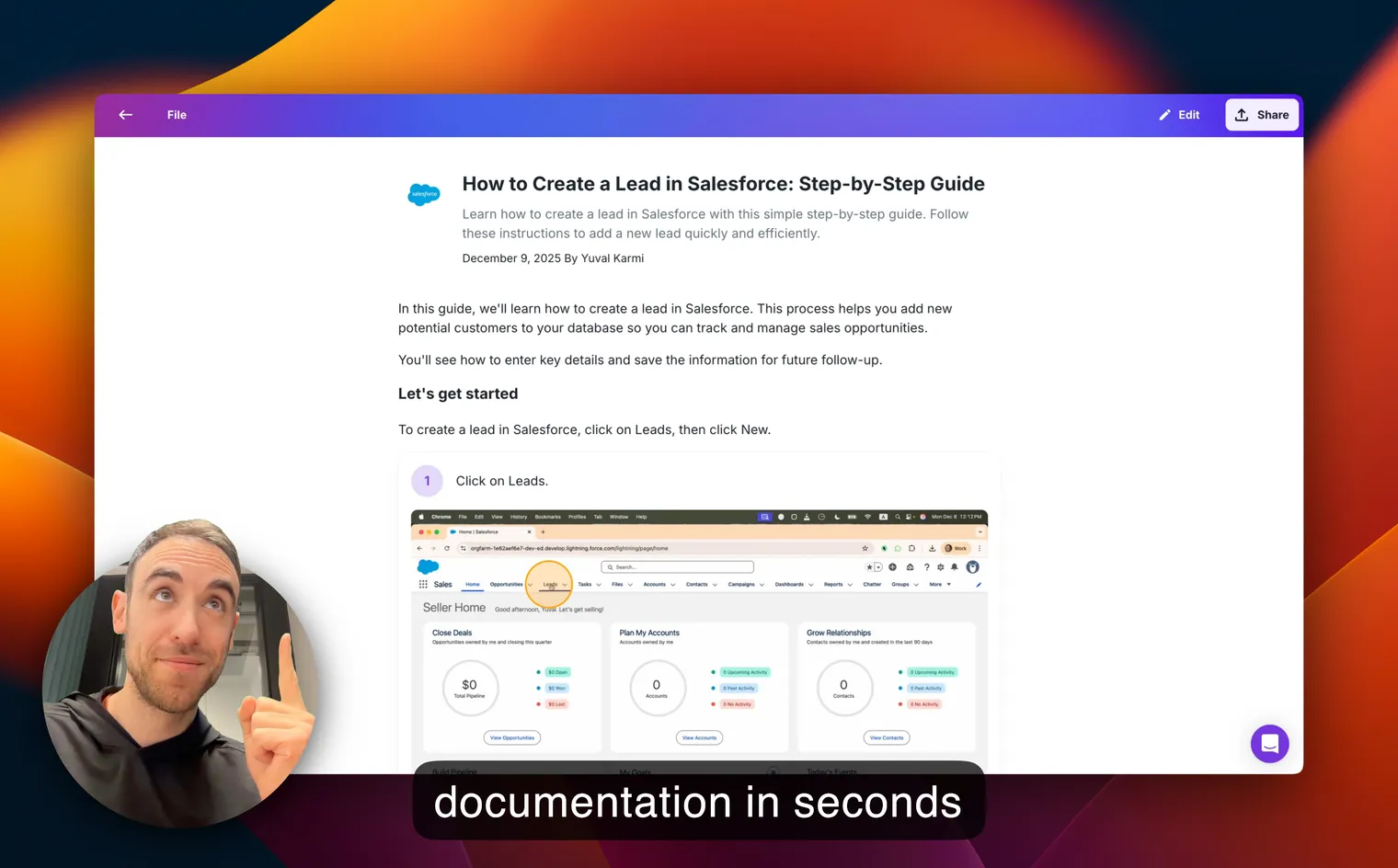
This is the exact problem I built Glitter AI to solve. Instead of writing the instruction, you record the job once. Glitter watches the workflow and turns it into a clean, step-by-step guide with the visuals already in place and the steps already written. You edit and approve instead of authoring from a blank page. And because it can produce the same instruction in 99 languages, the multilingual-floor problem stops being its own separate project.
I’m obviously biased here. But the reason customers in manufacturing stick with us isn’t the recording itself. It’s that “keeping instructions current” goes from a quarterly slog to something you redo in the time it takes to do the job once. Stale documentation is the failure mode that kills trust in all the others, and that’s the one this actually fixes.
If you want the manual version first, our work instruction template guide walks through the structure step by step, and the broader process documentation glossary entry covers where work instructions fit in the bigger picture.
A quick before-and-after
Bad step:
Verify that the bracket is properly installed and secure before proceeding to the next operation in the sequence.
Good step:
Step 7. Confirm bracket is seated. The bracket should sit flush against the housing with no visible gap. [Photo: correctly seated bracket, arrow pointing at the zero-gap edge] If you see daylight at the edge, it’s not seated. Re-press until flush.
Same intent. One of them an operator can act on at a glance, no guessing. That’s the entire game.
Downloads
If you want a starting structure for your own line, the work instruction template guide includes a fillable template you can adapt to your stations.
Frequently Asked Questions
What are manufacturing work instructions?
Manufacturing work instructions are the most granular process documents on a shop floor. Each one tells a single operator exactly how to perform one specific task at one station, including the sequence, tools, specs, and what a correctly completed step looks like.
What is the difference between an SOP and a manufacturing work instruction?
An SOP describes a whole procedure end to end, often across multiple roles, and explains what is done and why. A work instruction zooms in on a single task within that procedure and explains exactly how to do it. SOPs sit above work instructions in the documentation hierarchy.
Why should manufacturing work instructions be visual?
Operators at a station glance and act rather than read paragraphs, so dense text gets ignored. A photo of the correctly completed step lets an operator self-check at a glance, which reduces variation, scrap, and rework far more effectively than written descriptions.
Who should write shop-floor work instructions?
Capture the instruction from the operator who actually does the job well, ideally the one whose parts never come back. The real standard work lives in their hands, not in an engineering binder, so observe the task being performed rather than writing it from memory at a desk.
How detailed should a manufacturing work instruction be?
Write it for a competent new hire in their first week at that station. Include enough detail that a week-one operator never has to guess, but cut every word that does not change what their hands do. Specs and tolerances should be inline with the step, not in an appendix.
How often should work instructions be updated?
Update a work instruction every time the line, tooling, or process changes. The fastest way to lose operator trust in all your documentation is to let one instruction be wrong, after which people revert to asking veterans instead of reading the document.
Where should manufacturing work instructions be displayed?
At the station, at eye level, in the operator's hands or on a visible screen they can read without leaving the work. The location matters more than the format. An instruction stored in a binder in the supervisor's office or three folders deep on a shared drive effectively does not exist.
How do you validate a work instruction?
Have someone who does not know the job follow the instruction exactly while the expert watches without helping. Every point where the new person hesitates or does it wrong is a defect in the document, not the person. Fix those points before considering it complete.
What makes a work instruction one task versus a procedure?
If a document covers a whole line or multiple roles, it is an SOP or a manufacturing SOP made up of many work instructions. A true work instruction is scoped to one task, one station, and one role. Keeping them granular is what makes operators actually use them.
Can you create manufacturing work instructions faster than writing them by hand?
Yes. Tools like Glitter AI let you record the job once and automatically generate a step-by-step visual guide with the screenshots and steps already in place, including versions in up to 99 languages. You review and approve instead of authoring from a blank page, which makes keeping instructions current far less work.