
Read summarized version with
If you run a small business, this scenario probably sounds familiar.
Your bookkeeper is out for a week. Your office manager just gave notice. Or you hired someone new, and it dawns on you that nobody ever wrote down how to actually run payroll, code an invoice in QuickBooks, or close the month.
Suddenly, you’re the one figuring it out. Or worse, paying someone $150/hour to do it.
I’m Yuval, CEO of Glitter AI. We make SOP software, and most of our customers are small businesses with 1-50 employees. Operations managers, office managers, accountants, deputy clerks at city halls. They juggle QuickBooks, Sage, Excel, Salesforce, and a handful of other tools, and they need a cheap, easy way to write down how the work actually gets done.
Here’s the catch. Most of the “SOP software” you’ll find online was built for enterprises. It’s expensive, overkill, and it assumes you have a full-time documentation team. You don’t.
This guide cuts through that noise. I’ve looked at seven tools that genuinely make sense for a small business in 2026. I’ll tell you what they cost, where they shine, and where they fall flat.
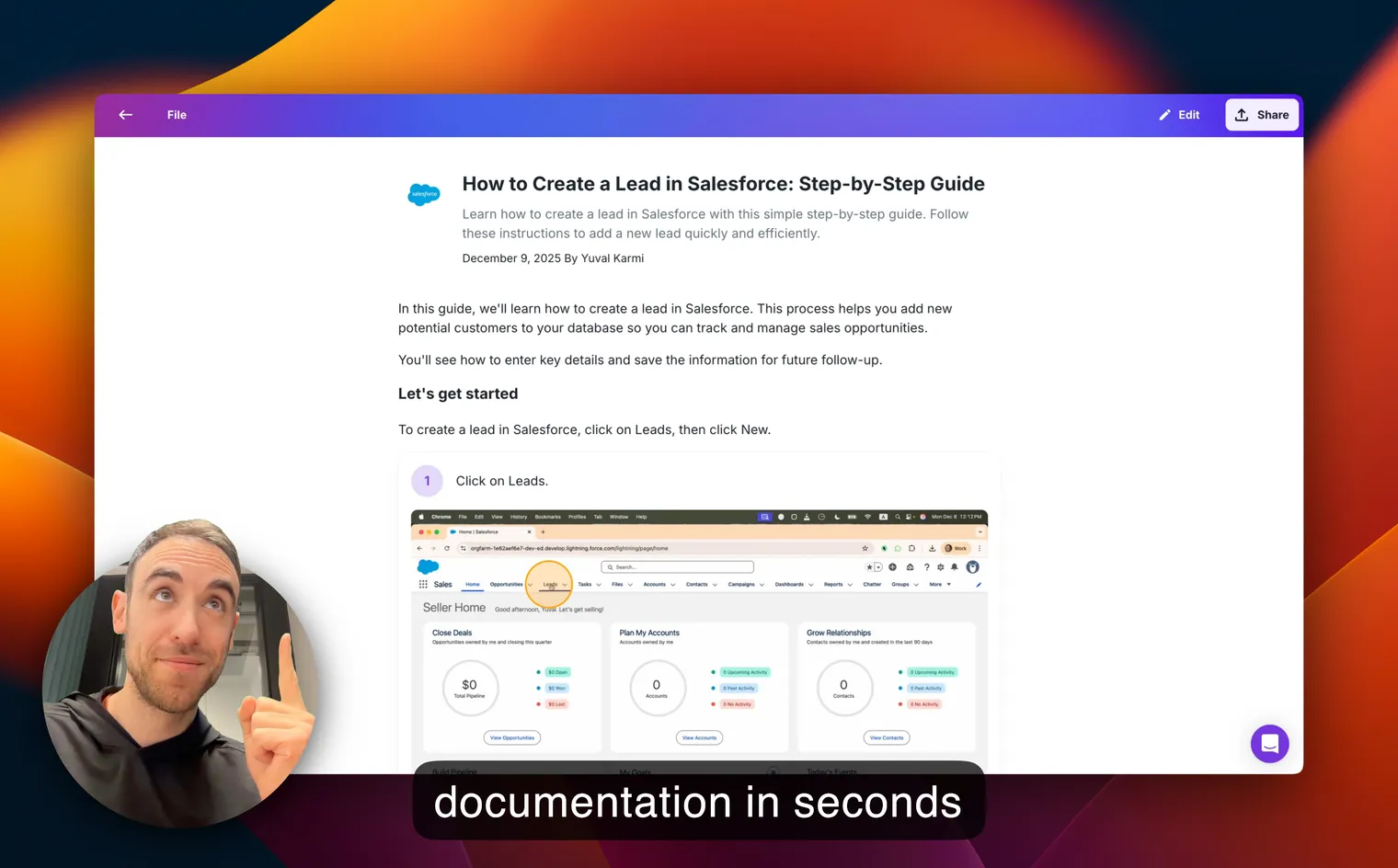
Teach your co-workers or customers how to get stuff done – in seconds.

What to Look for in SOP Software for Small Business
Before getting into the tools, here’s what really matters when you’re evaluating SOP software as a small business.
Speed of creation. If documenting a process takes two hours, nobody’s going to do it. Full stop. The best tools turn a screen recording into a finished SOP in minutes.
Pricing that scales down. Plenty of SOP software starts at $99-$299 per month on the cheapest plan. Fine if you have 200 employees. Absurd if you have 8.
Easy to use without training. Your bookkeeper, office admin, and warehouse lead should all be able to create SOPs without sitting through a 30-minute onboarding call.
Works for finance, HR, and ops. Small businesses don’t have specialized teams. One tool needs to handle invoice processing in QuickBooks, payroll training, AP workflows, and month-end close documentation.
Captures screenshots automatically. Manual screenshots are the #1 reason SOPs never get written. The tool should handle this for you. For more on this, see my guide on the free SOP generator approach.
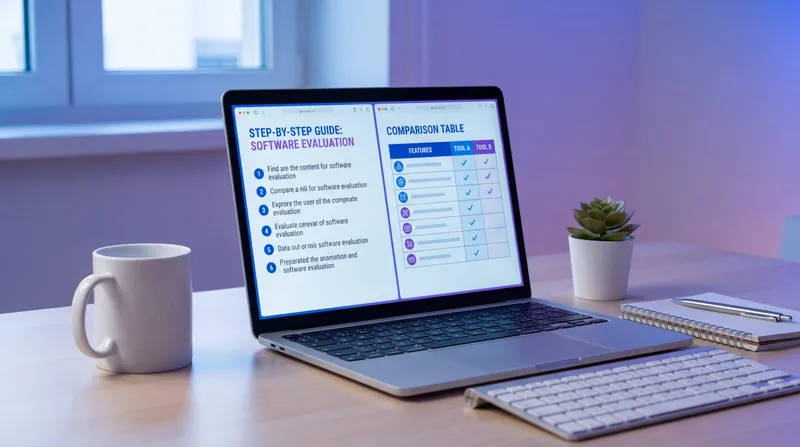
Quick Comparison Table
| Tool | Starting Price | Best For | AI Generation | Free Plan |
|---|---|---|---|---|
| Glitter AI | $6/seat/mo | SMBs needing fast AI-generated SOPs | Yes (full SOP from recording) | Yes |
| SweetProcess | $99/mo (up to 20 users) | Operations-heavy SMBs | Limited | 14-day trial |
| Trainual | $300/mo (up to 50 users) | SMBs focused on training | Limited | 7-day trial |
| Process Street | $100/mo (5 users) | Recurring checklists | Yes (some features) | Limited free |
| Tango | $20/user/mo | Quick step-by-step guides | No | Yes |
| Scribe | $35/user/mo | Individual contributors | Limited | Yes |
| Whale | $99/mo (up to 10 users) | Knowledge bases for SMBs | Yes | Trial only |
Prices reflect publicly listed plans as of 2026. Always check the vendor for current pricing.
1. Glitter AI
I built Glitter AI specifically for small businesses - here’s why.
I started Glitter after watching small business owners and ops people burn entire afternoons trying to write SOPs in Word or Google Docs. Take a screenshot, paste it in, type instructions, take another screenshot. Two hours later, a half-finished doc nobody will ever read.
Glitter AI flips that. Hit record, do the task once (processing an invoice in QuickBooks, running payroll in Gusto), and our AI spits out a complete, polished SOP. Step-by-step instructions, annotated screenshots, the works. Edit, share, or export to PDF. It’s the SOP software I built for exactly this.
Pricing: Free plan available. Paid plans start at $6 per seat per month. That’s the cheapest serious SOP software on the market for small businesses.
Key features:
- AI-generated SOPs from screen recordings (the fastest creation method I’ve seen, including from competitors)
- Auto-blurring for sensitive data (account numbers, SSNs, customer info)
- Edit text, replace screenshots, add notes
- Share via link or embed
- PDF and Word export
- Works on Mac, Windows, web
Best for: Small businesses with 1-50 employees documenting finance, HR, and ops procedures. Particularly good for QuickBooks, Sage, Salesforce, and Excel-heavy workflows.
Drawbacks: We don’t offer a full LMS or course-building module. If you need quizzes, certifications, and learning paths, take a look at Trainual instead.
If you’re weighing us against Scribe specifically, I wrote a detailed Scribe vs Glitter AI comparison that breaks down the differences.
Teach your co-workers or customers how to get stuff done – in seconds.
2. SweetProcess
SweetProcess is one of the older names in this space, and it has a loyal SMB following - especially among operations-heavy businesses like property management, healthcare practices, and accounting firms.
Pricing: Starts at $99/month for up to 20 active members, then $5/month per additional user.
Key features:
- Procedures, processes, and policies organized separately
- Team-based access controls
- Version history
- Integration with Zapier
- Dedicated training and onboarding
Best for: Established small businesses (10-50 employees) that want a structured, hierarchical system for documentation and have someone on the team willing to own it.
Drawbacks: No native AI generation from screen recordings, which means you’re still doing plenty of manual work. The interface feels dated next to newer tools. And the $99 floor is steep if you only have 5-10 users.
3. Trainual
Trainual positions itself as a training platform first, SOP tool second. It’s popular with franchises and SMBs that hire frequently.
Pricing: The “Build” plan starts at $300/month for up to 50 users. Smaller plans aren’t really aimed at SOP-only use cases.
Key features:
- Embedded videos, quizzes, and assessments
- Onboarding tracks and learning paths
- Org chart and role-based content
- E-signature for policy acknowledgment
- Mobile apps
Best for: Small businesses where employee training and onboarding is the main use case, not just procedure documentation.
Drawbacks: Pricey for documentation-only needs. The $300 entry point makes little sense if you have a 10-person team that just needs SOPs. Creating procedures still involves a lot of manual work.
4. Process Street
Process Street is built around recurring workflows and checklists. Think weekly client onboarding, monthly close checklists, quarterly compliance reviews.
Pricing: Starts around $100/month for 5 users on the Startup plan. Pro and Enterprise tiers climb from there.
Key features:
- Workflow automation with conditional logic
- Recurring checklists
- Form fields and approvals
- AI features in higher tiers
- Integrations with Slack, Salesforce, and others
Best for: Small businesses that run the same processes over and over (AP workflows, client onboarding, month-end close) and want each run tracked individually.
Drawbacks: Not the right fit if you just want static reference SOPs. Per-user pricing adds up fast. The learning curve is steeper than what you’ll find in simpler tools.
5. Tango
Tango is a browser extension that captures clicks and turns them into step-by-step guides. It’s lightweight and free for individual users.
Pricing: Free for basic use. Pro plan is $20/user/month.
Key features:
- Browser extension records clicks automatically
- Auto-screenshot capture
- Basic editing and sharing
- PDF export
Best for: Individual contributors and very small teams (1-5 people) who need quick how-to guides for browser-based tools.
Drawbacks: Browser-only, which means it can’t capture desktop apps like QuickBooks Desktop, Sage 50, or other software your accountant or office manager actually relies on. AI features are limited. No real folder structure or admin controls for a growing team.
6. Scribe
Scribe is arguably the best-known name in the category. It also captures clicks and converts them into guides.
Pricing: Free plan with watermarks. Pro Personal is $35/user/month (monthly billing). Pro Team is $17/user/month monthly with a 5-seat minimum ($85/mo floor).
Key features:
- Browser extension and desktop app
- Auto-redaction of sensitive data
- Embeds for help centers and wikis
- AI-generated titles and descriptions
Best for: Individual employees documenting their own workflows.
Drawbacks: Per-user pricing scales painfully once you have a small team. The free tier watermarks every screenshot, which makes it awkward to share with clients or external partners. AI features feel limited next to newer tools. Scribe captures and labels, but it doesn’t produce a full polished SOP the way Glitter does.
7. Whale
Whale (now Whale.io) is aimed at SMBs that want a knowledge base plus SOPs in one tool, often with a franchise-operations angle.
Pricing: Plans start around $99/month for up to 10 users.
Key features:
- AI-assisted content generation
- Browser extension for capture
- Searchable knowledge base
- Quizzes and tracking
- Slack and Teams integrations
Best for: Small businesses that want a single searchable place for SOPs, FAQs, and policies.
Drawbacks: The $99 floor combined with the 10-user cap is awkward. Too expensive for a 5-person team, but you outgrow it quickly. The AI is decent for editing, less so for generating full SOPs from a recording.
Teach your co-workers or customers how to get stuff done – in seconds.
Which SOP Tool Should a Small Business Actually Pick?
Here’s the honest breakdown by use case.
If you’re price-sensitive and want the fastest SOP creation: Glitter AI. $6 per seat is hard to beat, and the AI generation from screen recordings genuinely shaves hours off each SOP. We built it for exactly this audience.
If you have 20+ employees and want structured ops documentation: SweetProcess. Not the cheapest, but the org structure works well for established teams.
If training is your main priority: Trainual. The quizzes and onboarding tracks are where it earns the price tag.
If you run the same workflow repeatedly and need each run tracked: Process Street. The conditional logic and recurring checklists are excellent.
If you just need quick browser-based how-tos and you’re a team of 1-3: Tango or Scribe’s free tier.
If you want a knowledge base experience: Whale.
For most small businesses I talk to - the office manager at a 12-person firm, the deputy clerk at a small city hall, the ops lead at a 30-person agency - Glitter AI hits the sweet spot. Cheap, fast, and your accountant can use it without a training session. If you want a full breakdown of how to write good procedures regardless of tool, my SOP guide walks through it. And if finance documentation is your focus, see the accounting SOP guide.
Common Small Business SOP Use Cases
The small businesses we work with most often document these processes:
- Invoice processing in QuickBooks - coding, approvals, payment runs
- Payroll training - running payroll in Gusto, ADP, or Paychex; handling new hires
- AP workflows - bill entry, approval routing, vendor setup
- Month-end close - reconciliations, journal entries, financial reporting
- Customer onboarding - Salesforce setup, contract handling, kickoff
- Expense reporting - receipt capture, coding, reimbursement
- HR procedures - new hire onboarding, benefits enrollment, offboarding
The right SOP software handles every one of these without forcing your business into someone else’s category.
Frequently Asked Questions
What is the best SOP software for small business in 2026?
For most small businesses with 1-50 employees, Glitter AI offers the best combination of price ($6 per seat per month) and speed of creation, with AI-generated SOPs from screen recordings. SweetProcess and Trainual are stronger choices if you need deeper training features or structured ops documentation, but they cost significantly more.
What is the cheapest SOP software for a small business?
Glitter AI starts at $6 per seat per month with a free plan available, making it the cheapest serious SOP software for small businesses. Tango and Scribe both have free tiers, though their free plans include watermarks or feature limits that make them hard to use professionally.
Do small businesses really need SOP software?
Yes, especially if more than one person needs to perform any recurring task. Without documented SOPs, knowledge lives in one person's head - and when they leave, are sick, or take vacation, the work stops. SOP software makes documentation fast enough that small business owners actually do it.
What is an SOP tool used for?
An SOP tool is used to create, store, and share documented procedures for recurring business tasks. Common uses for small businesses include documenting invoice processing in QuickBooks, payroll runs, AP workflows, customer onboarding, and month-end close procedures so anyone on the team can follow them.
Can I create SOPs in Word or Google Docs instead?
You can, but it takes 5-10x longer. Manual SOPs require taking screenshots, pasting them in, formatting, and writing instructions step by step. Modern SOP software like Glitter AI generates the entire document from a single screen recording in minutes.
What is the easiest SOP software to use?
Glitter AI and Tango are both easy to use without training. Glitter is screen-recording-based, so you just hit record and do the task. Tango is a browser extension that captures clicks. Both produce a finished guide within minutes of completing the work.
How much should a small business spend on SOP software?
For most small businesses, $6 to $30 per user per month is a reasonable range. Tools that start at $99 or $300 per month are typically overkill unless you have 20+ employees actively using the software for training and onboarding.
Is Scribe or Glitter AI better for small businesses?
Glitter AI is generally a better fit for small businesses because of its lower per-seat pricing ($6 vs $35) and stronger AI generation that produces full polished SOPs rather than just labeled screenshots. Scribe is fine for individual contributors documenting their own workflows. See our detailed Scribe vs Glitter AI comparison for the full breakdown.
Can SOP software handle desktop apps like QuickBooks Desktop or Sage 50?
Glitter AI captures both desktop and browser-based applications via its desktop recorder, making it suitable for QuickBooks Desktop, Sage 50, and other installed software. Browser-only tools like Tango and Scribe's extension cannot capture desktop applications.
How long does it take to create an SOP with AI software?
With AI-powered tools like Glitter AI, a typical SOP takes 5-15 minutes from recording to finished document. Manual creation in Word or Google Docs typically takes 1-3 hours per SOP because of screenshot capture, formatting, and writing time.
Final Thoughts
The biggest mistake I see small businesses make with SOP software isn’t picking the wrong tool. It’s overspending on tools built for enterprises and then never actually using them.
Pick something cheap, fast, and easy. Document one SOP this week. Then another next week. Within three months, you’ll have the core knowledge of your business written down, and you’ll wonder how you ever operated without it.
If you want to try the approach we built for small businesses, Glitter AI has a free plan you can start with right now. No credit card. Record one task, see what comes out, and decide.
Either way, just start. The longer your processes live inside one person’s head, the more your business hinges on that one person.